Table of Contents
- What Causes Black Streaks on Roof Shingles?
- Roof Algae vs. Mold: How to Tell What’s Growing Up There
- How to Remove Black Streaks from Roof Shingles
- How to Prevent Roof Algae
- Frequently Asked Questions
Last Updated: October 4, 2026
What Causes Black Streaks on Roof Shingles?
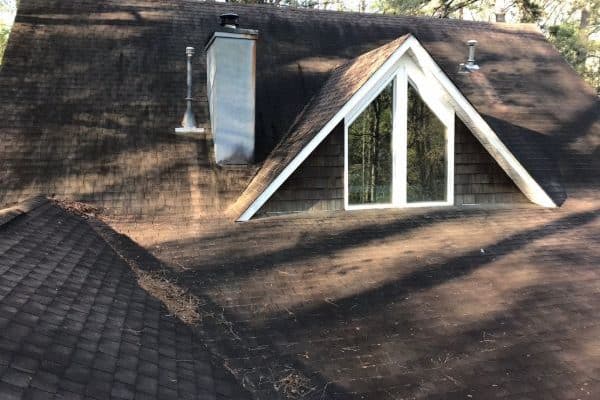
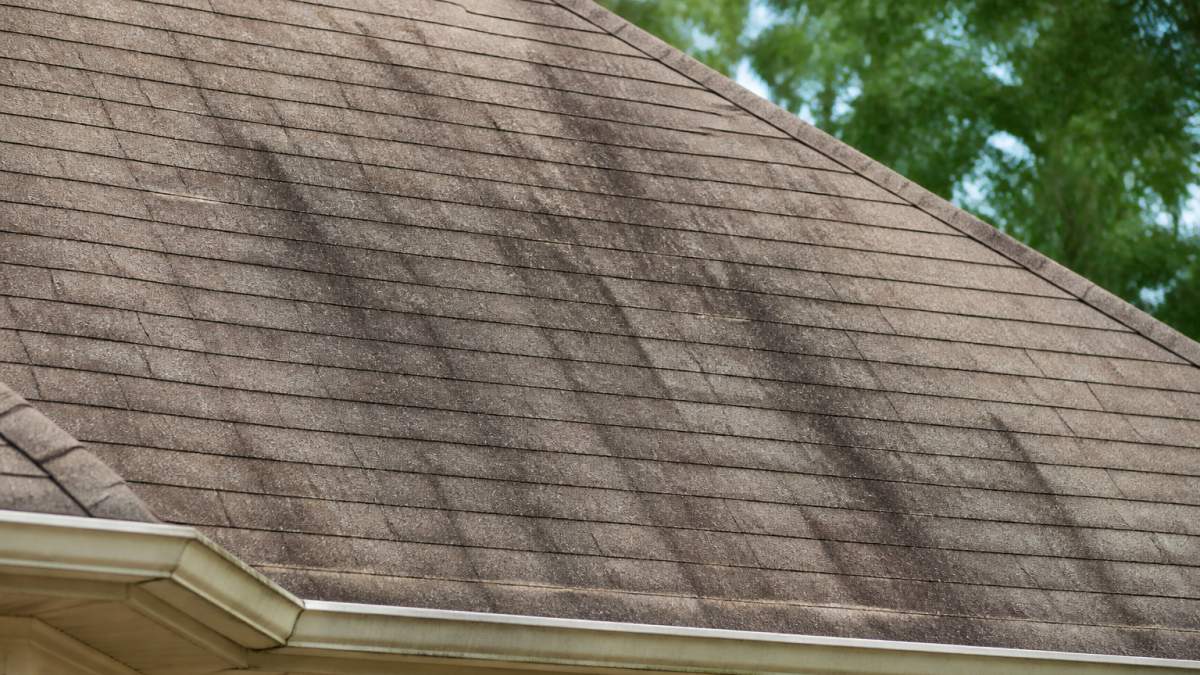
Black streaks on roof shingles are not dirt or a failing roof, they are a living organism: algae called Gloeocapsa magma. This guide from Curb Appeal Solutions covers what causes black streaks on roof shingles, how to tell algae from mold, and the safest way to remove them. Airborne spores land on your roof, feed on limestone fillers in the shingles, and grow into a dark, staining colony that spreads with moisture.
What Are Black Streaks on Roof Shingles?
Black streaks on roof shingles are dark stains caused by a cyanobacteria, often called blue-green algae. The most common species, Gloeocapsa magma, thrives in warm, humid climates and feeds on limestone fillers in asphalt shingles. It builds a protective shell that shields it from sunlight, that shell is the black stain, a living biofilm that spreads with every wet season.
What Causes Black Streaks on Roof Shingles?
Four things work together: airborne spores, limestone fillers the algae feeds on, moisture, and warmth. Remove any one and growth slows.
Why Do Streaks Appear on North-Facing Slopes?
North-facing slopes stay shaded and hold moisture longer, which is exactly what algae needs, so streaks usually start there and creep toward sunnier slopes.
Is Gloeocapsa Magma Harmful to Shingles?
Yes, but slowly. Algae holds moisture against the shingle surface, and that constant dampness breaks down the granules over time, exposing the asphalt underneath and shortening shingle lifespan, leading to a sooner, more expensive roof replacement.
Roof Algae vs. Mold: How to Tell What’s Growing Up There
Homeowners often use “algae” and “mold” interchangeably, but they are not the same, and the fix differs. Roof algae shows up as dark streaks, usually black or greenish-black, running down the slope in lines, flat and stained, not fuzzy or raised. Mold and mildew look patchy and fuzzy, often in green or gray clusters, and feel softer or powdery. Moss looks like a thick green carpet or clumps and lifts up from the shingle surface.
| Growth Type | Look | Texture | Where It Starts |
|---|---|---|---|
| Algae | Dark streaks, lines | Flat, stained | North-facing slopes |
| Mold/Mildew | Patchy clusters | Fuzzy, powdery | Damp, shaded areas |
| Moss | Green clumps | Thick, raised | Shaded, wet spots |
If you are unsure which one you have, a professional inspection takes the guesswork out. We see all three on Upstate roofs, often together.
Why Does This Matter for Your Roof?
Different growth needs different treatment: the wrong method can spread mold spores, treating moss like algae leaves roots behind, and high pressure on any of them risks the shingles.
How to Remove Black Streaks from Roof Shingles
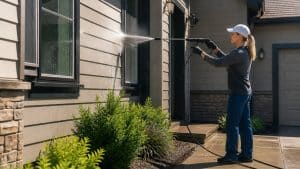
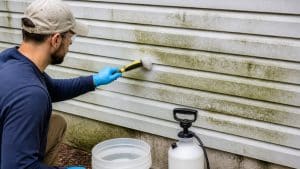
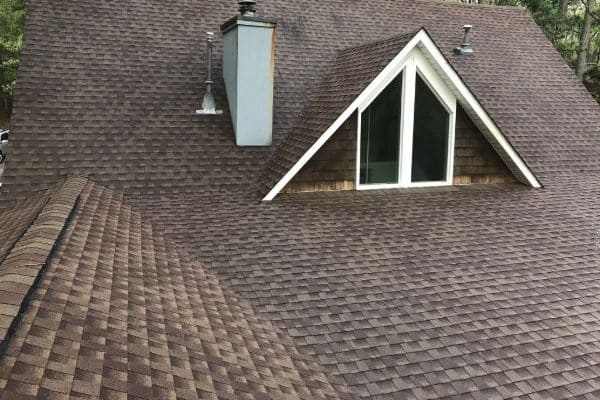
The safest way to remove black streaks from roof shingles is soft washing: a gentle cleaning solution kills the algae at the root, then low pressure rinses it away without harming the shingles.
Soft Washing vs. Pressure Washing: Which Is Safe?
Soft washing is safe for shingles; pressure washing is not. High force strips protective granules and can void your roof warranty, while soft washing kills the growth instead of blasting it off.
Does Algae Growth Void Roof Warranties?
It can. Many manufacturers treat algae growth as a maintenance issue, not a defect, so a claim can be denied if the damage was preventable. Algae-resistant shingles only slow growth, they do not stop it.
How to Prevent Roof Algae
Prevention is cheaper than removal. Install zinc strips or copper flashing (rain washes metal down the roof, and algae does not grow where that water flows), trim overhanging trees, keep gutters clear, improve ventilation, and schedule preventative treatment every couple of years.
How Often Should You Clean Your Roof?
In a warm, humid climate, preventative roof cleaning every two to three years keeps black streaks under control; homes with heavy shade or tree cover may need it more often.
If you are selling, a clean roof is one of the fastest ways to lift curb appeal, buyers notice a streaked roof and read it as deferred maintenance.
Frequently Asked Questions
Are black streaks on a roof caused by algae?
Yes, in most cases. The dark streaking you see on asphalt shingles is usually Gloeocapsa magma, a blue-green algae that feeds on limestone fillers in shingle granules. It spreads through airborne spores and thrives in humid conditions, especially on north-facing slopes that stay shaded and damp longer. What starts as a few faint lines can spread across the whole roof within a few seasons if left untreated.
Can you pressure wash black streaks off a roof?
Pressure washing is not recommended for asphalt shingles. The force strips away the protective granules that shield the shingle mat from sun and rain, shortening the roof’s lifespan and potentially voiding your warranty. Soft washing roof shingles with a low-pressure application of a cleaning solution kills the algae at the root instead of just blasting the surface.
How can you prevent black streaks from coming back?
Prevention starts with removing the algae completely, not just lightening the stains. Scheduling periodic roof maintenance and keeping gutters clear also reduces the moisture retention that feeds regrowth.
Black streaks on roof shingles are a sign that algae has taken hold, and the longer it sits, the more it shortens the life of your roof. At Curb Appeal Solutions, we remove black streaks from asphalt roofs using a low-pressure method that kills the growth without stripping your shingles. As a woman and veteran-owned local business with a 100% satisfaction guarantee, we treat every roof like it is our own. Get started with Curb Appeal Solutions and restore your roof’s curb appeal the safe way.