Table of Contents
- Gloeocapsa Magma Identification: What Roof Algae Really Looks Like
- Signs of Roof Moss vs Algae (and Lichen Too)
- Roof Algae Removal Methods That Actually Work
- How to Prevent Roof Algae Growth Long-Term
Last Updated: August 16, 2026
Gloeocapsa Magma Identification: What Roof Algae Really Looks Like
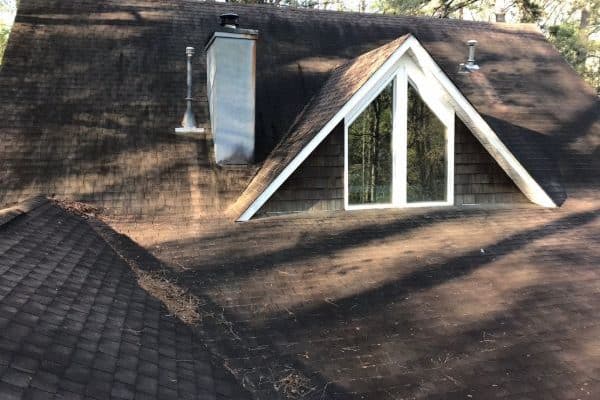
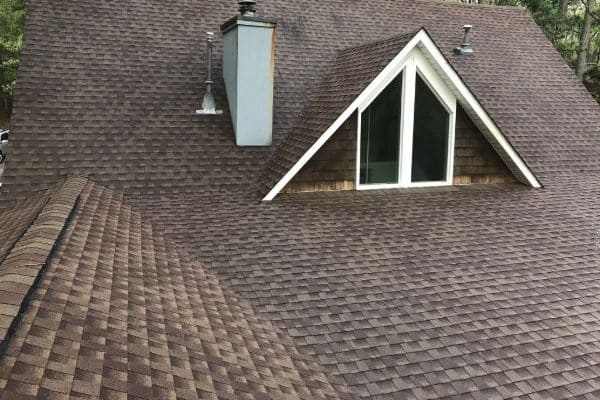
Roof algae is one of the most misunderstood problems homeowners face. Learning to identify it early can save you from costly shingle replacement. Roof algae is a cyanobacterium called Gloeocapsa magma that colonizes asphalt shingles, feeding on the limestone filler used as a granule binder. It starts as a faint gray haze and darkens into black streaks within a season or two, often mistaken for soot, mildew, or aging.
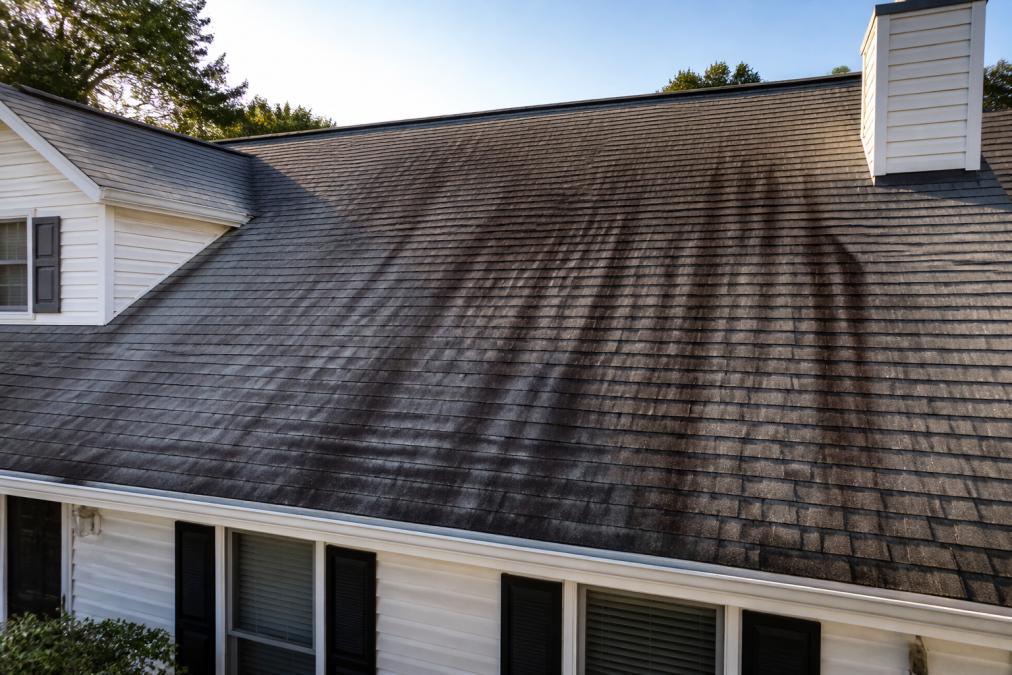
The dark color is not the algae itself. The organism produces a dark pigmented sheath to protect itself from ultraviolet radiation. What you see is a biofilm, a layered colony with built-in sunscreen. Streaks run downward from the ridge because spores travel with rainwater.
Several conditions accelerate growth: north-facing roof sections that stay shaded and damp, high humidity with warm summers, trees overhanging the roofline, and limestone-heavy shingle formulations.
The discoloration is not cosmetic. Roof algae retains moisture against the shingle surface, accelerating granule loss and degrading the asphalt underneath. According to Asphalt Roofing Manufacturers Association guidance on algae-resistant shingles, moisture retention from biological growth is a recognized contributor to premature shingle degradation.
Do not pressure wash black streaks off asphalt shingles. High-pressure water strips protective granules from the shingle surface, voiding most manufacturer warranties and accelerating wear by years. [Soft wash chemical cleaning](/soft-wash-vs-pressure-wash/) is the correct method.
Signs of Roof Moss vs Algae (and Lichen Too)
Moss, algae, and lichen are not interchangeable. Misidentifying the growth type leads to the wrong removal approach, which either fails or damages shingles further.
| Growth Type | Appearance | Texture | Where It Grows | Damage Level |
|---|---|---|---|---|
| Algae (Gloeocapsa magma) | Black or dark gray streaks | Flat, slick biofilm | Entire roof, ridge down | Moderate (moisture retention) |
| Moss | Thick green or brown cushions | Raised, fuzzy, spongy | Shaded, north-facing areas | High (lifts shingle edges) |
| Lichen | Gray-green crusty patches | Rough, textured, adhered | Any roof surface | Severe (penetrates shingles) |
Algae presents as streaking with a slightly slick biofilm feel but flat shingle surface. Moss forms thick, spongy cushions visible from ground level and wedges under shingle edges, forcing them upward and allowing water infiltration. Lichen is the most serious, a composite organism that anchors directly into the shingle surface, leaving permanent marks even after removal.
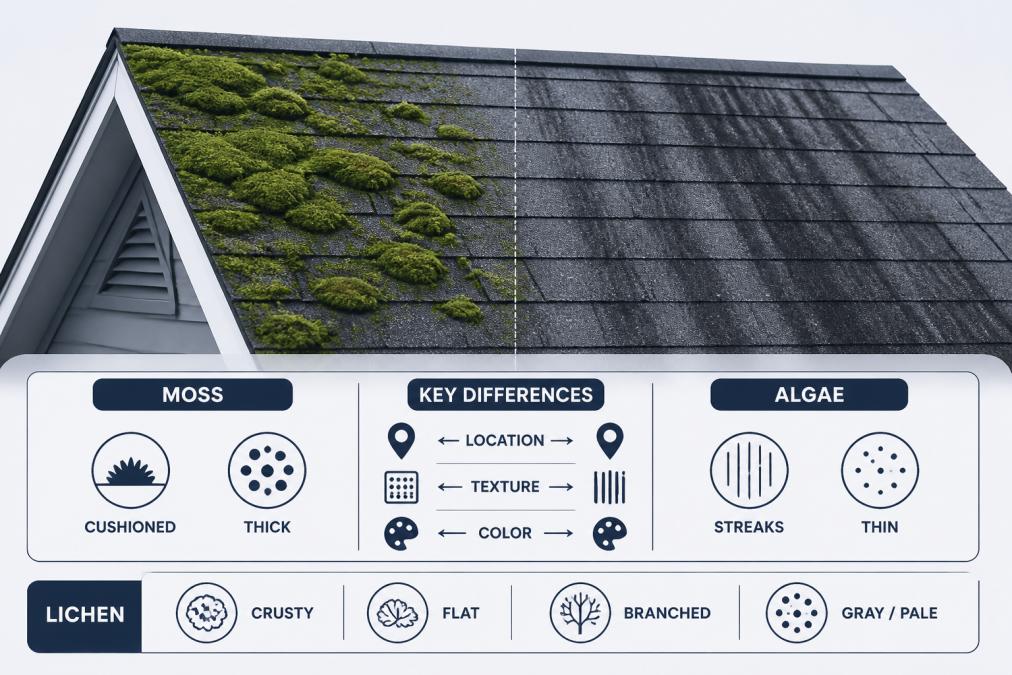
Check your roof from multiple angles before calling for service. Algae streaks are most visible in early morning or late afternoon light when the sun hits at a low angle.
Roof Algae Removal Methods That Actually Work
The wrong removal method causes more damage than the algae itself.
Soft washing is the industry-standard approach. It uses low-pressure application of diluted sodium hypochlorite solution, sometimes combined with surfactants. The solution breaks down the biofilm, kills the Gloeocapsa magma colony, and allows dead material to rinse away naturally over subsequent rain cycles.
The process:
- Inspect the roof for shingle condition, flashing integrity, and algae coverage
- Pre-wet surrounding vegetation to reduce chemical uptake from overspray
- Apply the cleaning solution at low pressure from eaves upward
- Allow dwell time, typically 15 to 20 minutes
- Rinse thoroughly with low-pressure water from ridge to eave
- Inspect and document the result; heavy lichen may require a second treatment
As noted in EPA guidance on safe chemical handling for residential applications, sodium hypochlorite solutions require proper dilution, protective equipment, and careful handling. Professional applicators use calibrated equipment that controls concentration precisely.
DIY roof cleaning kits work adequately on light algae but struggle with application consistency. For significant discoloration or moss or lichen presence, professional soft wash service produces more reliable results.
The goal is to kill the organism completely, including below the shingle surface where regrowth originates. A roof that looks clean but has not been treated correctly will show new streaks within months.
Safety equipment matters critically. Working on pitched roofs requires non-slip footwear, a properly anchored safety harness, and chemical-resistant gloves and eye protection. The OSHA residential fall protection standards set clear requirements for roof work.
How to Prevent Roof Algae Growth Long-Term
Removing existing algae is only half the equation. Without preventative measures, algae-prone roofs will show new growth within two to four years in humid climates.
Zinc strips and copper flashing are the most proven passive prevention methods. When rainwater contacts these metals and runs down the roof, it carries trace metal ions toxic to Gloeocapsa magma. Copper flashing at the ridge is particularly effective because every rain event distributes treatment across the full roof surface below.
Zinc strips lose effectiveness as they corrode and need periodic replacement. Copper flashing is more durable but costs more. Neither method eliminates algae entirely on heavily shaded roofs, but both meaningfully extend intervals between cleaning cycles.
A long-term maintenance schedule for algae-prone roofs:
| Interval | Action |
|---|---|
| Annually | Visual roof inspection; check for new streaking or moss growth |
| Every 1-2 years | Professional soft wash treatment in humid or shaded locations |
| Every 3-5 years | Full roof inspection including flashing, gutters, and shingle condition |
| After major storms | Check for debris accumulation and displaced granules |
Material-specific considerations affect treatment frequency. Asphalt shingles with algae-resistant formulations incorporating copper granules resist Gloeocapsa magma colonization significantly longer than standard shingles. Metal roofs, clay tile, and slate are naturally resistant because they lack the limestone filler that feeds the organism.
Regional climate impact is real. Roofs in the Southeast and mid-Atlantic face significantly higher algae pressure than drier western climates. Homeowners in these regions should plan on shorter treatment intervals and take passive prevention measures seriously.
Trimming overhanging tree branches is one of the highest-return maintenance actions. Shade and falling organic debris are the two biggest contributors to accelerated algae growth. A cleared roofline dries faster and receives enough UV exposure to slow colonization naturally.
According to National Roofing Contractors Association maintenance best practices, routine roof maintenance including biological growth management is one of the most cost-effective ways to extend roof service life.
Frequently Asked Questions
What does roof algae look like?
Roof algae typically appears as dark gray or black streaks running down asphalt shingles. The organism responsible is Gloeocapsa magma, a cyanobacterium that produces a dark pigmented sheath to protect itself from UV rays. Early-stage algae may look like faint shadowing or uneven discoloration. Over time, the streaks widen and darken. North-facing and shaded roof sections usually show the heaviest growth because they stay damp longer.
Is algae on your roof bad?
Yes. Roof algae is more than a cosmetic problem. Gloeocapsa magma feeds on the limestone filler in asphalt shingles, gradually breaking down the granules that protect your roof from UV damage and moisture. That shingle degradation shortens roof lifespan and can lead to leaks. Algae also retains moisture against the surface, accelerating wear. Addressing it early protects both your roof and your home's curb appeal.
What is the difference between roof algae, moss, and lichen?
Algae appears as flat black or dark gray streaks with no raised texture. Moss is a thick, spongy green growth that physically lifts shingles as its roots expand. Lichen is a combined organism of algae and fungus that bonds tightly to the shingle surface, making it the hardest of the three to remove. All three thrive in humid, shaded conditions, but lichen and moss cause more immediate physical damage to shingles than algae alone.
What kills algae on a roof?
A diluted sodium hypochlorite solution applied with a low-pressure soft wash system is the most effective treatment for roof algae. High-pressure washing strips protective granules from asphalt shingles and should be avoided. Zinc strips and copper flashing installed at the ridge line release metal ions that inhibit future algae growth when it rains. For safe, shingle-friendly removal, professional soft wash services produce the best results without risking shingle damage.
Identifying and managing roof algae is straightforward once you know what you are looking at, but the follow-through on removal and prevention is where most homeowners fall short. Curb Appeal Solutions specializes in low-pressure roof cleaning that removes black streaks and kills algae without damaging shingle granules, backed by a 100% satisfaction guarantee. Get a fast quote and find out what a properly treated roof looks like.
This article was written using GrandRanker