Table of Contents
- How Soft Washing Protects Your Roof Shingles
- Soft Wash vs Pressure Wash Roof: Key Differences
- How to Remove Algae from Roof Shingles Safely
- Signs Your Roof Needs Cleaning
- DIY vs Professional Roof Cleaning: Risk Assessment
- Environmental Impact and Runoff Safety
- Warranty Implications and Roof Longevity
- When to Schedule Roof Cleaning
- Frequently Asked Questions
Last Updated: September 12, 2026
How Soft Washing Protects Your Roof Shingles
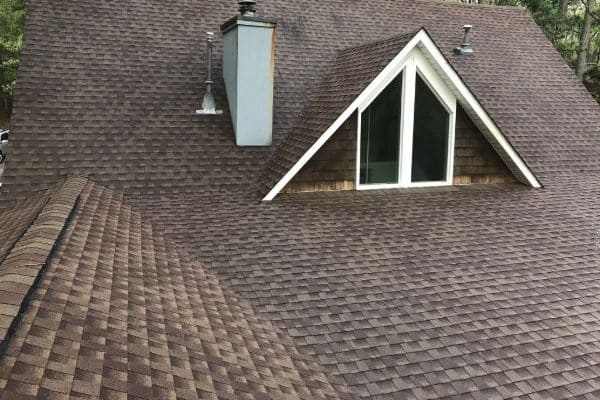
When the question is soft washing safe for roof shingles, the answer starts with the method itself: a low-pressure technique that uses cleaning solutions to break down organic growth rather than force. For homeowners wondering is soft washing safe for roof shingles, the answer is yes: it preserves asphalt shingles while eliminating algae, moss, and lichen that shorten roof lifespan.
A diluted sodium hypochlorite solution is applied at low pressure and left to dwell long enough to kill algae at the root, while surfactants help it cling before a gentle rinse carries away dead matter without disturbing protective granules (the EPA). This guide from Curb Appeal Solutions covers what makes soft washing safe before you schedule roof cleaning.
Soft Wash vs Pressure Wash Roof: Key Differences
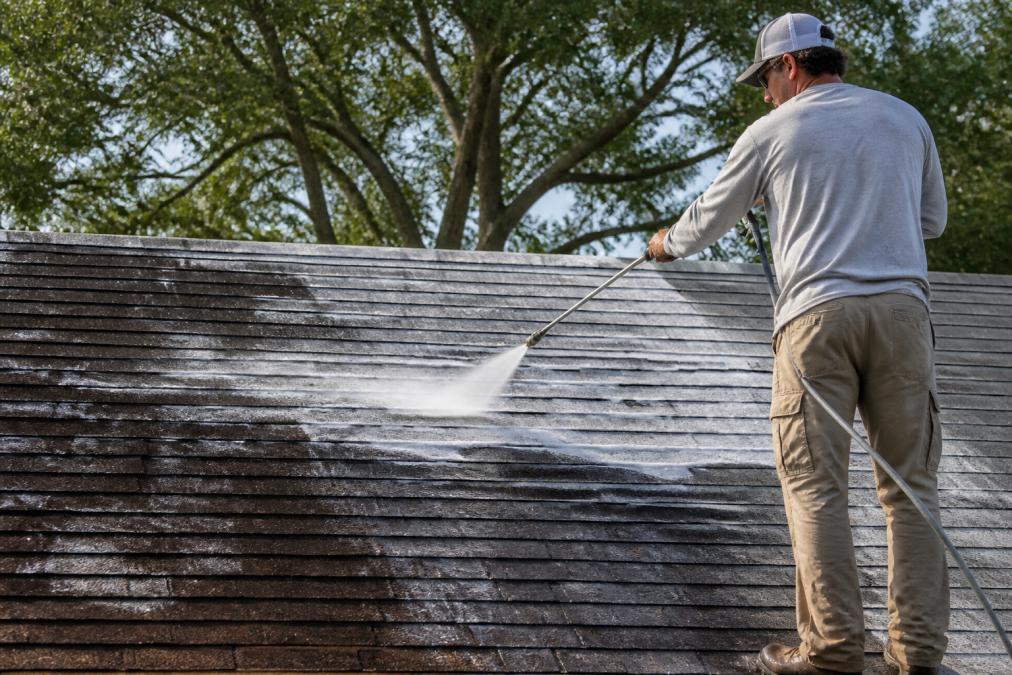
The difference between soft wash vs pressure wash roof comes down to pressure and purpose: pressure washing blasts dirt with high-pressure water, while soft washing uses low pressure plus cleaning solutions to kill organic growth. High-pressure cleaning can strip shingle granules, crack the substrate, and void warranties; soft washing avoids these risks because its efficacy comes from chemical dwell time and surfactants, not force.
| Factor | Soft Washing | Pressure Washing |
|---|---|---|
| Pressure level | Low, gentle | High, forceful |
| Primary action | Chemical breakdown | Mechanical force |
| Shingle granule risk | Minimal | High |
For asphalt shingles, soft washing is the only method most manufacturers recommend. The Asphalt Roofing Manufacturers Association maintenance guidance confirms that high-pressure damage is a leading cause of premature roof failure.
How to Remove Algae from Roof Shingles Safely
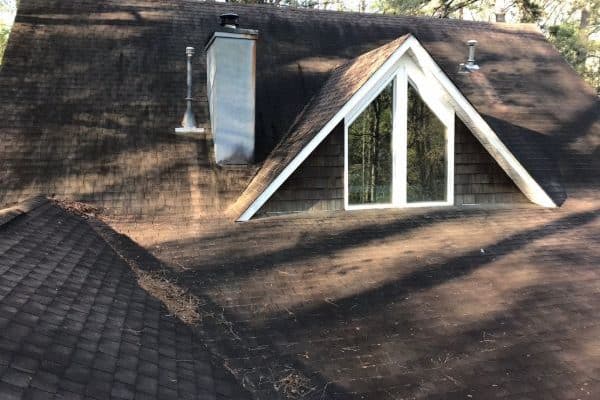
Removing algae from roof shingles safely prioritizes roof integrity over speed. The black streaks are typically gloeocapsa magma, a cyanobacteria that feeds on limestone filler in asphalt shingles.
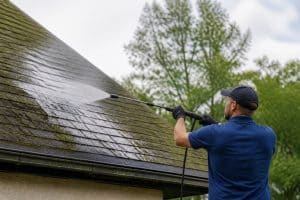
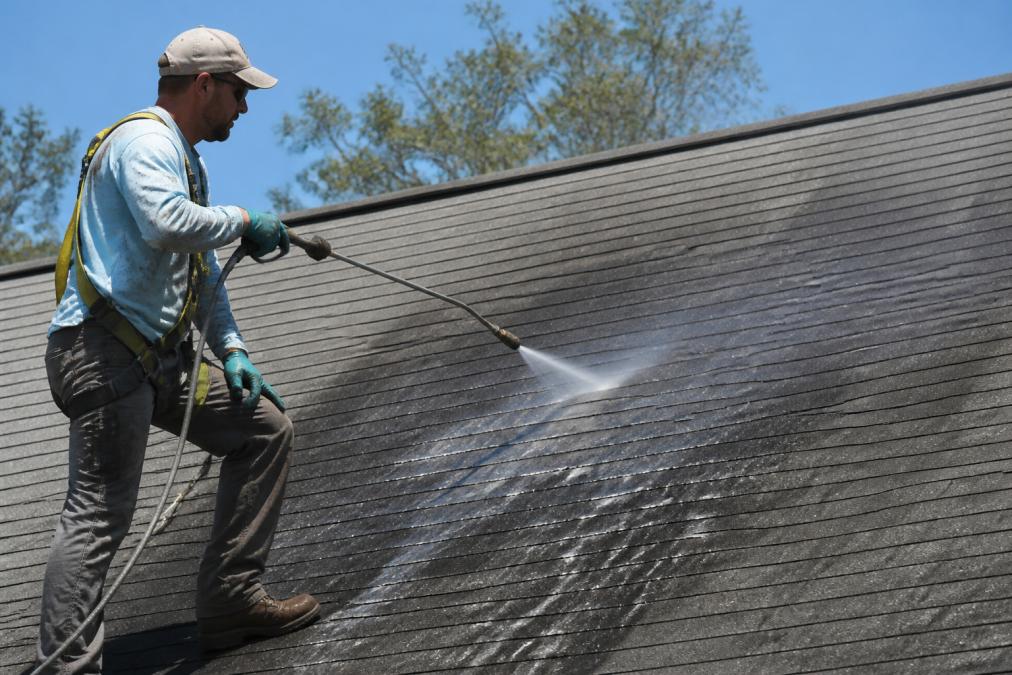
Professionals inspect the roof, protect landscaping and runoff areas, apply a biodegradable low-pressure solution, allow proper dwell time, then rinse gently without stripping granules.
Never use a pressure washer wand with a narrow nozzle tip on asphalt shingles. The concentrated force strips protective granules instantly, leaving the roof substrate exposed to UV damage and accelerating roof aging.
Signs Your Roof Needs Cleaning
Visible black streaks are the most obvious sign, but also watch for dark staining on north-facing slopes, green moss near valleys, and white lichen on shingle edges. If staining spreads across multiple slopes, schedule professional cleaning.
DIY vs Professional Roof Cleaning: Risk Assessment
DIY roof cleaning carries real risks: walking on a wet roof is dangerous, the wrong chemical concentration can damage shingles or landscaping, and without proper protocols you risk injury and costly damage. Professional contractors bring proper equipment, correct chemical mixtures, insurance coverage, and knowledge of warranty requirements, many shingle warranties specify that improper cleaning voids coverage.
The Occupational Safety and Health Administration notes that falls are among the leading causes of workplace fatalities in residential construction, a risk that applies equally to homeowners attempting roof work.
Ask any roof cleaning contractor which cleaning solution they use and at what concentration. Reputable professionals will explain their process clearly. Vague answers are a red flag.
Environmental Impact and Runoff Safety
Eco-friendly roof cleaning focuses on controlling where solutions go; biodegradable solutions still need proper management. Professional soft washing includes runoff mitigation: covering plants, redirecting water from storm drains, and timing applications to avoid rain.
Warranty Implications and Roof Longevity
Most asphalt shingle manufacturers require specific cleaning methods to maintain warranty coverage; high-pressure cleaning is commonly excluded, while correct soft washing preserves coverage. Regular soft washing extends roof lifespan by preventing organic growth from eating into shingle surfaces, since algae and moss hold moisture that accelerates deterioration.
When to Schedule Roof Cleaning
Frequency depends on your environment: homes surrounded by trees or in humid climates may need annual cleaning, while others can go two to three years. Watch for early signs like light staining, small moss patches, or dark streaks after a wet season.
The safest approach for asphalt shingles is low-pressure soft washing with proper chemical dwell time and runoff protection. High pressure removes granules; soft washing removes the problem.
Frequently Asked Questions
Does soft washing damage asphalt shingles?
No, when done correctly. Soft washing uses low pressure, typically under 100 PSI, combined with a sodium hypochlorite solution to kill algae at the root. This method avoids the granule loss and cracking that high-pressure washing causes. The key is proper chemical concentration and dwell time, followed by a gentle rinse cycle. A professional contractor trained in soft washing will adjust the mix based on your roof substrate and organic buildup levels.
How long does soft washing a roof last?
Results typically last two to three years before algae or moss begins returning, depending on shade, humidity, and tree cover. Soft washing kills gloeocapsa magma and other organic growth at the source rather than just blasting it off the surface. Scheduling preventative maintenance every two to three years keeps your roof looking clean and protects roof integrity over its full lifespan.
Can I use bleach to clean my roof shingles?
Household bleach is not the same as the sodium hypochlorite solution professionals use. Store-bought bleach is often too weak to kill algae fully or too concentrated and can damage shingle granules, plants, and metal flashing. A professional soft wash uses a measured chemical concentration with surfactants that help the solution cling to the roof, plus a proper rinse cycle to protect your landscaping and runoff safety.
Roof cleaning does not have to be a gamble with your shingles. Curb Appeal Solutions specializes in low-pressure roof cleaning that removes black streaks, kills mold at the source, and protects your roof integrity. As a woman and veteran-owned family business with a 100% satisfaction guarantee, we treat every home like our own. Get a fast quote from Curb Appeal Solutions and restore your roof’s appearance without risking damage.