Last Updated: October 29, 2026
Quick Summary
Water damage prevention starts with exterior maintenance: inspect your roof twice a year, clean gutters 2-4 times a year, and direct downspouts 4 to 6 feet away from the foundation. Sealing windows and doors, grading soil to slope away from the house, and trimming vegetation back 12 to 18 inches complete the checklist.
- Clogged gutters are the number one cause of avoidable water damage on most homes.
- Inspect the roof twice a year, in spring and fall, plus after major storms.
- Each downspout should carry water at least 4 to 6 feet from the foundation.
- The ground should slope away from the house about 6 inches over the first 10 feet.
- Trim vegetation back 12 to 18 inches from walls and keep limbs clear of the roof line.
Table of Contents
- Your Exterior Home Maintenance Checklist for Water Damage Prevention
- Gutter Cleaning and Maintenance That Moves Water Away
- Roof Maintenance to Prevent Leaks Before They Start
- Directing Runoff Away From the Foundation
- Sealing Windows, Doors, and Exterior Walls
- Grading, Drainage, and the Basement Check
- Trimming Trees and Shrubs Near the House
- Frequently Asked Questions
Your Exterior Home Maintenance Checklist for Water Damage Prevention
Water damage prevention starts outside. Most water that ruins basements, rots siding, and stains ceilings enters through small exterior failures you can fix before the next storm.
| Step | Task | How Often | Main Risk It Prevents |
|---|---|---|---|
| 1 | Roof inspection and repair | Twice a year | Leaks, rotted decking |
| 2 | Gutter and downspout cleaning | 2-4 times a year | Overflow, foundation soak |
| 3 | Downspout extensions and runoff | Check each season | Water pooling at the base |
Water runs downhill, so fix the highest point first.
Gutter Cleaning and Maintenance That Moves Water Away
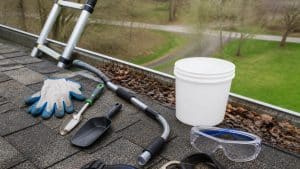
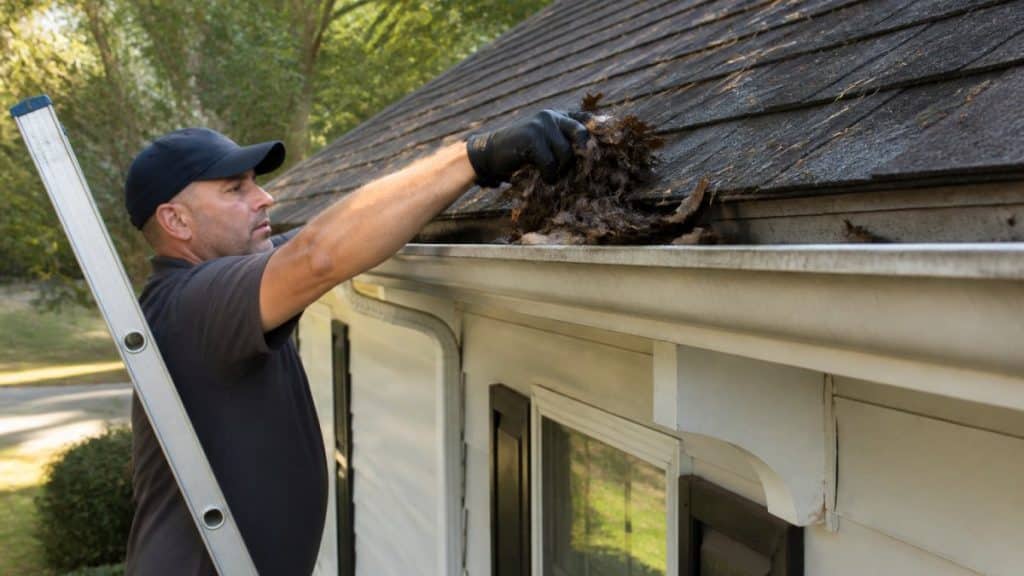
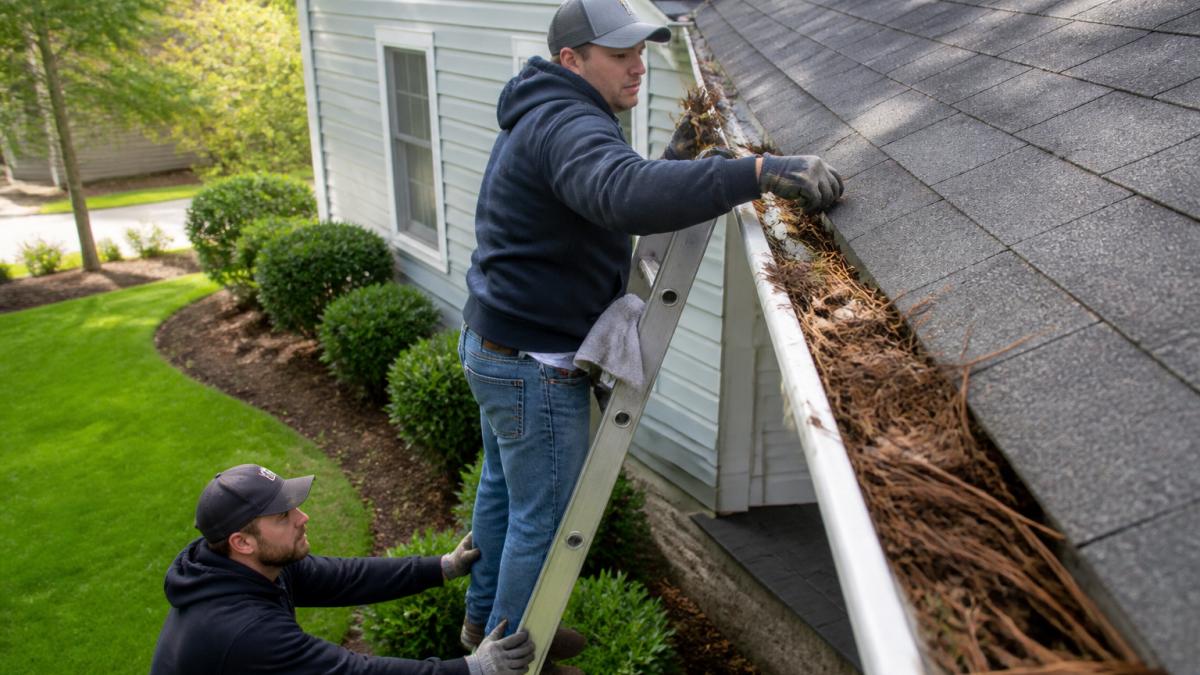
Clogged gutters are the number one cause of avoidable water damage on most homes, backing water up under the roof edge and soaking the soil against your foundation. For a step-by-step gutter cleaning method to prevent basement flooding, follow the linked guide. Scoop debris by hand from a stable ladder, flush with a hose, confirm the downspout flows freely, and check the gutter’s slope. Readers who want to set a maintenance schedule can learn how often to clean gutters.
Roof Maintenance to Prevent Leaks Before They Start
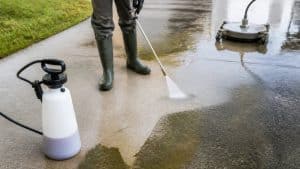
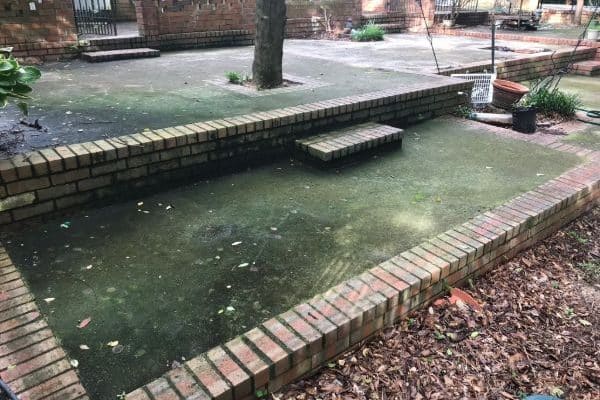
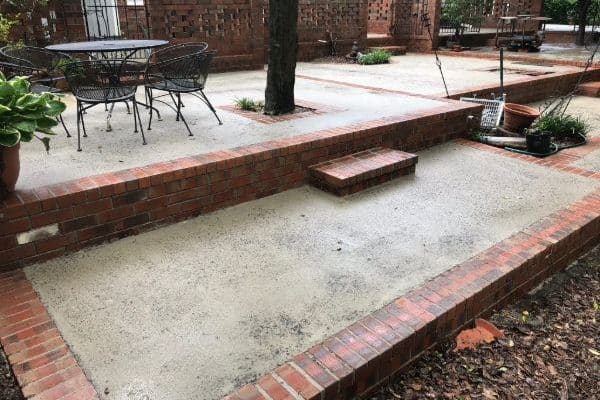
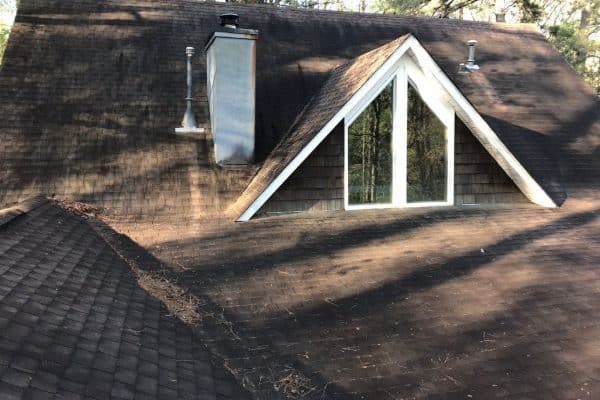
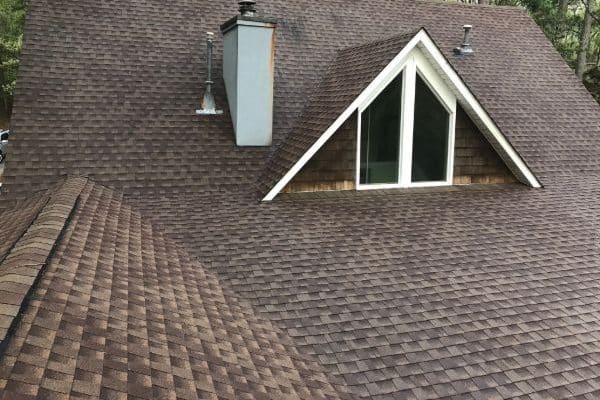
Roof maintenance to prevent leaks means catching small failures before water reaches the decking. Cracked flashing, missing shingles, and worn vent seals are the usual entry points; by the time a ceiling stain appears, damage has grown for weeks. When repairs are no longer enough, these signs it is time for roof replacement help you decide. Inspect twice a year, in spring and fall, plus after major storms, scanning for curled or missing shingles, rusted flashing, granule piles in gutters, and moss. Practical steps to prevent roof shingle damage are covered in the linked guide. Stay off the roof yourself. You can also review the top signs your roof needs cleaning as part of leak prevention. We check from a ladder and use low-pressure cleaning that lifts moss and black streaks without stripping protective granules.
Directing Runoff Away From the Foundation
Downspouts that dump water at the wall undo all your gutter work. Each should carry water at least 4 to 6 feet from the foundation, farther on sloped lots. Add a splash block or flexible extension and check it after heavy rain. The FEMA guidance on protecting homes from water damage makes the same point: keeping water away from the structure is the cheapest defense you have.
Sealing Windows, Doors, and Exterior Walls
Caulking windows and doors is a small job with a big payoff. Cracked sealant lets wind-driven rain into the wall cavity, rotting framing and feeding mold. Once a year, look for gaps in caulk, peeling paint, soft or lifted siding, and rusted nails or moisture stains. Replace failing caulk with exterior-grade sealant and repair damaged siding promptly.
Grading, Drainage, and the Basement Check
Foundation drainage and water damage prevention come down to one rule: the ground should slope away from the house, about 6 inches over the first 10 feet. Low spots, mulch above the siding, and clogged window wells invite water in. After heavy rain, check the basement or crawl space for damp walls, musty smells, and efflorescence. Fix the grade, extend downspouts, and clear window well drains. Correcting these exterior drainage patterns remains the most reliable way to prevent foundation issues while ensuring that moisture stays well away from your structural integrity.
Trimming Trees and Shrubs Near the House
Branches over the roof drop leaves into gutters and scrape shingles; shrubs against siding hold moisture and hide rot. Trim vegetation back 12 to 18 inches from walls and keep limbs clear of the roof line.
Water damage rarely announces itself. It starts with a clogged gutter, cracked caulk, or a downspout dumping water at the wall. Curb Appeal Solutions provides exterior cleaning services, including low-pressure washing, roof cleaning, and gutter maintenance. Curb Appeal Solutions is a woman and veteran-owned family business and offers a 100% satisfaction guarantee. Get started with Curb Appeal Solutions and protect your property before the next storm.
Frequently Asked Questions
How often should I clean my gutters to prevent water damage?
Twice a year is the baseline, ideally in spring and late fall. Homes with pine needles, heavy tree cover, or frequent storms may need quarterly gutter cleaning and maintenance. Clogged gutters send rainwater down the siding and pool it at the foundation, which is where most water intrusion starts. If you see water spilling over the edge during a storm, that is your signal to schedule a cleaning.
How should downspouts direct water away from a house?
Downspouts should discharge water at least 4 to 6 feet from the foundation, ideally onto a splash block or into an extension that slopes away from the house. Check that the ground around the foundation drops about 6 inches over the first 10 feet. Short leaders or downspouts that dump right at the wall are a common cause of basement and crawl space moisture, so extend them before the next heavy rain.
Can pressure washing damage siding or cause water intrusion?
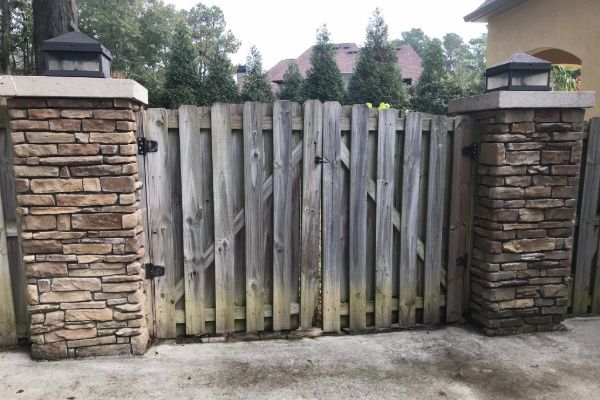
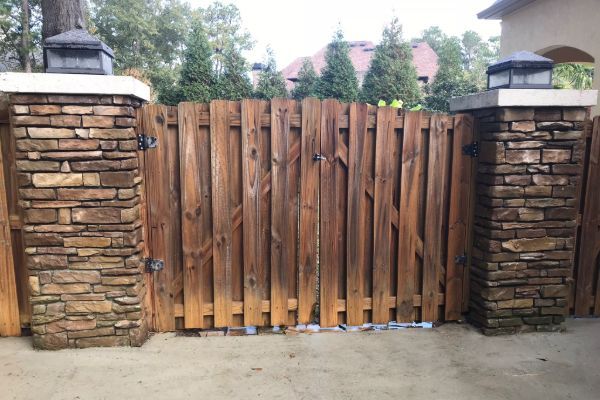
High pressure can force water behind siding, strip paint, and crack caulking around windows and doors, which lets moisture in. Low-pressure washing with the right cleaning solution removes mold, red clay stains, and grime without driving water into the exterior walls. After any cleaning, check window seals and caulking and reseal where needed to keep water damage prevention intact.