Table of Contents
- Visual Signs of Mold Damage on Wood House Siding
- Wood Siding Water Damage Signs That Lead to Mold
- How to Clean Mold Off Siding and Prevent Recurrence
- Frequently Asked Questions
Last Updated: October 19, 2026
Visual Signs of Mold Damage on Wood House Siding
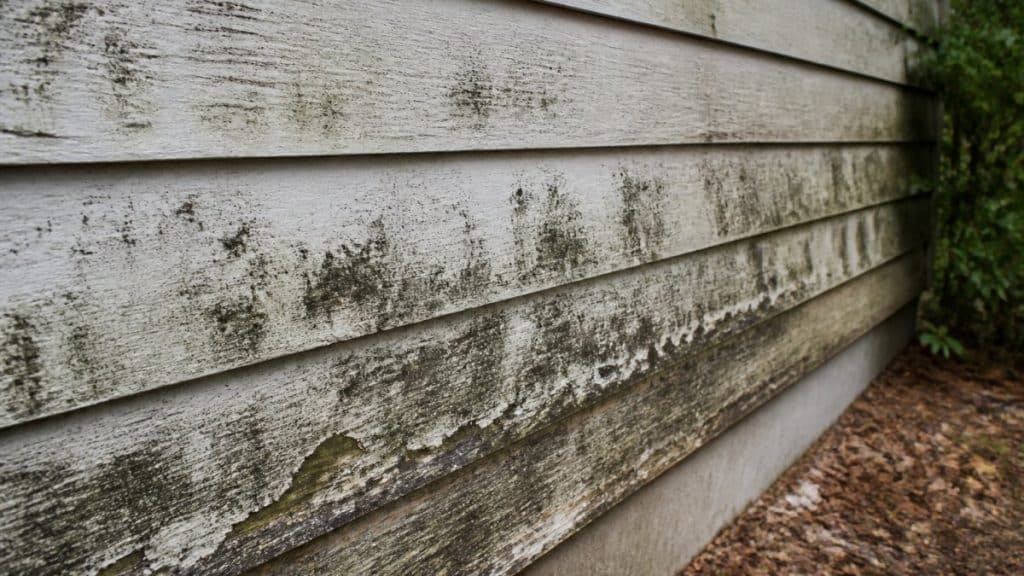
Black mold on wood siding appears as dark patches or streaks, often looking wet or slimy even in dry weather. Check shaded areas near the ground first, where moisture lingers longest.
Mold is darker and thicker than powdery mildew; algae creates a greenish tint. Dirt and weathering stains wash away, but mold returns quickly because it’s alive and feeding on the wood.
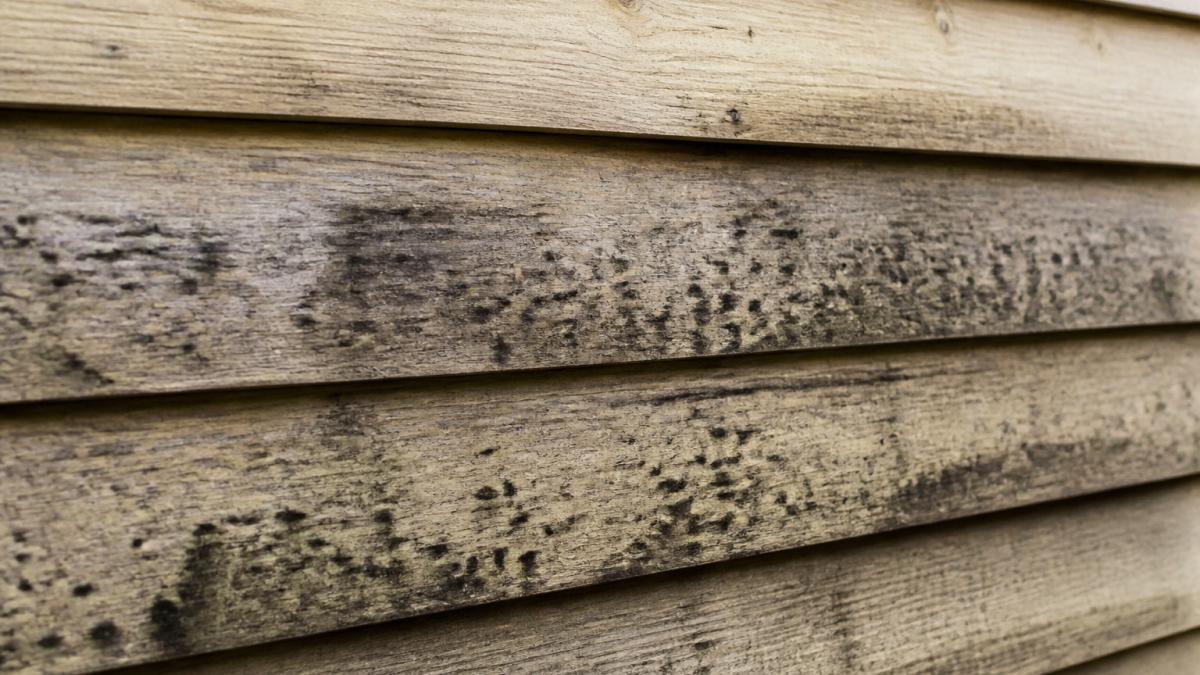
Look for these specific warning signs of mold damage on wood house siding:
- Dark or black patches that feel slimy to the touch
- Staining that spreads over time despite cleaning
- Surface growth clustered in corners or low areas
- Wood that appears darker or discolored than surrounding boards
- Fuzzy or textured growth rather than flat stains
Homeowners often mistake surface discoloration for deeper damage. The real concern is whether mold has penetrated the wood or hides beneath the surface.
Wood Siding Water Damage Signs That Lead to Mold
Water intrusion is the root cause of mold growth on wood siding. When water seeps behind or under the boards, trapped moisture lets spores germinate and spread.
Watch for these water damage indicators:
- Soft or spongy wood when you press on the boards
- Visible water stains or wet areas after rain
- Peeling paint or caulk around windows and doors
- Damaged flashing that allows roof runoff to hit the siding
- Gutters overflowing or pulling away from the house
- Standing water or poor drainage near the foundation
- Wood that feels damp to the touch
Shaded areas and spots near the ground are most vulnerable because they dry slowly. Leaves and debris trap moisture against the wood, and lower sections get constant splash-back from rain and groundwater.
The key difference between surface stains and structural damage is depth. Surface mold grows on top of the wood; hidden mold grows underneath the siding or inside the sheathing, invisible without removing boards.
How to Clean Mold Off Siding and Prevent Recurrence
You can safely remove surface mold yourself: wet the affected areas, gently scrub with a soft brush or cloth, then rinse thoroughly with clean water.
For stubborn growth, mix water with a mild cleaner. Avoid high-pressure washing, which forces water behind the siding; low-pressure methods clean without driving moisture into the wood fibers.
After cleaning, let the siding dry completely. Trim branches that shade the area, clear gutters and downspouts, and direct water at least 6 feet from the foundation.
If mold returns within weeks, water intrusion is likely the cause. Check flashing, caulking, and gutters for leaks, and repair damaged areas. Consider professional inspection if you suspect hidden mold behind the siding.
Regular maintenance prevents most mold problems: clean gutters twice yearly, inspect flashing after storms, trim vegetation, and ensure proper drainage around the foundation.
Frequently Asked Questions
How can you tell mold from dirt or mildew on wood siding?
Mold typically appears as black, dark green, or brown patches with a fuzzy or slimy texture, often in clusters. Dirt is loose surface material that washes away easily. Mildew is usually white or light gray and powdery. Mold on wood siding often grows in shaded areas and near the ground where moisture collects. If you’re unsure, a professional inspection can distinguish surface growth from deeper fungal damage requiring repair or replacement.
What are the signs of mold damage on wood siding?
Look for black patches, dark discoloration, and staining that doesn’t wash away with water. Check for soft or spongy wood, paint peeling or bubbling, and visible wood deterioration. Mold growing under siding may show as bulging boards, warping, or gaps between panels. Moisture stains, water intrusion around flashing, and recurring growth after cleaning are also warning signs. Shaded areas and lower siding sections are most vulnerable.
When should mold on wood siding be inspected by a professional?
Schedule a professional inspection if mold covers a large area, returns quickly after cleaning, or if you suspect mold growing under siding. Call immediately if wood feels soft, shows structural damage, or if water intrusion is visible behind or beneath panels. Professionals can detect hidden mold in exterior sheathing and plywood that poses health or structural risks.
Mold damage on wood house siding can spread quickly once moisture takes hold. Early detection and proper drainage are your best defenses. At Curb Appeal Solutions, we use low-pressure cleaning methods to safely remove mold and kill spores without damaging your home. Our eco-friendly approach protects your family and property while restoring your curb appeal. Get a fast quote today and discover why we’re the #1 rated exterior cleaning service in the Upstate.