Last Updated: November 16, 2026
Quick Summary
To remove algae from siding naturally, mix 1 part white vinegar, 1 part water, and 1 tablespoon of liquid soap per gallon. Spray the stained areas, let it dwell for 10 to 15 minutes, then scrub with a soft brush and rinse with a garden hose.
- Never mix vinegar with bleach, because the combination releases fumes that irritate eyes and lungs.
- Work from the bottom up so drips do not streak clean siding.
- Soak nearby plants before and after spraying, since vinegar can damage grass and shrubs.
- Trim shrubs back from walls, clean gutters, and rinse siding a few times a year to prevent algae.
- Call a pro when stains keep returning or the siding is high up.
Table of Contents
- Mix a Homemade Algae Remover for Siding
- How to Remove Algae From Siding Naturally With Vinegar
- Prevent Algae on Vinyl Siding
- Frequently Asked Questions
Mix a Homemade Algae Remover for Siding
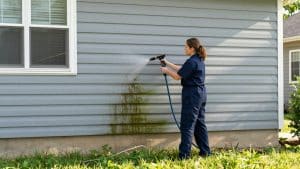
Green stains on siding come from algae that feeds on moisture and organic debris. You can remove algae from siding naturally with a simple mix of vinegar, liquid soap, and water.
Here is the recipe we suggest:
- 1 part white vinegar
- 1 part water
- 1 tablespoon liquid soap per gallon
A soft brush or a pump sprayer works better than a wire brush, which can scratch vinyl.
Watch out: never mix vinegar with bleach. The combination releases fumes that irritate your eyes and lungs (No, vinegar is not always safe).
Before you start, it helps to know what causes green stains on house siding so the growth does not just come back.
How to Remove Algae From Siding Naturally With Vinegar
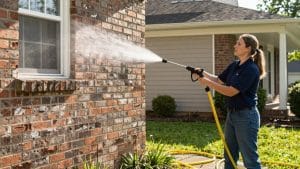
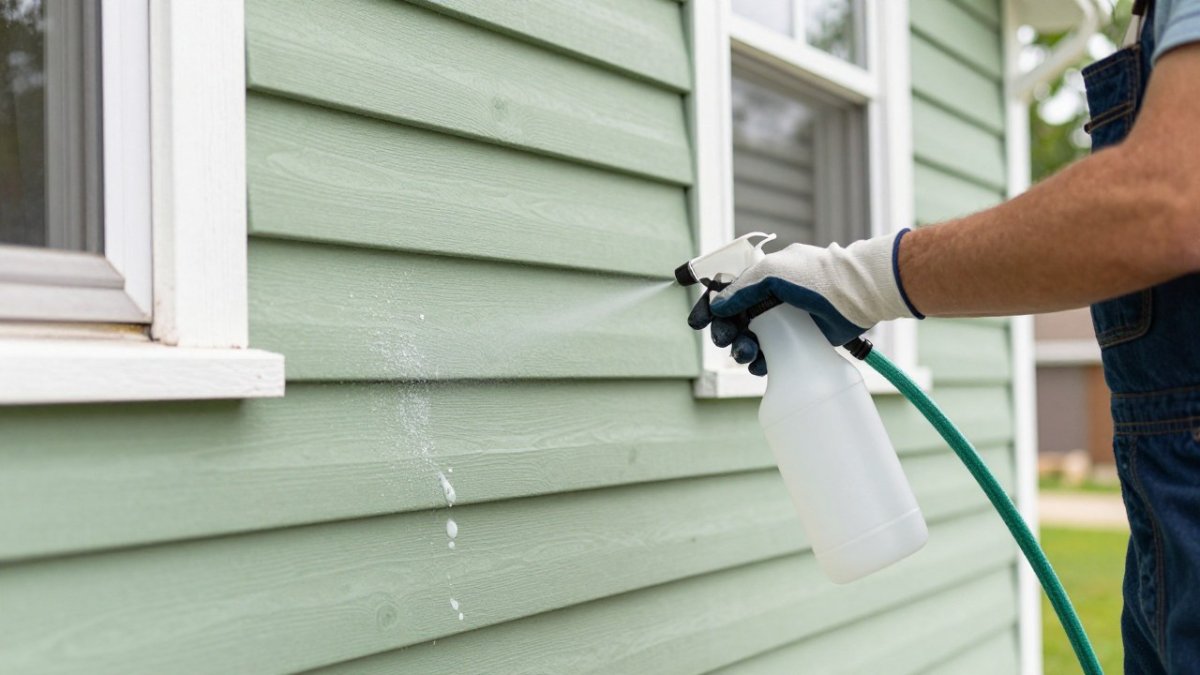
Vinegar can help loosen algae growth without harsh chemicals. Fill a pump spray bottle with the vinegar mix and coat the stained areas. Let it dwell for 10 to 15 minutes, then scrub with a soft brush and rinse with a garden hose.
Work from the bottom up so drips do not streak clean siding. Keep the hose handy, and soak nearby plants before and after you spray.
Vinegar can damage grass and shrubs, so read up on preventing landscape damage during exterior cleaning before you spray near beds. If the growth looks fuzzy or black rather than green, see our guide on removing mold from house siding instead.
Here is the vinegar cleaning process at a glance.
| Step | What to do | Time or frequency |
|---|---|---|
| Apply | Fill pump spray bottle with vinegar mix, coat stained areas | Not stated |
| Dwell | Let the vinegar mix sit on the stains | 10 to 15 minutes |
| Scrub | Scrub with a soft brush | Not stated |
| Rinse | Rinse with a garden hose | Not stated |
| Work direction | Work from the bottom up | Not stated |
| Protect plants | Soak nearby plants before and after spraying | Not stated |
Prevent Algae on Vinyl Siding
Algae returns wherever moisture and shade linger. Trim shrubs back from the walls, clean gutters so water drains away, and rinse the siding a few times a year. For more detail, read our guide on preventing algae growth on exterior surfaces.
When stains keep coming back or the siding is high up, call a pro. Curb Appeal Solutions offers low-pressure washing for exterior cleaning, and every job is backed by a 100% satisfaction guarantee.
Algae on siding is a moisture problem, not just a cosmetic one. If it keeps returning, our team can clean it safely and help you stop it for good. Curb Appeal Solutions offers low-pressure washing and gutter maintenance, so your exterior stays clean without surface damage. Get started with Curb Appeal Solutions and restore your curb appeal today.
Frequently Asked Questions
Does vinegar really remove algae from siding?
Yes. White vinegar’s acetic acid can help loosen algae growth without bleach. Mix equal parts white vinegar and water in a spray bottle, apply to the green stains, let it sit for 10 to 15 minutes, then scrub with a soft brush and rinse with a garden hose. For heavier buildup, add a few drops of liquid soap to help the solution cling to the siding.
What is the best homemade algae remover for siding?
A simple mix of one part white vinegar, one part water, and a squirt of mild liquid soap works well for most green algae on vinyl siding. For tougher stains, some people use oxygen bleach (sodium percarbonate) dissolved in water as a non-chlorine option. Always test any solution on a small hidden area first and rinse thoroughly afterward.
How can I prevent algae on vinyl siding from coming back?
Algae thrives on moisture and shade, so keep gutters clear and direct downspouts away from the house. Trim shrubs and tree limbs back from the siding to increase sunlight and airflow. A yearly wash with a vinegar solution, plus a quick rinse after pollen season, stops buildup before it spreads.