Table of Contents
- Identify Mold, Mildew, and Other Siding Stains
- How to Remove Black Mold From Vinyl Siding
- Best Cleaner for Mold and Mildew on Siding
- Frequently Asked Questions
Last Updated: October 10, 2026
Identify Mold, Mildew, and Other Siding Stains
Learning how to remove mold from house siding starts with identifying what you’re dealing with, as mold, mildew, algae, and dirt stains require different approaches.
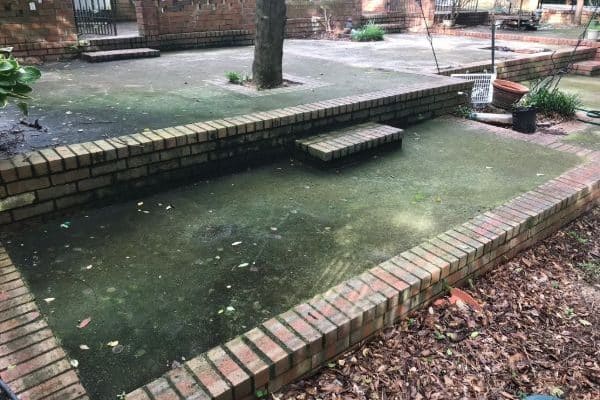
Mold appears black or dark green in damp, shaded areas. Mildew is powdery and gray or white. Algae looks slimy and green, often on the north side where sun is limited. Dirt and red clay stains wash away more easily than biological growth.
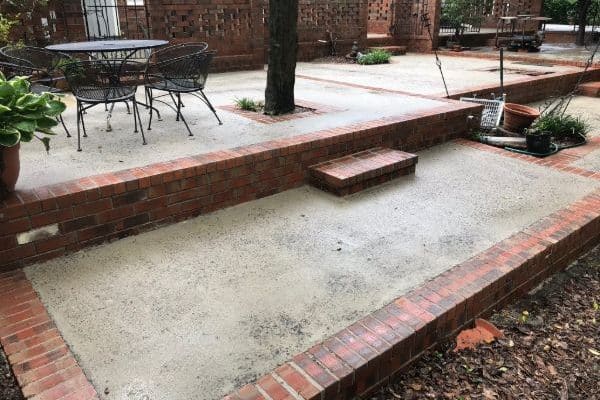
Mold and algae kill the surface they grow on; dirt doesn’t. If discoloration doesn’t wash away with water, you likely have mold or algae.
How to Remove Black Mold From Vinyl Siding
Removing mold from house siding requires the right solution and safety precautions.
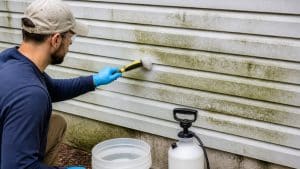
Mix 1 part household bleach to 10 parts water with a small amount of dish soap; never use full-strength bleach as it damages vinyl.
Pour the mixture into a pump sprayer or garden sprayer. Apply it generously to affected areas. Let the solution sit for 10 to 15 minutes. This dwell time allows the bleach to kill mold at the root.
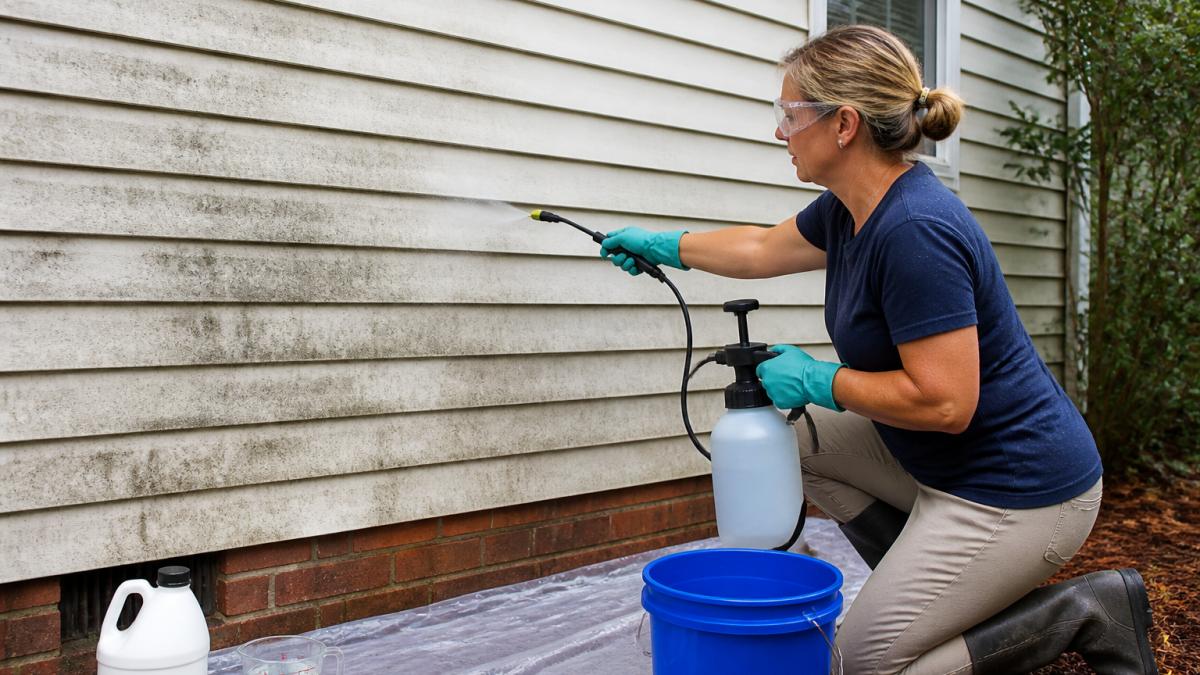
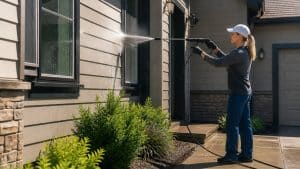
After dwell time, rinse thoroughly with a garden hose. Start from the top and work downward. Scrub stubborn stains gently with a soft brush, never use high pressure, which can force water behind the siding and cause damage.
Best Cleaner for Mold and Mildew on Siding
White vinegar and water offers an eco-friendly alternative to bleach. Mix equal parts vinegar and water in your spray bottle. Vinegar kills mold naturally and won’t harm plants or pets.
Commercial exterior cleaners designed for mold removal work well too. Look for antimicrobial products labeled safe for vinyl siding. Always follow the manufacturer’s instructions for dwell time and dilution.
The best cleaner for your situation depends on severity. Light mildew responds to vinegar. Heavy mold growth needs bleach or commercial antimicrobial treatment. For persistent cases or large areas, professional help prevents mistakes that damage your siding permanently.
Mold on house siding doesn’t have to stay there. Whether you choose bleach, vinegar, or a commercial cleaner, the process is straightforward: identify, spray, wait, scrub gently, and rinse. For stubborn mold that returns quickly or covers large areas, professional help can remove mold safely while protecting your siding’s integrity. The EPA provides guidance on mold cleanup for homeowners. Get a fast quote today and keep your home’s exterior pristine year-round.
Frequently Asked Questions
How can I remove black mold from vinyl siding?
Mix one part bleach with three parts water in a spray bottle or pump sprayer. Apply the solution to affected areas and let it dwell for 10-15 minutes. Scrub gently with a soft-bristled brush to avoid damaging the vinyl, then rinse thoroughly with a garden hose. For stubborn stains, a second application may be needed. Always wear gloves, eye protection, and work on a calm day to avoid spray drift.
What’s the best cleaner for mold and mildew on siding?
Diluted bleach is highly effective for killing mold and mildew on most siding materials. White vinegar and water (1:1 ratio) is a gentler alternative that still removes algae and mildew. Commercial exterior cleaners formulated for mold removal are also available and often include antimicrobial ingredients to prevent regrowth. Test any solution on a hidden area first to ensure it won’t discolor your siding.
How do I prevent mold from growing on house siding?
Reduce moisture by keeping gutters clean and directing water away from your foundation. Trim tree branches to improve air circulation and sunlight exposure, which inhibit mold growth. Apply a preventative antimicrobial treatment after cleaning to slow regrowth. Address any roof leaks or drainage issues promptly, as standing water on or near siding accelerates mold formation.