Last Updated: November 4, 2026
Quick Summary
Most landscape damage during exterior cleaning starts before any water touches the siding, so prepare first. Cover delicate plants, move furniture and pots, clear debris, and pre-water the soil the day before. Then use low-pressure methods and rinse plants with clean water.
- Cover delicate plants and flower beds with plastic sheeting or a breathable tarp.
- Water plants and soil the day before, since moist soil absorbs less runoff.
- Skipping pre-wetting lets cleaning solution soak into dry soil and burn roots.
- Use low-pressure, soft-wash methods on siding and roofs, since high pressure causes most damage.
- Rinse plants and lawn with clean water from the bottom up, then flush walkways.
Table of Contents
- Prepare Your Property Before Cleaning Begins
- Use Eco-Friendly Pressure Washing Techniques on Exterior Surfaces
- How to Rinse Landscaping After Cleaning and Finish Safely
- Frequently Asked Questions
Prepare Your Property Before Cleaning Begins
Most landscape damage happens before the first drop of water hits the siding. Curb Appeal Solutions, a woman and veteran-owned family business serving Greenville, SC, understands where landscape damage tends to start. Walk the property and note every plant, shrub, and garden bed near walls and walkways. Our step-by-step guide to readying your home for pressure washing walks through each preparation task in order.
- Cover delicate plants and flower beds with plastic sheeting or a breathable tarp.
- Move potted plants, furniture, and garden decor away from the work area. Our guide to preparing your home for exterior cleaning services explains what to do before the crew arrives.
- Clear leaves, mulch, and loose debris from walkways and foundation edges.
- Water plants and soil the day before; moist soil absorbs less runoff.
- Turn off sprinklers and close nearby windows and vents.
- Mark spots where soil or roots are shallow, such as young shrubs.
Skipping pre-wetting lets cleaning solution soak into dry soil, burning roots and leaving brown patches.
Use this quick checklist to see which preparation steps protect plants and how often each one matters.
| Step | What to do | Timing |
|---|---|---|
| Cover plants | Use plastic sheeting or a breathable tarp | Before cleaning |
| Move items | Relocate potted plants, furniture, and decor | Before cleaning |
| Clear debris | Remove leaves, mulch, and loose debris | Before cleaning |
| Pre-water | Water plants and soil | Day before |
| Shut systems | Turn off sprinklers and close vents | Before cleaning |
| Mark shallow roots | Flag young shrubs and shallow soil | Before cleaning |
Use Eco-Friendly Pressure Washing Techniques on Exterior Surfaces
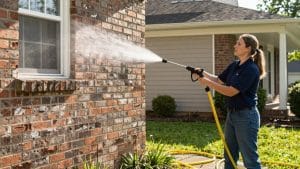
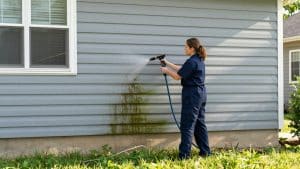
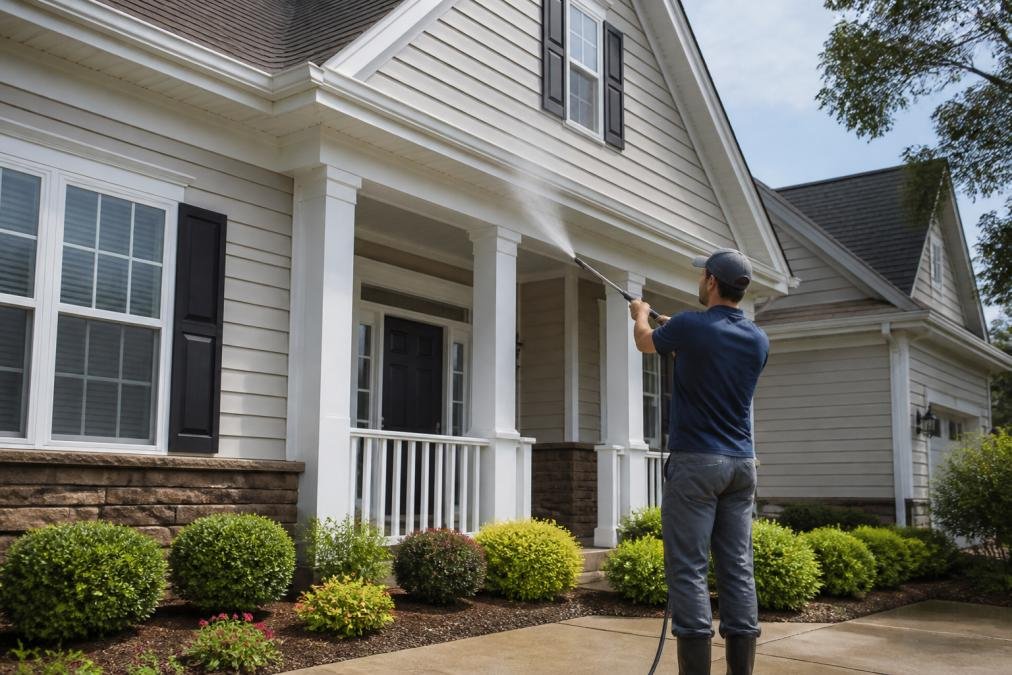
Pressure settings do most of the damage. High pressure can strip paint, etch vinyl, and push water behind siding, so we use low-pressure cleaning on most homes. Keep the nozzle moving and stay several feet back from delicate surfaces. Keeping the spray controlled around siding also means watching where runoff travels, since avoiding landscape damage depends on protecting nearby plants and soil during any exterior work.
- Low-pressure, soft-wash methods on siding and roofs
- Cleaners diluted to label instructions
- Testing a small, hidden area first
- Keeping runoff away from storm drains and garden beds
How to Rinse Landscaping After Cleaning and Finish Safely
Rinsing is where many DIY jobs go wrong: leftover cleaner dries on leaves and soil, harming plants and pets. Rinse plants and lawn with clean water from the bottom up, then flush walkways. Pet owners should check which products are safe around animals before cleaning near a yard where dogs play (Poisonous Household Products). Request a quote from Curb Appeal Solutions to discuss a cleaning and rinse plan for your property.
Frequently Asked Questions
Can professional cleaning services damage my landscaping?
They can if the job is rushed. Plants get hurt by high-pressure spray, chemical runoff that sits on leaves or soil, and cleaners applied in full strength. A careful crew pre-wets plants, covers sensitive growth, dilutes cleaners according to the label, and rinses foliage afterward. Ask any company you hire how they protect plants and what cleaner they use before you agree to the job.
Does pressure washing kill grass and flowers?
Yes, it can. High pressure can strip leaves, bend stems, and wash soil away from roots, while bleach-based cleaners can burn foliage and turf. Low-pressure soft washing with diluted cleaner and thorough rinsing usually avoids that damage. Covering flower beds and wetting plants before cleaning reduces the risk further, and plants that look scorched often recover within weeks if rinsed promptly.
What is the best way to rinse plants after exterior cleaning?
Rinse plants with clean water from a garden hose, starting at the base and working upward so cleaner drains away from the roots. Spray until the leaves no longer feel slick or smell of cleaner, and do not use the pressure washer for this step. Water the soil lightly afterward to dilute any residue that reached the ground.