Table of Contents
- Why Pine Needles Clog Gutters and Damage Drainage
- Gutter Cleaning Tools for Pine Needles: What Works Best
- Step-by-Step Guide to Removing Pine Needles from Gutters
- Best Gutter Guards for Pine Needles and Prevention
Last Updated: August 22, 2026
Why Pine Needles Clog Gutters and Damage Drainage
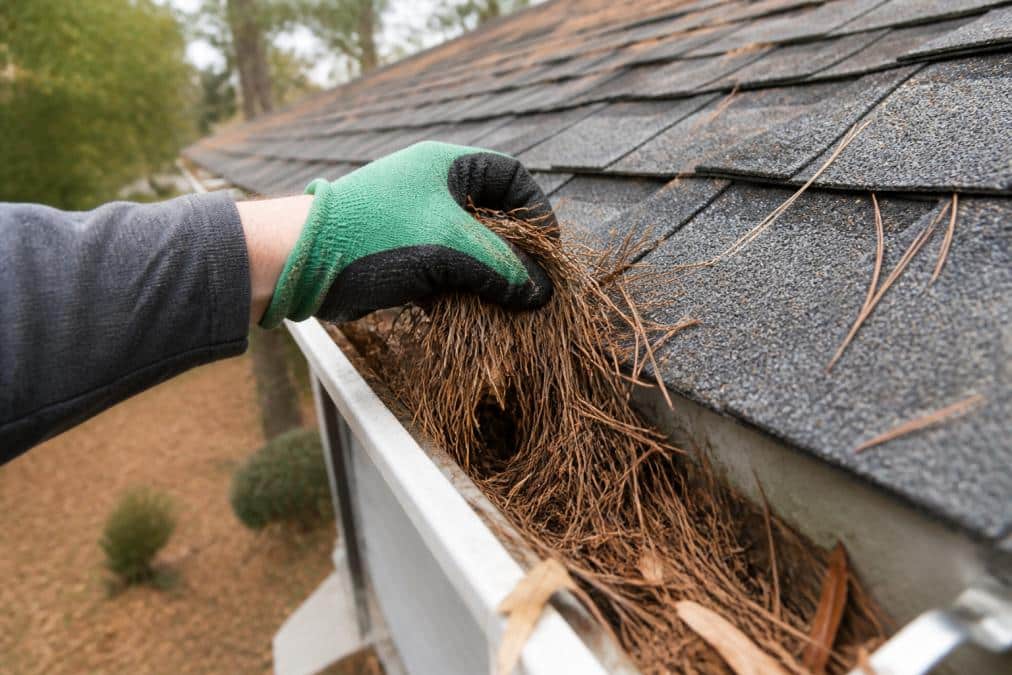
Pine needles accumulate in gutters faster than most debris because their shape and weight keep them intact and tightly packed, restricting water flow. When gutters clog, water backs up and overflows, damaging foundations, siding, and landscaping (fema.gov). Standing water becomes a breeding ground for mold and algae, while the weight of accumulated needles can bend gutters. Pine needles are slightly acidic, accelerating corrosion on metal systems (peer-reviewed research). A single pine tree sheds thousands of needles during seasonal shedding, making frequent gutter maintenance critical for properties with pine trees (usda.gov).
Gutter Cleaning Tools for Pine Needles: What Works Best
Standard gutter scoops work for light debris, but dense needle buildup requires more aggressive equipment. Leaf blowers with gutter attachments dislodge needles effectively, while gutter vacuum systems on extension poles save time and reduce ladder climbing. Gutter brushes work best as preventative tools, and low-pressure washers can flush stubborn debris with care to avoid damage.
| Tool | Best For | Pros | Cons |
|---|---|---|---|
| Gutter scoop | Light to moderate debris | Low cost, manual control | Slow for heavy buildup |
| Leaf blower attachment | Dry needles | Fast, covers large areas | Blows debris around yard |
| Gutter vacuum | High-reach areas | Reaches without ladder | Higher equipment cost |
| Gutter brush | Preventative maintenance | Durable, reusable | Not effective on dense clogs |
| Low-pressure washer | Stubborn buildup | Thorough cleaning | Risk of gutter damage |
The most practical approach combines tools: use a scoop or blower for initial removal, then finish with a brush or low-pressure rinse.
Step-by-Step Guide to Removing Pine Needles from Gutters
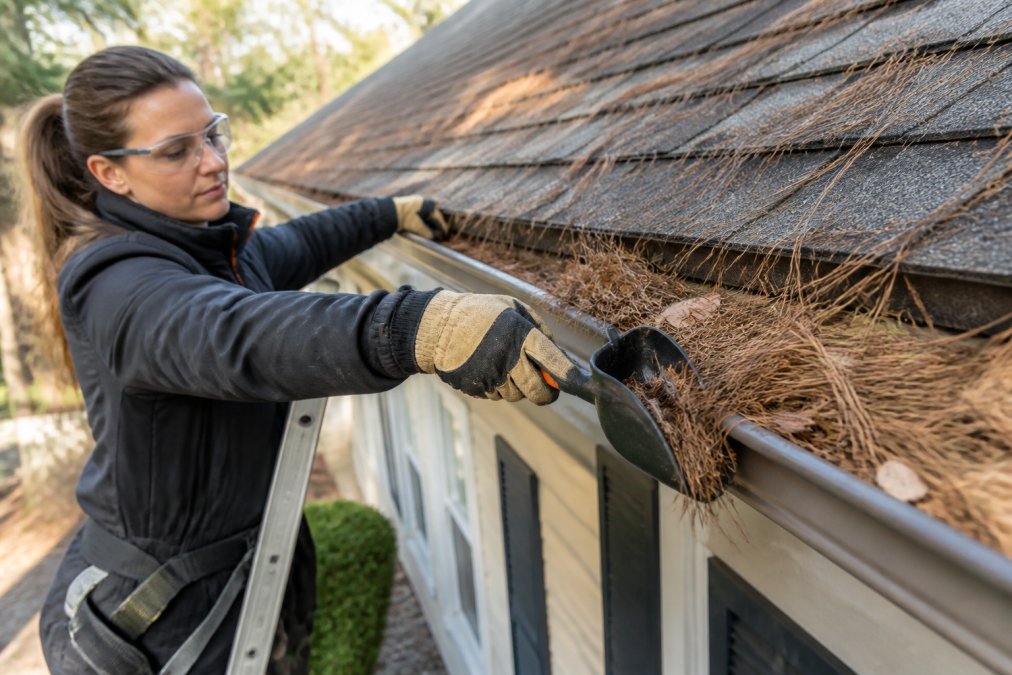
Gather a sturdy ladder, work gloves, gutter scoop, bucket, and safety glasses. Position your ladder on level ground with a spotter present. Never lean too far; reposition the ladder instead.
Step 1: Remove Bulk Debris (10-15 minutes)
Scoop out accumulated pine needles using your gutter scoop, working toward the downspout. Deposit debris into your bucket and remove needles manually to prevent downspout blockages. fix standing water.
Step 2: Clear the Downspout (5-10 minutes)
Check that water flows freely. Use a plumbing snake or pressure washer if the downspout is blocked.
Step 3: Flush Remaining Debris (5-10 minutes)
Use a garden hose to flush remaining particles toward the downspout.
Step 4: Inspect for Damage (5 minutes)
Look for dents, rust spots, or seam separation and document any damage for repair.
Total time: 25-40 minutes per section. Safety matters more than speed.
Best Gutter Guards for Pine Needles and Prevention
Installing a gutter guard system prevents pine needles from entering gutters. Mesh screens with small openings block needles while allowing water through, making them ideal for pine-heavy properties. Solid covers with curved designs direct debris off the roof while water flows into the gutter channel. Brush-style guards use bristles to create a barrier that needles can’t penetrate and require minimal maintenance, though they may trap finer debris on top.
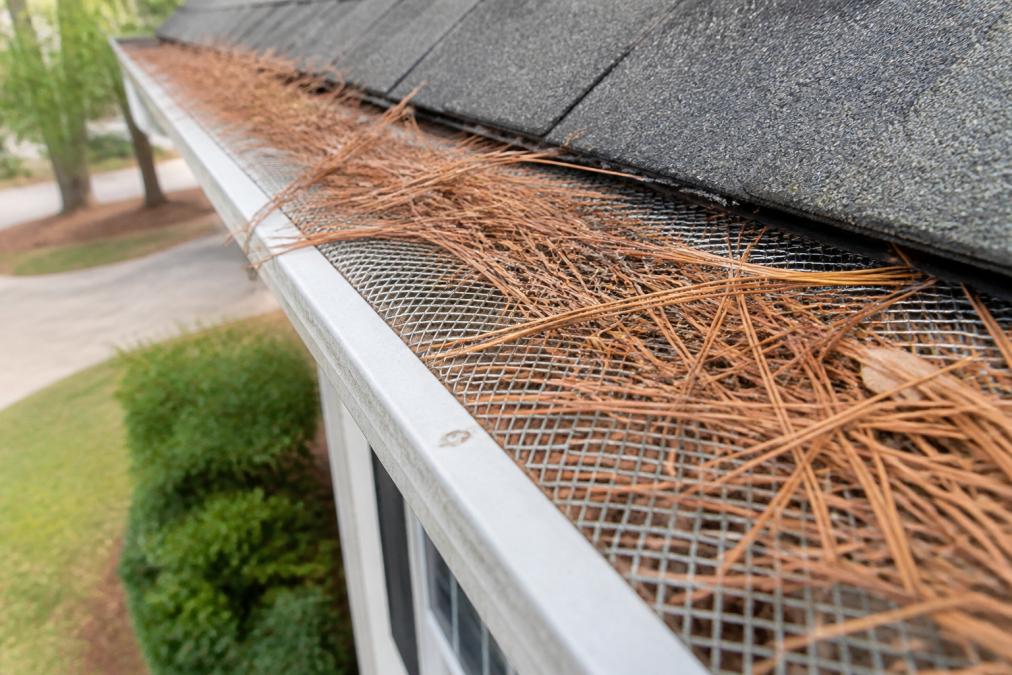
Curb Appeal Solutions offers the RainDrop gutter guard system, which combines mesh protection with a design that sheds pine needles while maintaining water flow. When selecting gutter guards, consider your roof slope, climate, and tree coverage. A professional assessment helps determine whether mesh, solid covers, or brush systems best suit your property’s needs.
Preventing pine needle clogs starts with understanding your gutter system’s vulnerability to seasonal debris. Curb Appeal Solutions specializes in gutter cleaning and protection system installation using low-pressure methods that preserve your home’s exterior. Our team assesses your gutter condition, recommends the right guard system, and handles seasonal maintenance. Get a fast quote today and protect your home from water damage caused by clogged drainage.
Frequently Asked Questions
What is the best way to remove pine needles from gutters?
Manual removal using a gutter scoop or small shovel is most effective for heavy pine needle accumulation. Wear gloves and use a stable ladder with a spotter for safety. After hand removal, flush the gutter with a garden hose to clear remaining debris and check for downspout blockage. For hard-to-reach areas or extensive buildup, a high-reach vacuum or leaf blower attachment can help. Always inspect the gutter slope to ensure water flows toward downspouts.
How often should you clean gutters if you have pine trees?
Homes with pine trees typically need gutter cleaning every 2-3 months during heavy shedding seasons (spring and fall), and at least twice yearly otherwise. Pine needle accumulation happens faster than leaf debris due to their size and tendency to pack tightly. Consider more frequent cleaning if you have multiple large pine trees nearby or live in an area with significant seasonal shedding. Installing gutter guards designed for pine needles can reduce cleaning frequency.
Are pine needles more damaging to gutters than leaves?
Yes, pine needles create unique challenges. Their acidity can corrode certain gutter materials over time, and their shape allows them to pack densely, creating stubborn clogs that restrict water flow and cause downspout blockage. Unlike leaves that break down relatively quickly, pine needles remain intact longer, maintaining structural integrity that keeps debris wedged in gutters. This prolonged blockage increases the risk of water damage to fascia boards, siding, and foundation areas. Regular cleaning and prevention are essential to protect gutter integrity.
This article was written using GrandRanker