Table of Contents
- Quick Comparison: Professional Roof Cleaning vs DIY Cleaning
- Is Soft Washing Safe for Roof Shingles?
- Dangers of DIY Roof Pressure Washing and Warranty Requirements
- Cost Comparison: DIY vs Professional
- Safety Risks of DIY Roof Maintenance
- When to Hire a Professional
- Post-Cleaning Maintenance and Roof Longevity
- Regional Climate and Insurance Considerations
- Frequently Asked Questions
Last Updated: September 24, 2026
Quick Comparison: Professional Roof Cleaning vs DIY Cleaning
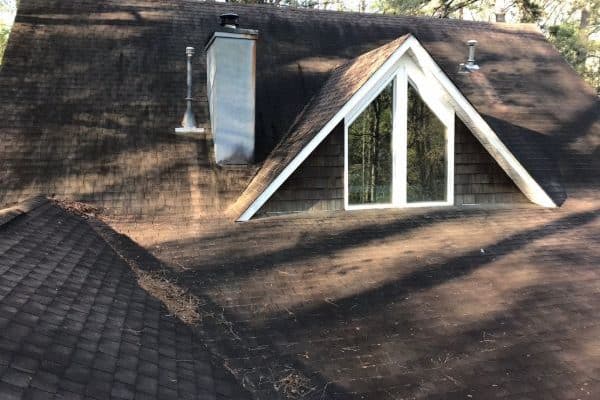
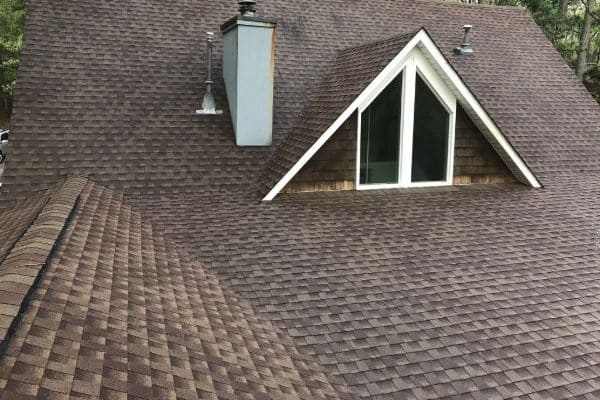
Professional roof cleaning vs DIY comes down to risk, cost, and how long results last: soft washing protects shingles for years, while DIY pressure washing strips granules and can void your warranty.
| Factor | Professional Cleaning | DIY Cleaning |
|---|---|---|
| Shingle safety | Low-pressure soft wash | High risk of granule loss |
| Warranty impact | Usually protected | Often voided |
| Safety risk | Minimal | Falls, chemical burns |
| Results duration | Years | Months |
| Upfront cost | Higher | Lower |
Best for professional service: roofs with algae, moss, or black streaks. Best for DIY: a small, lightly stained area on a low, easily reached roof.
Is Soft Washing Safe for Roof Shingles?
Yes. Soft washing is safe for asphalt shingles because it relies on low pressure and a cleaning solution rather than force. The Asphalt Roofing Manufacturers Association guidance on roof cleaning supports gentle, chemical-based methods over pressure washing for asphalt shingles.
It kills algae and moss at the root and avoids stripping the granules that shield your roof from sun and rain.
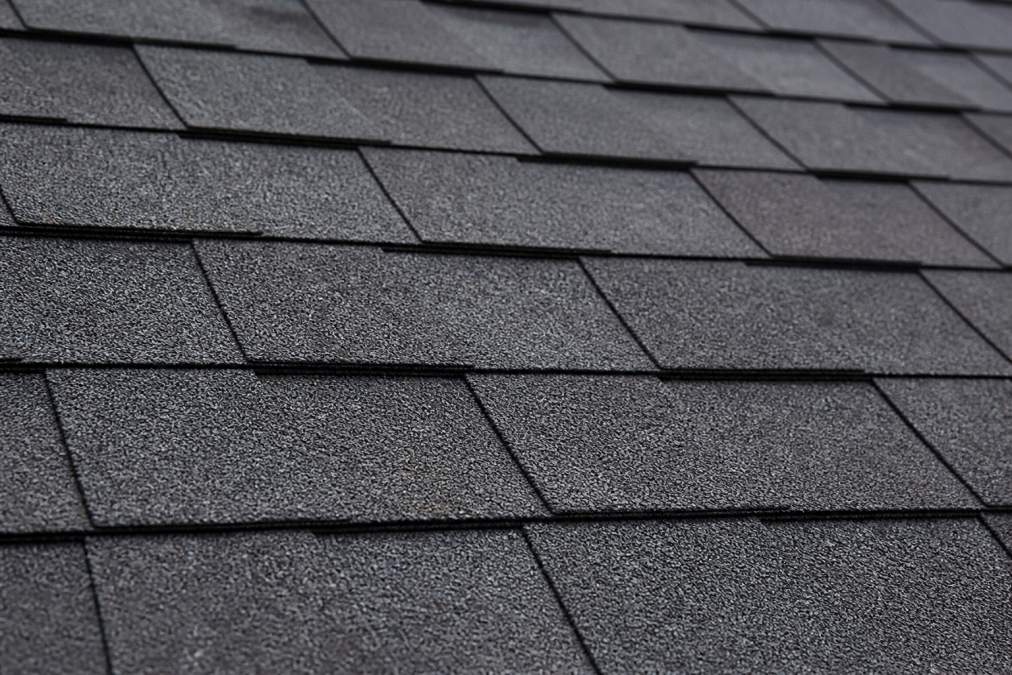
Tile and metal roofs also hold up well to soft washing.
Ask any roof cleaner to confirm they use low pressure and a biodegradable solution, not a pressure washer. If they can’t answer clearly, that’s your sign to keep looking.
Dangers of DIY Roof Pressure Washing and Warranty Requirements
DIY roof pressure washing is the fastest way to damage shingles and void your warranty. The Federal Trade Commission guidance on warranties notes that damage from improper maintenance can affect your coverage, and most shingle manufacturers require specific cleaning methods to keep a warranty valid.
A pressure washer strips protective granules off asphalt shingles, aging them toward premature replacement, and blasting moss without killing it just brings it back.
Check your warranty paperwork before renting a machine, if unsure, hire a professional.
Pressure washing a shingled roof can strip granules and leave the surface exposed to UV damage. That mistake can shorten your roof’s life by years and cost far more than a professional cleaning.
Cost Comparison: DIY vs Professional
The real cost of DIY isn’t just equipment rental, it’s your time, safety risk, and chance of a repair bill. Professional pricing varies by roof size, pitch, and growth, so ask for a specific quote.
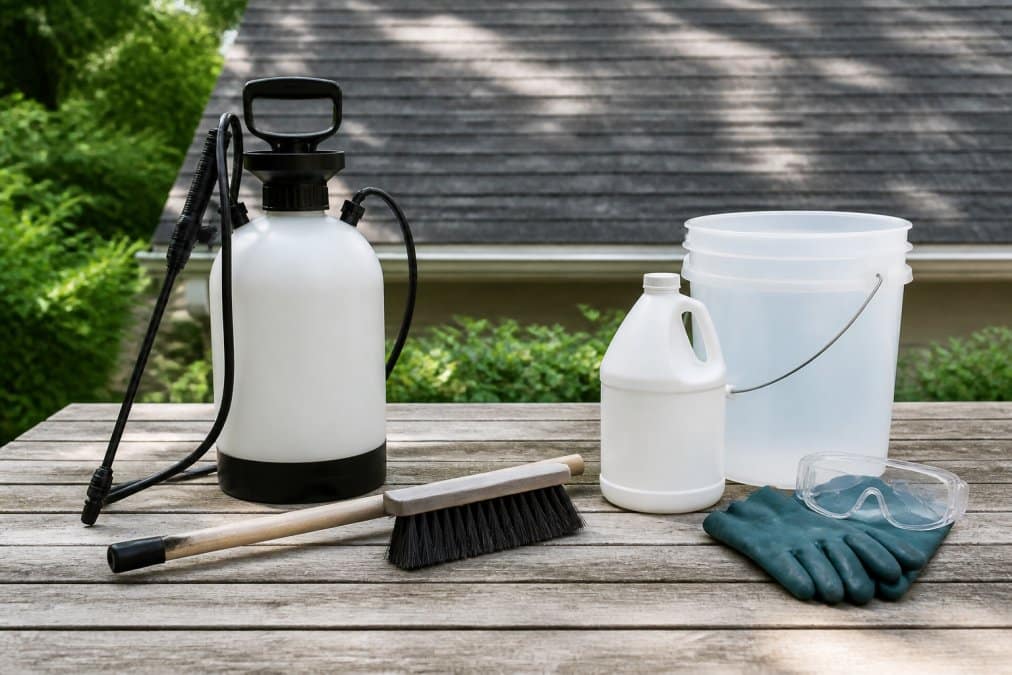
DIY looks cheaper until you add a ladder, pressure washer rental, chemicals, protective gear, and a weekend on a steep roof.
A cost-benefit analysis usually favors professional cleaning once you factor in roof longevity and warranty protection. The Occupational Safety and Health Administration guidance on ladder safety exists for a reason: falls from roofs and ladders send thousands of homeowners to the hospital every year.
| Cost Factor | Professional | DIY |
|---|---|---|
| Equipment | Included | Rental or purchase |
| Time | A few hours | A full weekend |
| Safety risk | Low | High |
| Warranty protection | Maintained | At risk |
| Repair risk | Covered by guarantee | On you |
Safety Risks of DIY Roof Maintenance
Ladder safety and roof access cause the most DIY injuries: wet shingles, steep pitches, and slippery moss turn a simple job into a serious fall risk.
DIY roof cleaners often contain bleach or strong fungicides that burn skin and eyes and kill plants below if runoff is uncontrolled.
A professional crew controls runoff and rinses surrounding landscaping.
When to Hire a Professional
Hire a professional when your roof shows algae streaks, moss, or lichen, when it’s steep or high, or when you’re unsure about your warranty.
Signs it’s time to call someone: spreading black streaks or green moss, a roof steeper than you’re comfortable walking, any roof over one story, or a warranty you don’t want to jeopardize.
For sellers, black streaks drag down first impressions and property value; professional cleaning restores the look without a DIY mishap before a showing.
When comparing quotes, focus on method, not just price: ask whether they soft wash, what solution they use, and whether they’re insured.
Post-Cleaning Maintenance and Roof Longevity
A professional cleaning done right buys you years, not weeks: killing algae and moss at the root slows regrowth far more than surface blasting.
A simple maintenance schedule keeps your roof in shape: inspect each spring and fall, clear gutters, trim overhanging branches, and re-treat problem areas every few years.
Roof longevity depends on protecting shingle granules and keeping moisture off the surface. Soft washing supports both; pressure washing undermines both.
The method matters more than the frequency. A gentle soft wash every few years protects your roof longer than aggressive pressure washing done more often.
Regional Climate and Insurance Considerations
Climate shapes how fast algae and moss grow: humid, shaded, rainy conditions speed growth, while sunnier, drier areas slow it.
Frequently Asked Questions
Can DIY roof cleaning void my manufacturer’s warranty?
Yes. Most asphalt shingle manufacturers require specific maintenance methods to keep warranties valid, and pressure washing or harsh chemicals can strip protective granules. This physical damage often voids coverage for granule loss, algae resistance, or premature failure. Always check your shingle warranty requirements before cleaning, and use low-pressure soft washing to stay compliant.
How much does professional roof cleaning cost compared to DIY supplies?
Pricing depends on roof size, pitch, and contamination level. Professional services include labor, insurance, and specialized equipment, with quotes tailored to your property. Request a fast quote to see exact pricing for your home.
Is it safe to walk on my roof to clean it?
Walking on a roof is risky. Falls are a leading cause of home injury deaths, and roofs become slippery when wet or covered in algae. Professional technicians use safety harnesses, ladder stabilizers, and fall protection. For your safety, avoid DIY roof walking and hire a certified crew for any cleaning that requires roof access.