Table of Contents
- Is Pressure Washing Soap Toxic to Dogs?
- Is Pressure Washer Soap Safe for Pets?
- Dog Licked Cleaning Solution? What to Do
- Frequently Asked Questions
Last Updated: October 14, 2026
Is Pressure Washing Soap Toxic to Dogs?
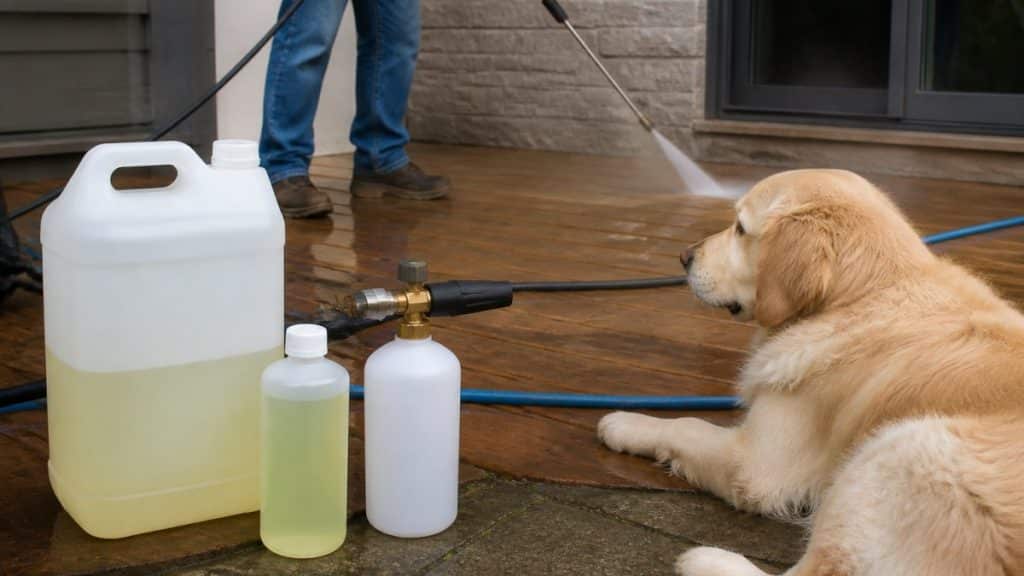
Sometimes. Whether pressure washing soap is toxic to dogs depends on the product, dose, and exposure route. At Curb Appeal Solutions, Greenville homeowners ask us this almost weekly: most exterior cleaning solutions aren’t meant to be ingested, inhaled, or left on skin, so treat wet surfaces as off-limits until dry.
What Makes Pressure Washing Soap Risky?
Pressure washing soap is a detergent built to break down dirt, mold, and stains on hard outdoor surfaces. Most formulas rely on surfactants, plus bleach, chlorine, or ammonia in stronger mixes, ingredients that can irritate a dog’s skin, eyes, nose, and stomach. Risk climbs with concentration.
The Three Main Exposure Routes
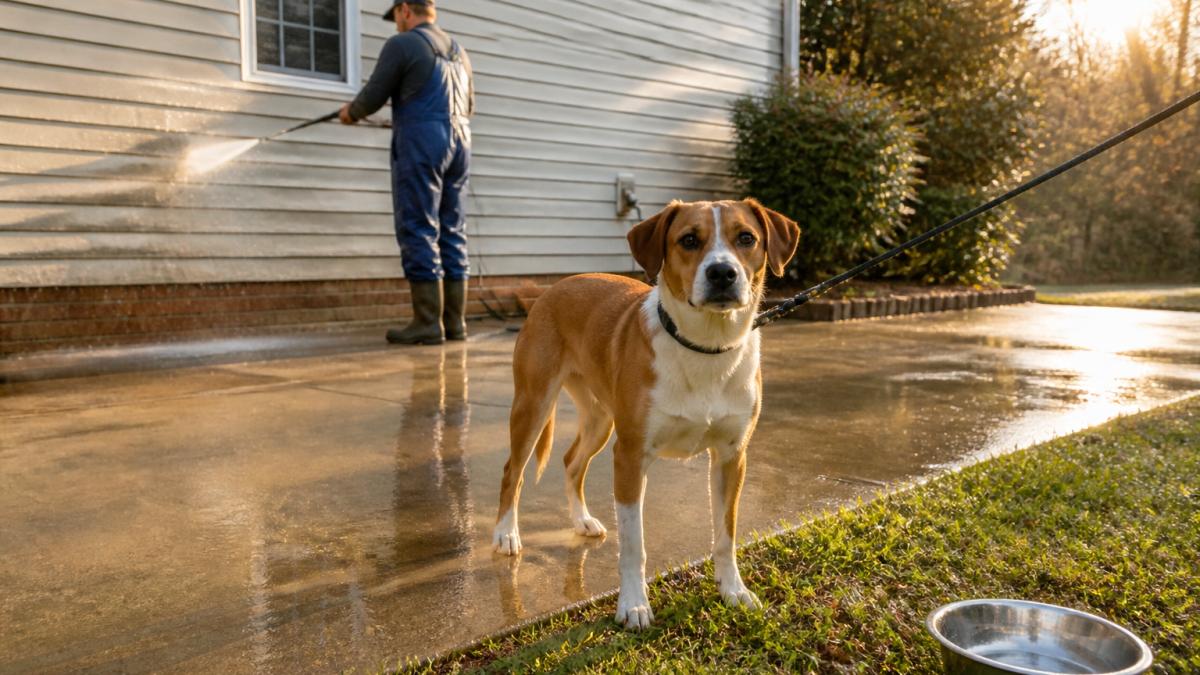
Dogs get exposed three ways: ingestion (licking paws, drinking puddles, chewing wet grass), skin and eye contact (walking or lying on treated concrete), and inhalation (fumes or drifting spray).
Why Dilution Changes Everything
A diluted mix sprayed and rinsed is far less risky than concentrate spilled on the ground.
Never let a dog walk through a puddle of undiluted concentrate. Even a small amount can cause vomiting or mouth irritation, and the dog will likely lick its paws afterward.
Is Pressure Washer Soap Safe for Pets?
Pressure washer soap is safe for pets only after the surface is rinsed and fully dried, nothing is pet-safe while wet.
Signs Your Dog Was Exposed
Watch for drooling, pawing at the mouth, vomiting, red or watery eyes, sneezing, trouble breathing, and itchy skin.
Safe vs. Unsafe Products at a Glance
| Product Type | Main Risk | Pet Concern Level |
|---|---|---|
| Plain water rinse | None | Safe |
| Mild soap, diluted | Mild irritation | Low once dry |
| Bleach-based cleaner | Burns, fumes | High |
How Long to Keep Dogs Off Treated Surfaces
Keep dogs off treated surfaces until completely dry: two to four hours on a warm, sunny day, or most of the day in shade or humidity. Rinse with plain water first if you can, then wait, when in doubt, wait longer.
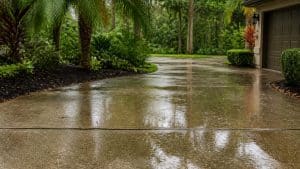
Walk the perimeter and check for damp spots before letting your dog back out, puddles gather in low corners and along the garage edge, and those are the spots dogs find first.
Dog Licked Cleaning Solution? What to Do
If your dog licked cleaning solution, act fast and stay calm. Most mild soap exposure causes only mild stomach upset, but stronger cleaners need immediate attention.
Step-by-Step First Aid
- Move your dog away from the area.
- Rinse the mouth with plain water if the product touched the tongue or gums.
- Wipe paws and coat with a wet cloth if they were on treated ground.
- Check the label for first aid instructions.
- Call your veterinarian or a pet poison hotline.
The ASPCA Animal Poison Control Center is a trusted resource for pet exposure questions, and the EPA’s Safer Choice program helps you spot products made with safer ingredients. For product-specific safety details, always check the product safety data sheet guidance from OSHA.
Reading the Product Label
The label tells you more than any blog can. Look for signal words like “caution,” “warning,” or “danger,” first aid instructions, dilution requirements, and pet or wildlife warnings.
Reducing Risk on Your Property
Keep pets inside during and after exterior cleaning, store concentrates in sealed, locked containers, rinse treated areas with plain water once done, and never leave buckets or sprayers within a dog’s reach. Our team uses low-pressure cleaning methods and eco-friendly products, and we walk homeowners through re-entry timing before we pack up. With over 1,700 five-star reviews, we’ve learned that clear communication about pets and kids matters as much as the clean itself.
Frequently Asked Questions
Is pressure washing soap toxic to dogs?
Pressure washing soap can be toxic to dogs depending on its ingredients and concentration. Many detergents contain surfactants, bleach, or ammonia that cause gastrointestinal upset, skin irritation, or respiratory problems if ingested or inhaled. Always check the product label and safety data sheet. If you use a professional service, ask what they apply and whether it is pet-safe. Keeping dogs away during and after cleaning is the simplest way to prevent exposure.
What should I do if my dog licks pressure washing soap?
If your dog licks pressure washing soap, immediately rinse its mouth with fresh water and offer water to drink. Do not induce vomiting unless a veterinarian instructs you. Call your vet or a pet poison control hotline right away. Watch for vomiting, drooling, or lethargy. Bring the product label or safety data sheet so the vet knows exactly what was ingested. Quick action reduces the risk of serious harm.
How long should dogs stay off a surface after pressure washing?
Keep dogs off treated surfaces until they are completely dry, with the duration depending on weather and product. Even after drying, some residues can remain. Rinse the area with plain water if your dog is likely to lick or chew the surface. For professional services, ask the provider for specific re-entry guidance. When in doubt, wait longer and provide a safe, untreated area for your pet.
Cleaning your driveway, siding, or roof should not put your dog at risk. The safest approach is to let a team that understands both the products and the timing handle the job. Curb Appeal Solutions offers low-pressure washing, eco-friendly cleaning methods, and a 100% satisfaction guarantee, so your home looks its best and your pets stay protected. Get started with Curb Appeal Solutions and get a fast quote for a safer, cleaner exterior.