Last Updated: November 7, 2026
Quick Summary
Yes, is pressure washing safe for old concrete depends on surface condition rather than age: sound, fully cured concrete can be washed at moderate pressure with a fan tip, but weathered, cracked, or scaling concrete is risky at full force. Test a hidden patch first and use the lowest pressure setting.
- Test a patch 12-18 inches away with the lowest pressure and a wide fan tip before washing.
- Never use a zero-degree nozzle, which cuts the concrete cream layer instead of cleaning it.
- Scaling, spalling, or exposed-aggregate surfaces need low pressure only or no pressure washer at all.
- Avoid pressure washing cracked or pitted concrete; use a garden hose and detergent instead.
- A dull thud from a screwdriver tap or paste you can scrape with a fingernail means no pressure washer.
Table of Contents
- Is Pressure Washing Safe for Old Concrete?
- Pressure Washing Concrete Safely: A Test-Wash Procedure
- Pressure Washing an Old Concrete Driveway: Matching PSI to Condition
- How Do You Know If Old Concrete Is Too Weak to Wash?
- What Causes Pressure Washer Damage on Concrete?
- When Should You Call a Professional Instead?
- Frequently Asked Questions
Is Pressure Washing Safe for Old Concrete?
Yes, with conditions: the question of is pressure washing safe for old concrete comes down to whether the surface is sound and pressure matches its condition, but it is risky on weathered, cracked, or scaling concrete at full force. Surface condition, not age, decides.
Pressure Washing Concrete Safely: A Test-Wash Procedure
Clear debris, check for cracks and loose aggregate, fit a wide fan tip (never zero-degree), set the lowest pressure, test a patch 12-18 inches away, keep the wand moving, then rinse, dry, and inspect for color change or grain loss.
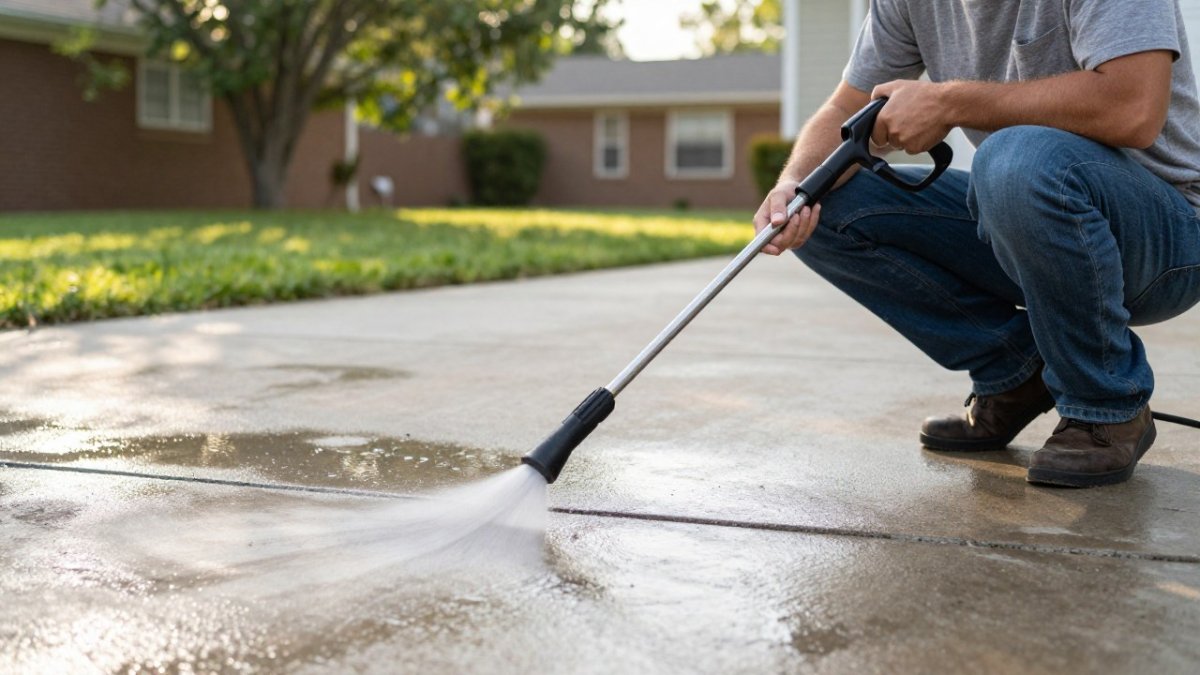
Detergent dwell time matters as much as pressure, let a concrete-safe solution sit per the label, then rinse. For product picks, see our guide on the best pressure washing detergents for concrete surfaces. If mold is the main problem, a gentler approach often beats force; see removing mold from a concrete driveway naturally.
Pressure Washing an Old Concrete Driveway: Matching PSI to Condition
Match PSI to the slab, not the stain: a sound, cured driveway takes a moderate wash with a fan tip, while weathered, scaling, or exposed-aggregate surfaces need the lowest setting or no pressure washer at all.
| Concrete Condition | What You See | Suggested PSI Range | Tip and Technique |
|---|---|---|---|
| Sound, fully cured | Even color, tight surface, no cracks | Moderate | 25-degree fan tip, steady passes |
| Scaling or spalling | Flaking top layer, rough patches | Low only | 40-degree tip, test first |
| Cracked or pitted | Visible cracks, craters, loose bits | Avoid pressure washing | Use a garden hose and detergent |
Concrete cream is the cement-rich top layer; scaling is that layer flaking off; spalling is chunks breaking away; etching is the dull, scratched look left when a jet strips the paste. Dirt lifts and rinses away; damage leaves a permanent change in texture or color, if a patch looks lighter and rougher after drying, stop and reassess. For scheduling, see how often to pressure wash your driveway.
How Do You Know If Old Concrete Is Too Weak to Wash?
Old concrete is too weak to wash when the top layer flakes, crumbles, or sounds hollow underfoot, a dull thud from a screwdriver tap or paste you can scrape with a fingernail means no pressure washer.
- Tap the surface in several spots and listen for hollow or dull sounds.
- Press a fingernail into the paste; if it crumbles, the surface is soft.
- Look for scaling, spalling, or exposed aggregate.
- Check for cracks wider than a hairline.
- Note any prior patching or resurfacing.
- Test a hidden patch with a garden hose before any machine.
Curing is the other half: fresh concrete needs time to reach full strength, and the American Concrete Institute advises letting new slabs cure properly before cleaning. If a slab fails the check, pressure washing is off the table, call a professional for assessment.
What Causes Pressure Washer Damage on Concrete?
Damage comes from too much pressure, too narrow a tip, and too little distance; all three together strip the cream layer in seconds. The zero-degree nozzle is the biggest offender, it cuts rather than cleans, while a fan tip spreads the water and pulling the wand back reduces impact.
How Do You Fix Pressure Washer Damage on Concrete?
Minor etching often fades as the surface weathers; deeper damage may need a concrete resurfacer, and structural cracks need separate assessment.
When Should You Call a Professional Instead?
Call a professional when the slab is scaling, spalling, cracked, or covered in exposed aggregate, those need low-pressure methods, the right detergent, and a careful hand. Low-pressure washing is a method Curb Appeal Solutions uses for exterior cleaning. For keeping results longer, read maintaining concrete driveways in humid climates.
Old concrete does not have to be a gamble. Get the condition check right, test a small patch, and match your pressure to the slab.
Get started with Curb Appeal Solutions and restore your driveway, porch, and siding without risking the surface underneath. Request a fast quote and we will assess the concrete before anything touches it.
Frequently Asked Questions
How old should concrete be before pressure washing?
New concrete needs to cure before any water pressure touches it. Most contractors wait at least 28 days, and some recommend 30 days, before cleaning fresh concrete. Pressure washing too early can pull up the cement paste at the surface and leave a permanently rough, pitted finish. If you are unsure when a slab was poured, treat it as fresh and wait, or test a small hidden patch first. Fully cured concrete that is years old behaves very differently from a recent pour.
Will pressure washing damage old concrete?
It can, depending on pressure, nozzle, and surface condition. Old concrete that has scaling, spalling, cracks, or a worn top layer is vulnerable. High PSI paired with a zero-degree nozzle held close to the surface can etch lines, pit the finish, and strip the cream layer to expose aggregate. The safe approach is pressure washing old concrete at lower PSI with a wide fan tip, keeping the wand moving and testing a small area before committing to the whole slab.
How do you fix concrete damaged by a pressure washer?
Light etching and wand marks often fade on their own as the concrete weathers, but deeper damage needs repair. For cosmetic scarring, a concrete resurfacer for damaged concrete can be troweled or rolled over the affected area to restore a uniform finish. Structural damage such as deep spalling or widening cracks should be assessed before any resurfacing. Fix the cause first, which usually means switching to lower pressure and a wider nozzle, then repair the surface.