Table of Contents
- What You’ll Need: Safety Gear and Cleaning Supplies
- Soft Wash vs Pressure Wash: Choosing the Right Method
- Step-by-Step Process to Remove Mold from Brick
- Frequently Asked Questions
Last Updated: September 26, 2026
What You’ll Need: Safety Gear and Cleaning Supplies
Removing mold from brick requires proper protection and the right supplies.
Personal Protective Equipment:
- Safety goggles to protect eyes from spray and debris
- Nitrile gloves (thick, durable type)
- N95 or P100 respirator mask to avoid breathing mold spores (the CDC)
- Long sleeves and pants to cover skin
- Closed-toe shoes with good grip
Cleaning Supplies:
- Stiff-bristled brush for scrubbing
- Bucket or sprayer for applying solution
- Squeegee or broom for rinsing
- Towels for drying
Choose a cleaning solution: natural options like vinegar and baking soda, or chemical cleaners like diluted bleach or trisodium phosphate, depending on mold severity and your comfort level.
Mold spores can cause respiratory issues if inhaled (the EPA). Never skip the respirator mask when dealing with visible mold growth on masonry surfaces.
Soft Wash vs Pressure Wash: Choosing the Right Method
Soft wash and pressure wash produce different results for brick mold removal.
Soft Wash (Low-Pressure Cleaning):
Soft wash uses low pressure with specialized cleaning solutions to kill mold at the source while protecting brick and mortar joints.
Pressure Wash (High-Pressure Cleaning):
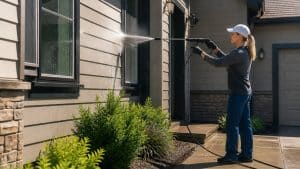
Pressure wash removes surface growth quickly but can damage brick porosity, strip coatings, and force water into mortar joints.
For mold removal, soft wash is safer because mold lives below the surface on porous brick and requires solution penetration to eliminate it, while pressure can damage the brick’s protective layer.
At Curb Appeal Solutions, we use low-pressure methods to remove mold effectively while preserving masonry and extending results.
Homeowners with older brick or mortar that needs protection should choose soft wash methods to prevent surface damage and water infiltration.
Step-by-Step Process to Remove Mold from Brick
Follow this process to safely remove mold from brick walls.
Step 1: Prepare the Area
Clear the space and wet down surrounding plants to protect them from cleaning solution runoff.
Step 2: Apply Cleaning Solution
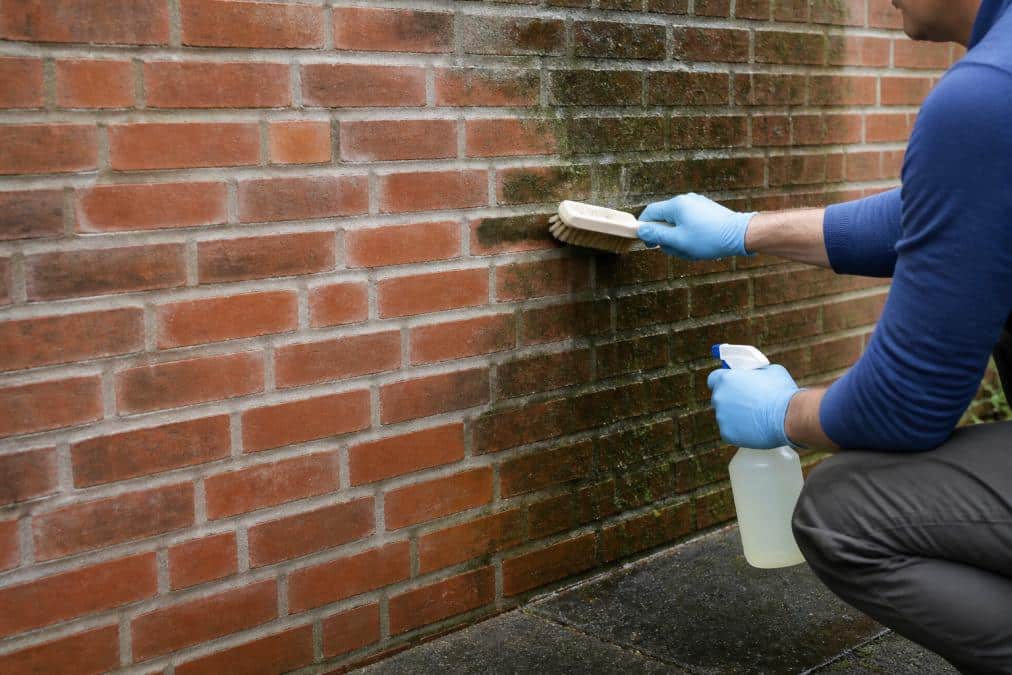
Mix your cleaner (equal parts white vinegar and water for natural options, or follow label directions for chemicals). Spray generously over moldy brick and let sit 10-15 minutes to penetrate and kill mold spores.
Step 3: Scrub the Brick
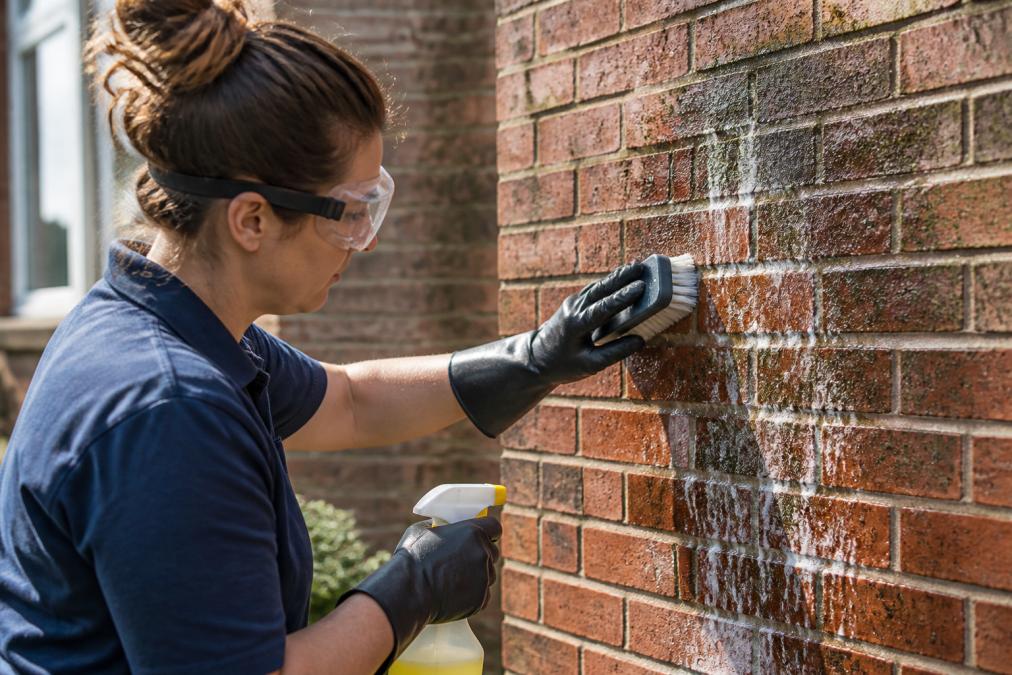
Use a stiff-bristled brush in circular motions, paying extra attention to mortar joints where mold hides. Thorough scrubbing breaks down the mold structure.
Step 4: Rinse Thoroughly
Rinse with low-pressure clean water from top to bottom until no cleaner remains on the brick.
Step 5: Dry the Brick
Use towels or air dry with good ventilation, ensuring no water pools in mortar joints or cracks.
After cleaning, apply a masonry sealer to protect the brick from future mold growth. This preventive step keeps your brick cleaner longer and reduces the chance of mold returning quickly.
Frequently Asked Questions
Will vinegar damage brick when removing mold?
Vinegar is acidic and can etch porous brick surfaces over time, especially on older masonry. While it kills surface mold, it may damage the brick’s protective layer and mortar joints. For safer results, use a diluted vinegar solution (1 part vinegar to 3 parts water) or consider a masonry-specific cleaner designed to remove mold without harming the brick structure. Always test on an inconspicuous area first.
What’s the difference between soft wash and pressure wash for removing mold from brick?
Soft wash uses low-pressure water combined with biodegradable cleaning solutions to kill mold and bio-growth without damaging the brick or mortar joints. Pressure washing relies on high-pressure water that can strip protective granules, cause surface abrasion, and force water into porous surfaces. For brick with mold, soft wash is the safer choice because it protects the masonry integrity while effectively eliminating mold spores and preventing recurrence.
How can I tell if what’s on my brick is mold or efflorescence?
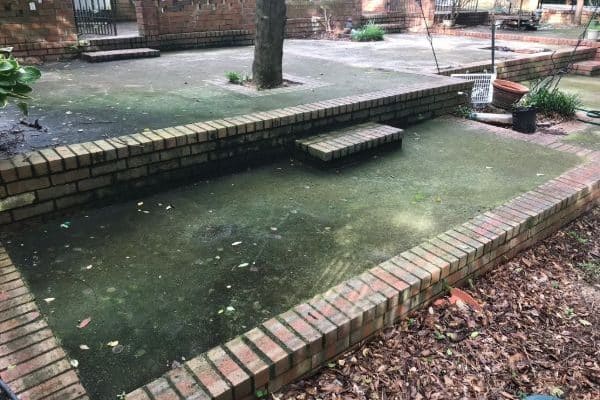
Mold appears as black, green, or brown growth with a slimy or fuzzy texture and grows in shaded, moist areas. Efflorescence looks like white, powdery deposits on brick and is caused by salt deposits, not biological growth. To test, spray water on the spot: mold will darken and may return after drying, while efflorescence will simply dissolve temporarily. Mold requires biological treatment, while efflorescence can be removed with dry brushing or mild acid washing.
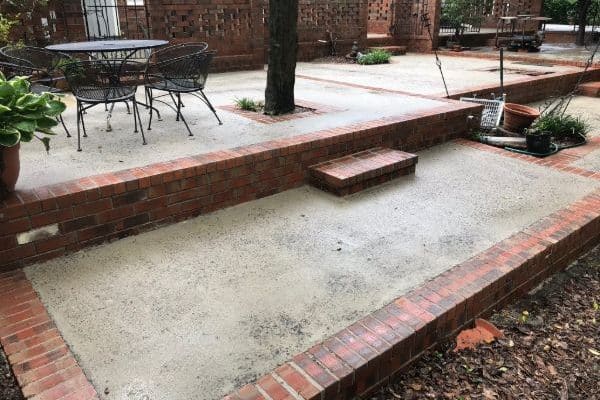
Mold on brick doesn’t have to stay there. Taking time to clean safely protects both your health and your home’s exterior. For stubborn mold or large affected areas, professional soft wash services remove mold completely while protecting your masonry investment. Curb Appeal Solutions specializes in low-pressure cleaning methods that eliminate mold and restore your brick’s appearance, with a 100% satisfaction guarantee and eco-friendly solutions that keep your family and landscape safe.