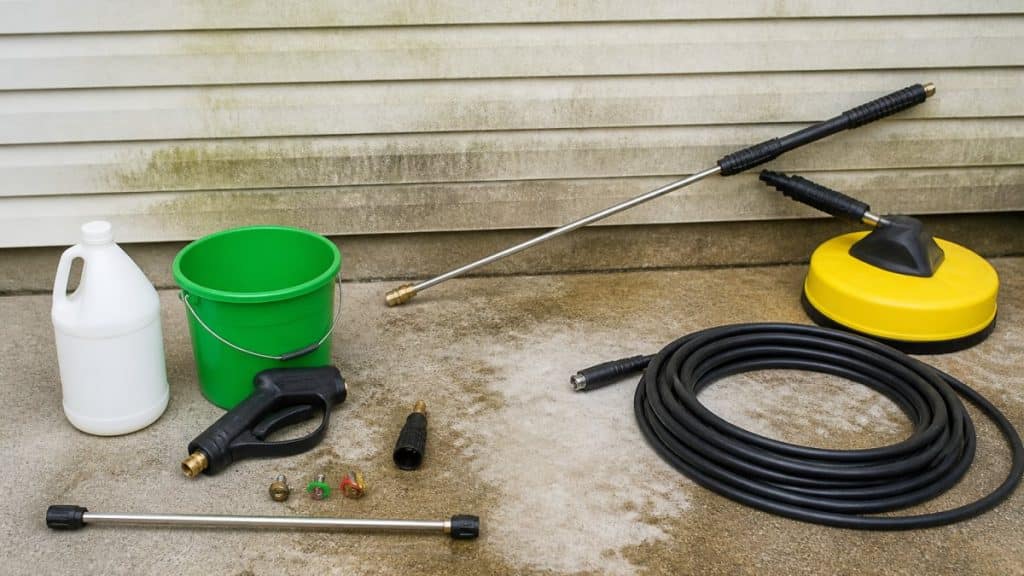
Last Updated: October 23, 2026
Quick Summary
Common mistakes to avoid when pressure washing include using too much pressure, choosing the wrong nozzle, spraying at incorrect angles, standing too close to surfaces, using wrong detergents, and skipping safety gear. Most of these errors are easy to prevent by starting at lower PSI, testing hidden spots first, and wearing proper protective equipment.
- Start at 1,500-2,000 PSI and test a hidden spot before increasing pressure to avoid stripping paint or gouging wood.
- Use 40-degree nozzles for siding and wood, 25-degree for concrete, and 0-degree for metal only.
- Always spray downward on siding and shingles, never upward, to prevent water from forcing behind panels and causing rot.
- Keep at least 3 feet away from surfaces and wear ANSI-rated eyewear, gloves, and closed-toe shoes for protection.
Table of Contents
- Common Mistakes to Avoid When Pressure Washing
- What Not to Pressure Wash
- Pressure Washing Safety Tips and Detergent Use
- Frequently Asked Questions
Common Mistakes to Avoid When Pressure Washing
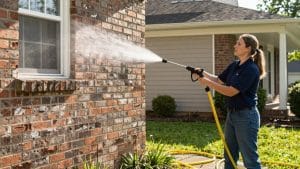
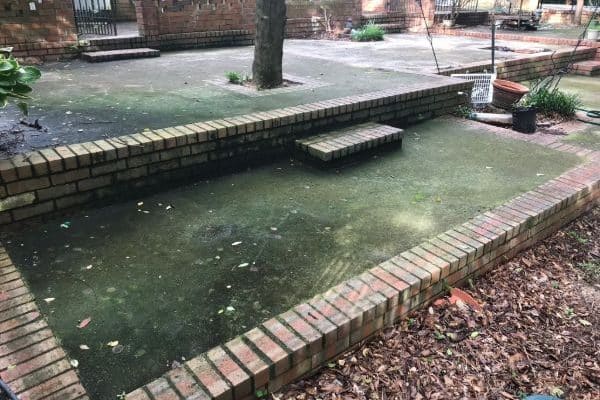
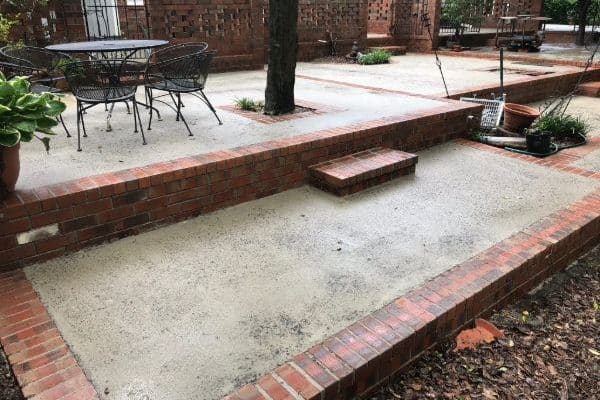
Pressure washing restores exteriors fast, but one wrong move causes permanent damage. Most common mistakes to avoid when pressure washing are easy to prevent.
Using Too Much Pressure or Wrong PSI
The mistake: Maximum pressure strips paint, gouges wood, and etches concrete; 4,000 PSI on vinyl siding or wood decks causes permanent damage.
How to avoid it: Start at 1,500-2,000 PSI, test a hidden spot, and use 3,000+ PSI only on concrete or metal.
Choosing the Wrong Nozzle or Spray Tip
The mistake: A 0-degree nozzle cuts like a knife; a 40-degree nozzle spreads water safely, yet most people grab the strongest one.
How to avoid it: Use 40-degree for siding, wood, and paint, 25-degree for concrete, and 0-degree for metal only.
Spraying at the Wrong Angle
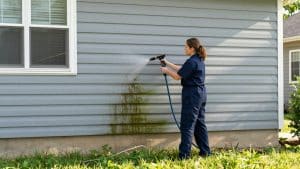
The mistake: Spraying upward on siding forces water behind panels, causing mold, rot, and structural damage.
How to avoid it: Angle the spray downward, never upward on siding or shingles, and keep 45 degrees on vertical surfaces.
Standing Too Close to the Surface
The mistake: Getting close damages the surface and bounces the stream back at you, cutting skin or forcing debris into your eyes.
How to avoid it: Keep at least 3 feet away, back off if damage starts, wear eyewear and gloves, and move the wand smoothly.
Using the Wrong Detergent or Cleaning Chemical
The mistake: Random or industrial-strength chemicals damage surfaces and harm the environment; the wrong one bleaches or streaks.
How to avoid it: Use pressure-washer-specific detergents, match the chemical to the surface, follow dilution instructions, and test a small area first.
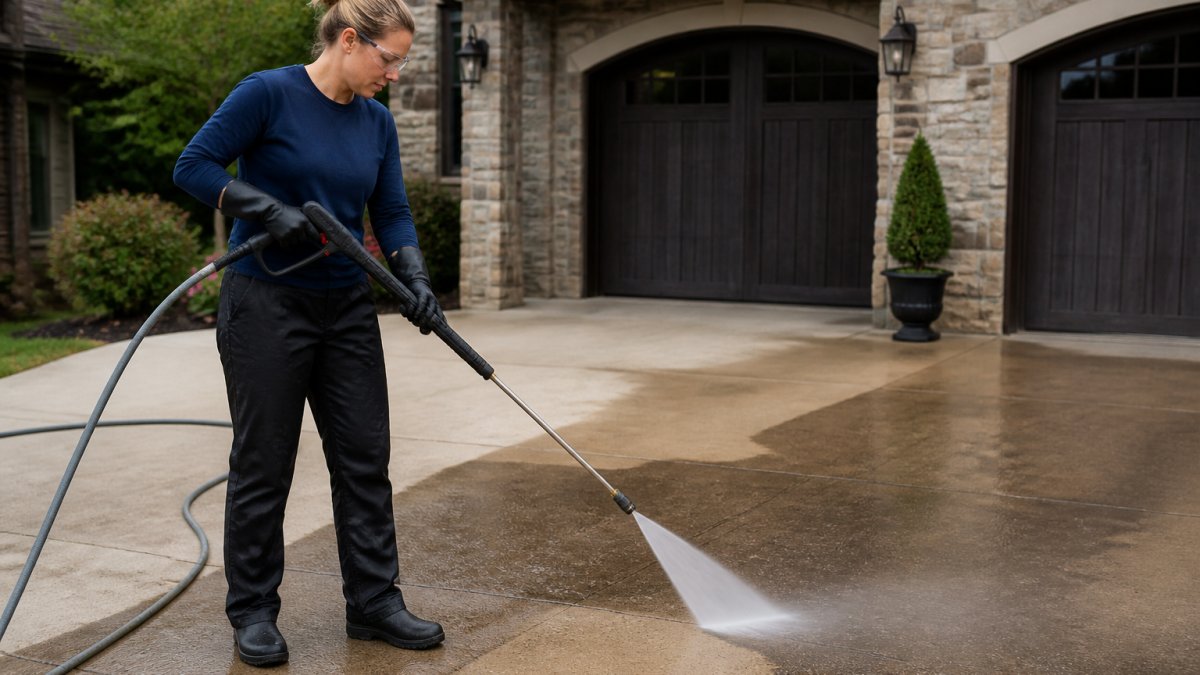
Skipping Safety Gear and Precautions
The mistake: Skipping protective equipment risks injuries from water pressure, flying debris, and chemical splashes.
How to avoid it: Wear ANSI-rated eyewear, heavy-duty gloves, and closed-toe shoes, apply sunscreen, and keep bystanders and pets away.
Here are the most common pressure washing mistakes and how to prevent them.
| Mistake | Cause | How to Avoid |
|---|---|---|
| Using too much pressure | Maximum pressure strips paint and gouges wood | Start at 1,500-2,000 PSI, test hidden spot first |
| Wrong nozzle or spray tip | 0-degree nozzle cuts like a knife; strongest chosen | Use 40-degree for siding, 25-degree for concrete |
| Spraying at wrong angle | Spraying upward forces water behind panels | Angle spray downward, keep 45 degrees on vertical |
| Standing too close | Damages surface and bounces stream back at you | Keep at least 3 feet away, wear eyewear and gloves |
| Wrong detergent or chemical | Industrial-strength chemicals damage surfaces | Use pressure-washer-specific detergents, test first |
| Skipping safety gear | Water pressure and debris cause injuries | Wear ANSI eyewear, gloves, closed-toe shoes |
What Not to Pressure Wash
Some surfaces should never see a pressure washer; knowing which saves money and prevents damage.
Don’t pressure wash: delicate wood (cedar, redwood, old siding), asphalt shingles, vinyl siding at high pressure, untested painted surfaces, and soft stucco or brick without expertise.
For delicate surfaces, soft wash vs pressure wash is safer. If unsure your exterior can handle it, check whether your brick home is safe for pressure washing first.
Pressure Washing Safety Tips and Detergent Use
Safety isn’t optional: water pressure causes cuts, eye injuries, and chemical burns.
Essential safety steps: Check equipment for leaks, never point the wand at people, pets, or yourself, turn off the machine when moving, and keep children and pets indoors.
Detergent handling: Follow label ratios exactly, never mix chemicals, rinse thoroughly, dispose of runoff responsibly, and consider eco-friendly options.
Worried about chemicals on your property? Check whether pressure washing soap is toxic to your pets to choose the right products.
Before you start, prepare your home properly for pressure washing to minimize damage and maximize results.
Frequently Asked Questions
What should you never pressure wash?
Avoid pressure washing delicate surfaces like wood siding, soft stucco, and asphalt shingles without low-pressure settings. Never spray upward on siding or roofs, this forces water behind protective layers and causes damage. Roof shingles are especially vulnerable; high pressure strips protective granules and voids warranties. Painted surfaces, windows, and areas with electrical outlets also require caution. When in doubt, test a small hidden spot first or hire a professional.
How do you choose the right pressure washer nozzle for different surfaces?
Nozzle selection depends on water flow and spray angle. Use a 65-degree wide-angle nozzle for delicate surfaces like siding and gutters. A 40-degree nozzle works for general cleaning on concrete. The 25-degree nozzle tackles stubborn stains on driveways but risks surface damage if held too close. Never use a 0-degree pinpoint nozzle on residential surfaces, it concentrates force and causes gouging. Match your nozzle to both the surface material and the PSI setting for safe, effective cleaning.
What are the best pressure washing safety tips?
Always wear protective eyewear, gloves, and closed-toe footwear to shield against spray kickback and debris. Keep bystanders, children, and pets away from the work area. Inspect your equipment before starting and check the water source for adequate supply. Never point the wand at people or animals. Stand at least 3 feet from the surface and maintain a steady spray pattern. Use eco-friendly detergents approved for your region, and never mix chemicals unless the manufacturer recommends it.
Pressure washing mistakes happen fast but damage lasts. The right technique, pressure level, and safety precautions protect both your home and your health. When common mistakes to avoid when pressure washing feel overwhelming, or when your home has delicate surfaces that need expert care, professionals like Curb Appeal Solutions use low-pressure methods and eco-friendly detergents to clean without damage. [Get a fast quote](page:Fast Quote) and let our team handle the work safely.