Table of Contents
- Chemical Cleaning Alternatives for Roof Moss Removal: An Overview
- Roof Moss Prevention Methods That Work Long-Term
- Low-Pressure Roof Cleaning Benefits for Your Home
- Frequently Asked Questions
Last Updated: September 15, 2026
Chemical Cleaning Alternatives for Roof Moss Removal: An Overview
Roof moss removal eliminates moss from shingles without damaging the roof substrate, and your choice of cleaning agent decides whether the job protects or destroys it. This guide from Curb Appeal Solutions covers the chemical alternatives that work.
Chemical cleaning alternatives for roof moss removal fall into four categories: bleach-based, oxygen-based, zinc-based, and surfactant products.
| Cleaning Agent | Active Ingredient | Best For | Main Drawback |
|---|---|---|---|
| Bleach-based wash | Sodium hypochlorite | Fast moss and algae kill | Damages plants, needs rinsing |
| Oxygen bleach | Sodium percarbonate | Eco-conscious DIYers | Requires mixing and dwell time |
| Zinc sulfate | Zinc sulfate | Long-term prevention | Corrosive to some metals |
| Surfactant spray | Biodegradable surfactants | Spray-and-leave convenience | Slow results, weeks to months |
| Copper strips | Copper ions | Passive prevention | Won’t kill thick existing moss |
Roof Moss Prevention Methods That Work Long-Term
The most effective long-term moss prevention combines chemical treatment with physical disruption: keep organic matter off the roof and manage shade and moisture.
Treating moss once rarely lasts; spores return within a season or two without preventative maintenance (extension.psu.edu). What holds up:
- Install copper or zinc strips along the ridge so rainfall carries ions down the roof
- Trim overhanging branches to reduce shade and leaf drop
- Clear gutters so water doesn’t back up under shingle edges
Zinc and copper strips work best on roof pitches above a shallow slope, where rainfall actually runs across them (How to control roof moss and prevent long-term damage). On nearly flat sections, water pools instead of carrying the ions, so the strips do almost nothing.
Low-Pressure Roof Cleaning Benefits for Your Home
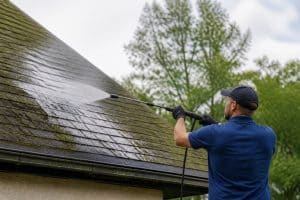
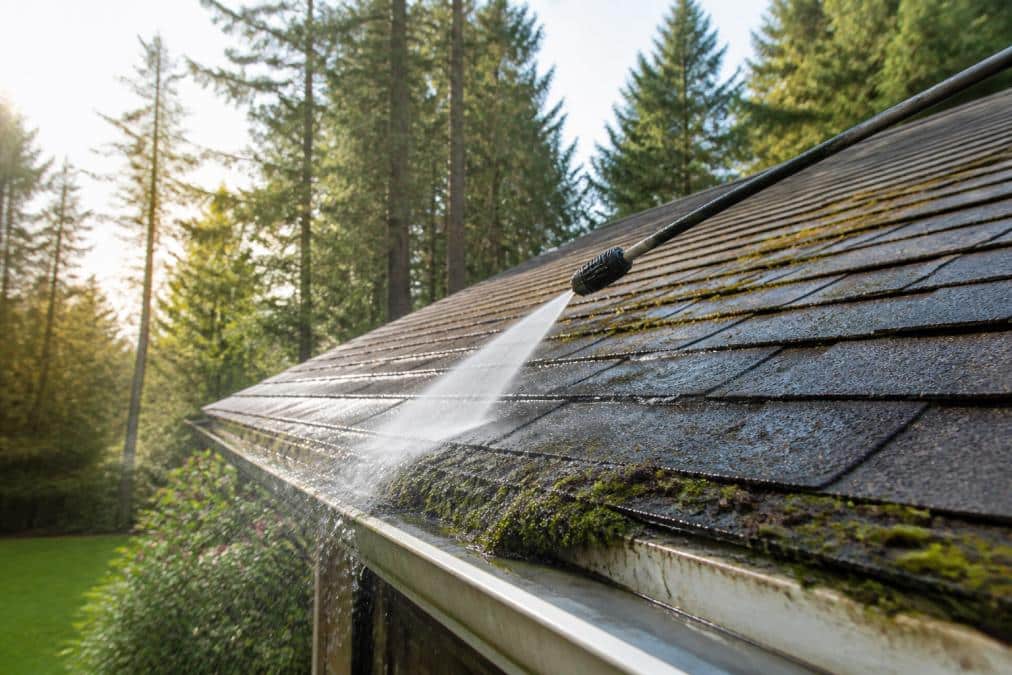
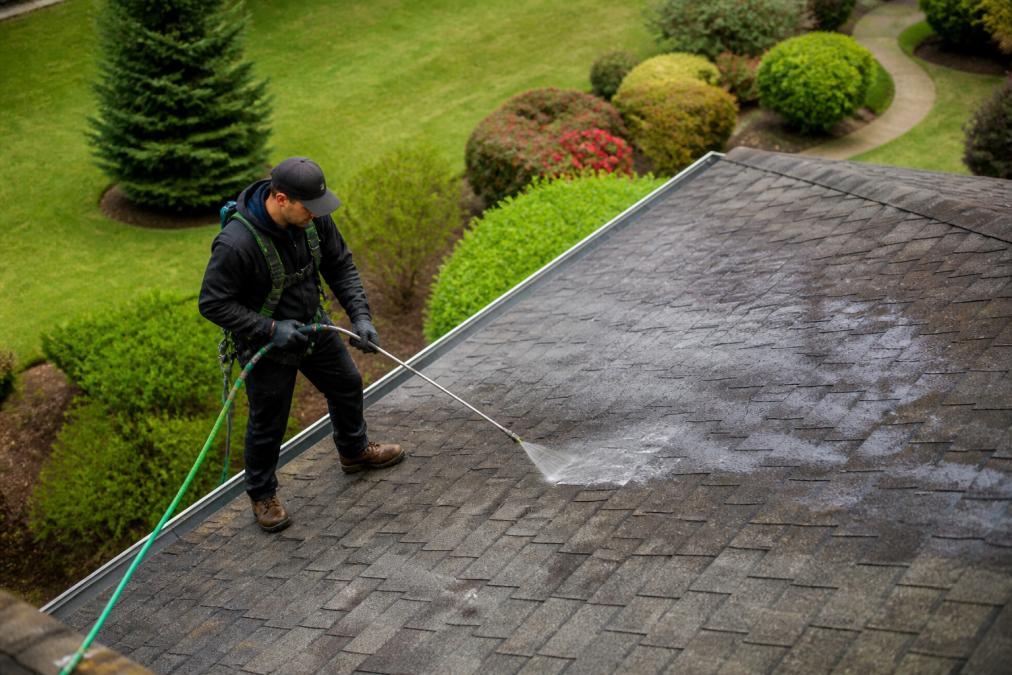
Low-pressure roof cleaning protects shingle granules in a way power washing cannot. High-pressure water strips the granule layer off asphalt shingles, exposing asphalt to UV damage and accelerating roof failure (Algae Discoloration of Roofs).
The benefits:
- Preserves surface integrity by leaving granules intact
- Reduces shingle displacement and water intrusion risk
- Uses far less water than pressure washing
At Curb Appeal Solutions, our low-pressure method kills the organic growth, then lets it wash away naturally rather than blasting it off.
If moss keeps returning no matter what you spray, the problem usually isn’t the product but the application method and conditions feeding growth. Curb Appeal Solutions handles roof cleaning, gutter maintenance, and low-pressure exterior washing for homeowners across the Upstate, removing black streaks from asphalt roofs and killing mold without stripping shingles. Our team backs every job with a 100% satisfaction guarantee and over 1,700 five-star reviews. Get started with Curb Appeal Solutions and request a fast quote for a roof that stays clean longer.
Frequently Asked Questions
What is the most effective chemical to remove moss from a roof?
Zinc sulfate and sodium hypochlorite are the most widely used chemicals for roof moss removal. Zinc sulfate kills moss on contact and leaves a residue that prevents regrowth, while sodium hypochlorite (bleach) breaks down organic matter quickly. However, bleach can damage shingles and harm plants if runoff is not managed. For a gentler option, oxygen-based cleaners like sodium percarbonate break down into water and oxygen, making them safer for landscaping and pets.
How can I prevent moss growth on my roof without harsh chemicals?
Install copper or zinc strips along the roof ridge. When it rains, these strips release metal ions that coat the roof surface and stop moss spores from taking hold. Keep gutters clear of organic debris so moisture does not sit on shingles, and trim tree branches that shade the roof. Improving airflow and sunlight exposure reduces the damp conditions moss needs to grow. These roof moss prevention methods work passively and require no spraying or mixing.
What are the risks of using bleach for roof cleaning?
Bleach (sodium hypochlorite) can strip the protective granules from asphalt shingles, shortening the roof’s lifespan. Runoff carries bleach into soil and storm drains, where it harms plants, pets, and aquatic life. Bleach also requires careful handling with protective gear and proper rinsing protocols. If you choose a bleach-based product, apply it on a calm day, wet surrounding plants first, and rinse everything thoroughly afterward. Low-pressure application reduces the risk of shingle damage compared to power washing.