Table of Contents
- Soft Wash vs Pressure Wash: Which Method Is Safe for Stucco?
- Best Stucco Cleaning Solution for Your Home’s Exterior
- How to Remove Mold from Stucco Without Damaging the Surface
- Frequently Asked Questions
Last Updated: September 14, 2026
Soft Wash vs Pressure Wash: Which Method Is Safe for Stucco?
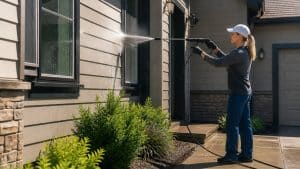
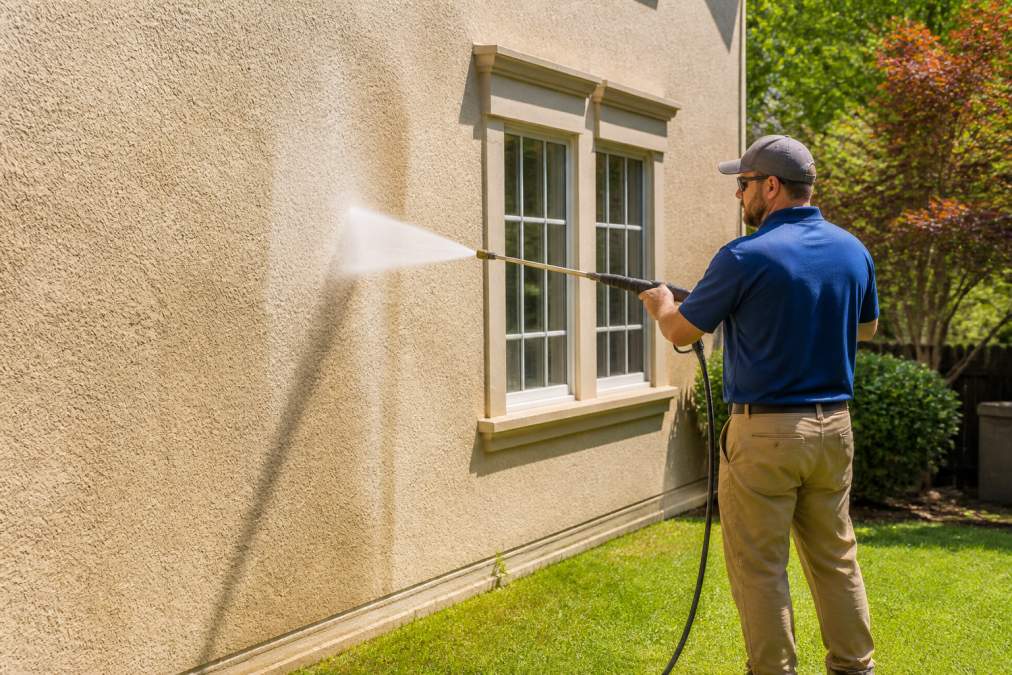
Learning to clean stucco the wrong way can crack the finish and force water behind the wall. A soft wash, low pressure plus a cleaning solution, is the safe choice for most stucco; high pressure risks damage on nearly every finish (PCA Archival Literature, Volume 1).
Stucco is a cement-based exterior finish applied over a wall assembly, and its surface is more porous and brittle than brick or vinyl siding. The Cement Plaster/Stucco Manual from the Portland Cement Association describes the material as a rigid, cementitious coating that performs best when its surface stays intact. Pressure washing works by force, which drives water into hairline fractures and can blow out the finish coat.
Curb Appeal Solutions uses low-pressure washing for this reason, and we see high-pressure damage on Greenville-area homes every season.
| Method | Pressure Level | Best For | Main Risk |
|---|---|---|---|
| Soft wash | Low, under 500 PSI | Traditional and synthetic stucco | None when diluted correctly |
| Pressure wash | 1,500 PSI and up | Concrete, brick, pavers | Cracks, water intrusion |
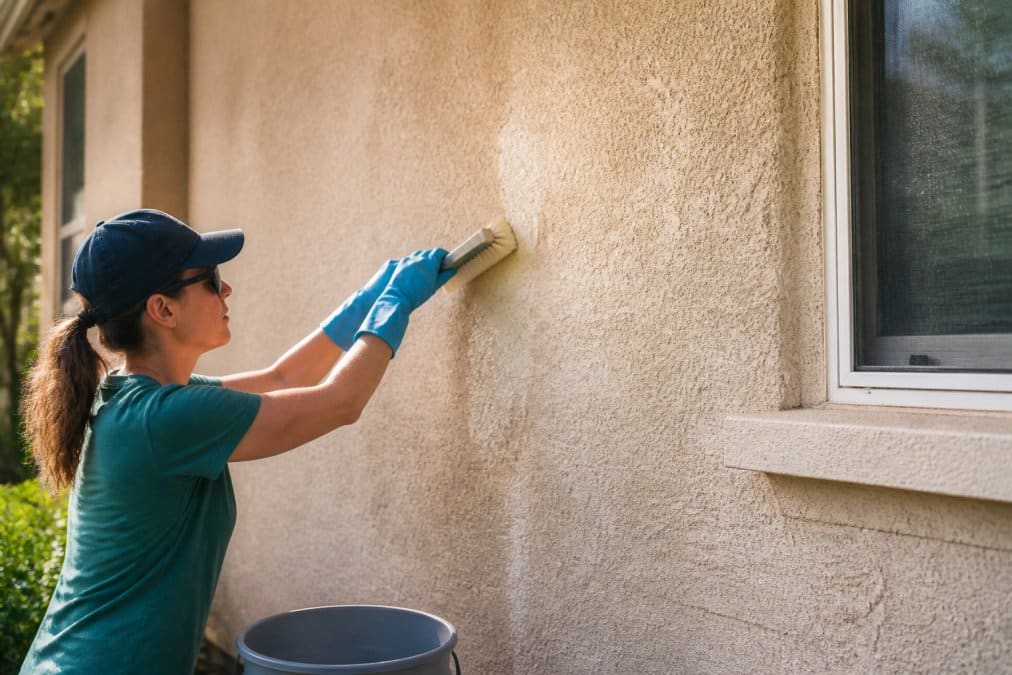
| Garden hose and brush | Very low | Small touch-ups, spot cleaning | Slow on large walls |
If you are unsure which method fits your home, the answer is almost always soft wash.
Best Stucco Cleaning Solution for Your Home’s Exterior
The best stucco cleaning solution is a pH-neutral, water-based cleaner, or diluted sodium hypochlorite for mold and mildew. Match the cleaner to the stain.
- Red clay and dirt: mild detergent with warm water
- Mold, mildew, and algae: diluted sodium hypochlorite at low pressure
- Efflorescence (white mineral haze): vinegar solution, then a rinse
- Light grime: baking soda paste on a soft-bristle brush
Test any cleaner on a hidden patch first: rinse, wait a day, and check for discoloration before treating the whole wall.
How to Remove Mold from Stucco Without Damaging the Surface
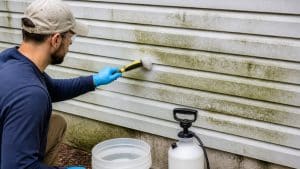
To remove mold from stucco, apply diluted sodium hypochlorite at low pressure, let it dwell, then rinse top-to-bottom. Never scrub hard or blast the surface; kill the growth and let the wall dry.
The U.S. Environmental Protection Agency’s mold guidance notes that mold needs moisture to grow, which is why cleaning alone rarely solves a recurring problem. If mold keeps coming back, the water source matters more than the cleaner.
A common mistake when you clean stucco is scrubbing dried mold with a stiff brush, which spreads spores and scratches the finish. Let the solution do the work.
Skipping the rinse leaves chemical residue that can streak the wall and harm landscaping. Rinse top-to-bottom and protect plants with a pre-wet and post-rinse.
Frequently Asked Questions
What cleaner to use on stucco?
For most stucco, a pH-neutral detergent mixed with water works well for light dirt. For mold or mildew, a diluted sodium hypochlorite solution applied with a soft-bristle brush is effective. You can also try a vinegar solution or baking soda for milder stains. Always test a small area first and rinse thoroughly to avoid residue that could harm the finish.
Is it okay to pressure wash a stucco house?
Pressure washing stucco is risky. High pressure can force water behind the surface, crack the finish, or damage the texture. Instead, use a soft wash approach with low pressure and a chemical cleaner to kill mold and lift dirt. If you hire a professional, ask about their low-pressure method to protect your stucco’s integrity.
How often should you clean stucco siding?
Most stucco homes need a cleaning every 12 to 18 months. If you live in an area with high humidity, heavy tree cover, or frequent rain, you may need it every 6 to 12 months. Regular cleaning prevents mold and algae from taking hold and keeps the surface looking uniform. Inspect for efflorescence or stains after each season.
Stubborn red clay stains and recurring mold are the two problems Greenville homeowners ask about most, and both come down to method. Curb Appeal Solutions uses low-pressure washing with eco-friendly cleaners, backed by a 100% satisfaction guarantee and more than 1,700 five-star reviews. Get a fast quote from Curb Appeal Solutions and restore your home’s curb appeal without risking the finish.