Table of Contents
- How Often to Clean Residential Gutters
- Signs Your Gutters Need Cleaning
- Best Tools for Gutter Cleaning
- How to Safely Clean Gutters with Pine Needles
- Frequently Asked Questions
Last Updated: September 4, 2026
How Often to Clean Residential Gutters
Most homeowners clean their gutters twice a year, but the reality is that how often to clean residential gutters depends heavily on your specific environment. A home surrounded by mature pine trees requires a far different schedule than one sitting in an open clearing. The general rule of thumb, spring and fall, is a solid starting point, but it misses the variables that actually dictate debris accumulation. At Curb Appeal Solutions, we recommend evaluating your tree canopy, roof age, and local weather patterns before locking in a maintenance routine. Below, we’ll break down the exact schedule that fits your property and the signs that tell you it’s time for an earlier intervention.
Twice-yearly cleaning prevents most water damage, foundation problems, and fascia rot. Properties with heavy pine needle buildup need quarterly service, especially in fall. Pine needles weave into dense mats that block water flow while appearing relatively empty from the street.
Waiting until you see water overflowing during a storm means the damage has already started. Clogged gutters can pull away from the fascia board and saturate the soil around your foundation, leading to costly structural repairs.
Signs Your Gutters Need Cleaning
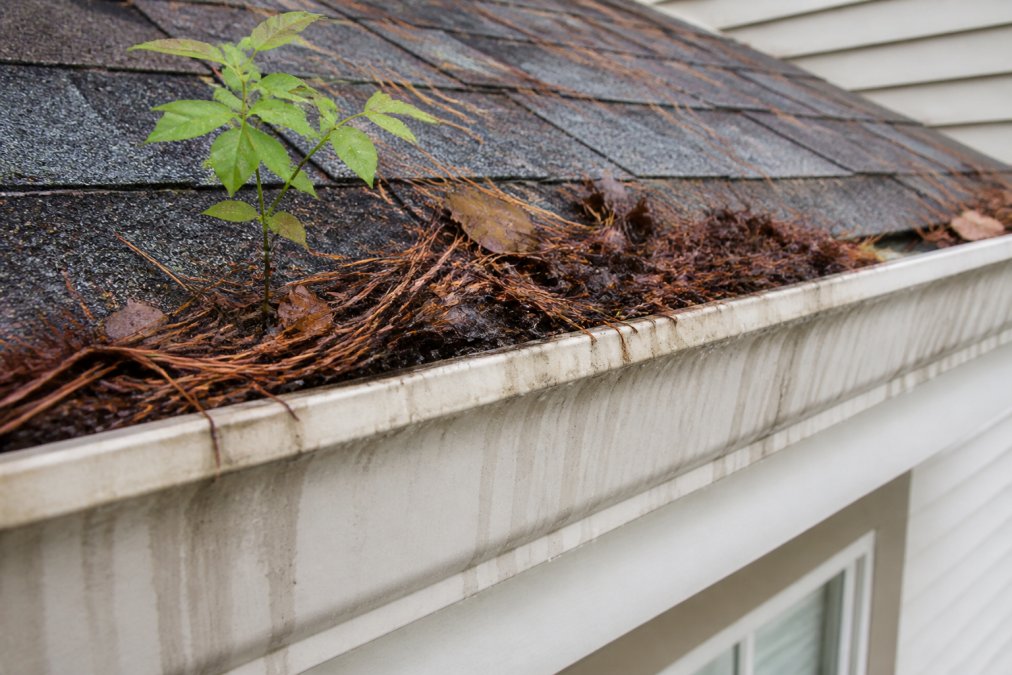
Watch for water spilling over during rain, sagging sections, plants sprouting from debris, rust stains, or peeling paint, all signs of blockage.
Another overlooked indicator is the presence of shingle granules in your downspout outlets. Asphalt shingles naturally shed granules over time, and when those granules accumulate in the gutter, they accelerate wear on the drainage system. The EPA’s guidance on home water damage prevention highlights that proper drainage maintenance is critical to protecting your home’s structural integrity.
Best Tools for Gutter Cleaning
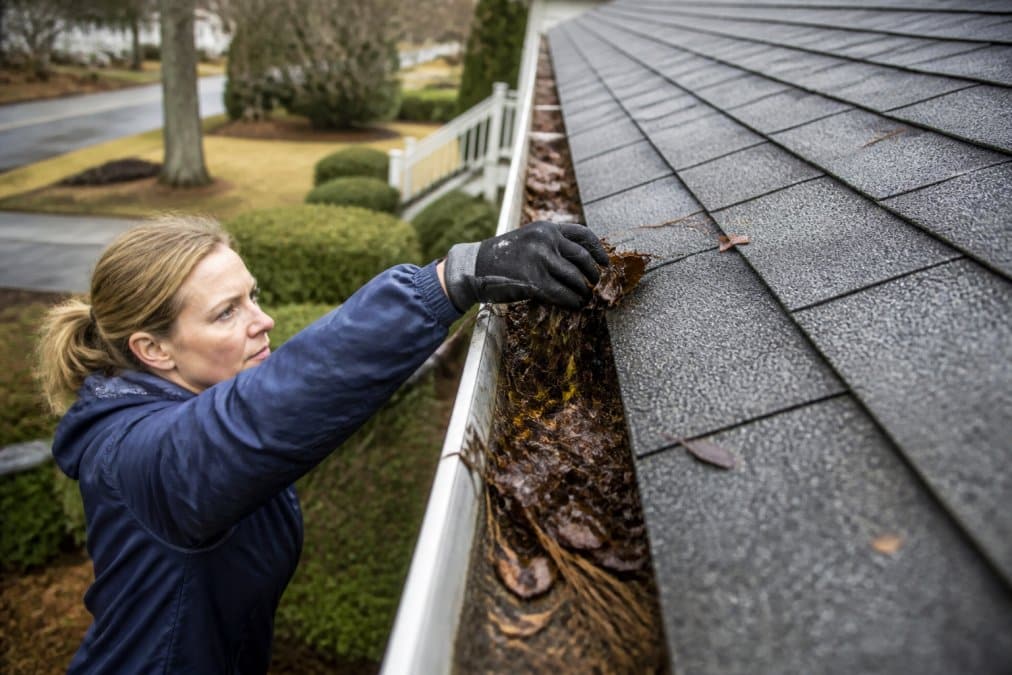
A sturdy extension ladder with stabilizer and heavy-duty gloves are essential. A narrow gutter scoop works for loose material, but pine needles require different tools.
A high-pressure leaf blower with a gutter attachment kit can clear dry debris efficiently from the ground. For wet, compacted material, a wet/dry vacuum with a curved nozzle reaches into the trough without requiring constant ladder repositioning. The Consumer Product Safety Commission’s ladder safety guidelines reports that ladder-related injuries account for a significant portion of home maintenance accidents, so investing in the right equipment is an investment in your safety.
| Tool | Best Use Case | Safety Consideration |
|---|---|---|
| Gutter scoop + gloves | General leaf and sludge removal | Requires ladder work |
| Leaf blower attachment | Dry, loose debris | Stay on the ground |
| Wet/dry vacuum | Wet, compacted material | Heavy to lift |
| Ladder stabilizer | Any ladder work | Prevents gutter damage |
How to Safely Clean Gutters with Pine Needles
Pine needles compact into felt-like layers that resist scooping. Start by using a leaf blower to remove loose needles from the roof. Position your ladder on firm, level ground, extending at least three feet above the roofline.
Work from the downspout backward, removing compacted mat in sections with a plastic scoop. Flush with a garden hose to confirm water flows freely. If water pools, the downspout is clogged and needs a plumber’s snake.
After clearing pine needles, inspect the gutter pitch. A sagging middle section traps water and debris, undoing your work within weeks. Adjust the hangers or add new ones to maintain a consistent slope toward the downspout.
For many homeowners, this process is physically demanding and requires repeating every few weeks during peak shedding season. Professional gutter maintenance services use low-pressure washing techniques that clear debris without damaging shingles or stripping protective granules, a common issue with high-pressure DIY methods. The National Roofing Contractors Association’s guidance on gutter maintenance recommends annual professional inspections to catch drainage issues before they compromise the roof structure.
For properties with heavy tree coverage, professional maintenance provides peace of mind. Consistency prevents emergency cleanups after storms.
Keeping gutters clear protects your foundation and roof structure. Curb Appeal Solutions offers professional gutter maintenance using eco-friendly, low-pressure methods, backed by our 100% satisfaction guarantee. Get a Fast Quote today.
Frequently Asked Questions
How often should I clean my residential gutters if I have lots of trees?
If you have trees near your home, plan to clean gutters 3-4 times per year, especially in fall and spring. Heavy leaf and debris accumulation from nearby trees increases the risk of clogged downspouts and water overflow. Pine needles are particularly problematic because they pack tightly and resist water drainage. Properties with dense tree coverage may need cleaning every 2-3 months during peak shedding seasons.
What happens if you never clean your gutters?
Neglected gutters lead to serious structural damage. Clogged gutters cause water to overflow, damaging fascia boards, soffits, and your home’s foundation. Standing water in gutters promotes mold growth and attracts pests. Over time, water damage can compromise your roof’s structural integrity and lead to costly repairs. Regular maintenance prevents these expensive problems and extends your gutter system’s lifespan.
Can I clean gutters with pine needles myself, or should I hire a professional?
You can clean gutters yourself if you’re comfortable working at heights and have the right tools, but pine needles require extra care. They compact easily and can be stubborn to remove. Use a sturdy ladder, wear gloves, and consider a gutter scoop or pressure washer designed for gutters. However, if your roof has steep pitch, high gutters, or significant pine needle accumulation, professional cleaning is safer and more effective. Professionals have equipment to handle debris removal without damaging shingle granules.
This article was written using GrandRanker