Last Updated: November 2, 2026
Quick Summary
Soft washing is generally the safer choice for historic brick because it uses low pressure and a cleaning solution instead of high-force water. It is not automatically safe for every wall, so inspect the brick and test a small hidden patch first.
- Soft washing uses low pressure and a cleaning solution, unlike high-pressure washing.
- Pressure washing can chip old brick faces and erode soft mortar joints.
- Inspect for loose bricks, crumbling mortar and peeling paint before spraying anything.
- Never let a strong cleaning solution dry on old brick; it can leave stains.
- Choose a mild masonry cleaner and follow the label’s dilution instructions.
Table of Contents
- Soft Wash vs. Pressure Wash for Brick: Why the Difference Matters
- How to Clean Old Brick Safely, Step by Step
- Choosing Safe Cleaning Solutions and Removing Algae, Then Booking Your Brick Cleaning
- Frequently Asked Questions
Soft Wash vs. Pressure Wash for Brick: Why the Difference Matters
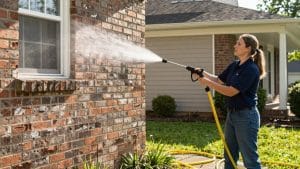
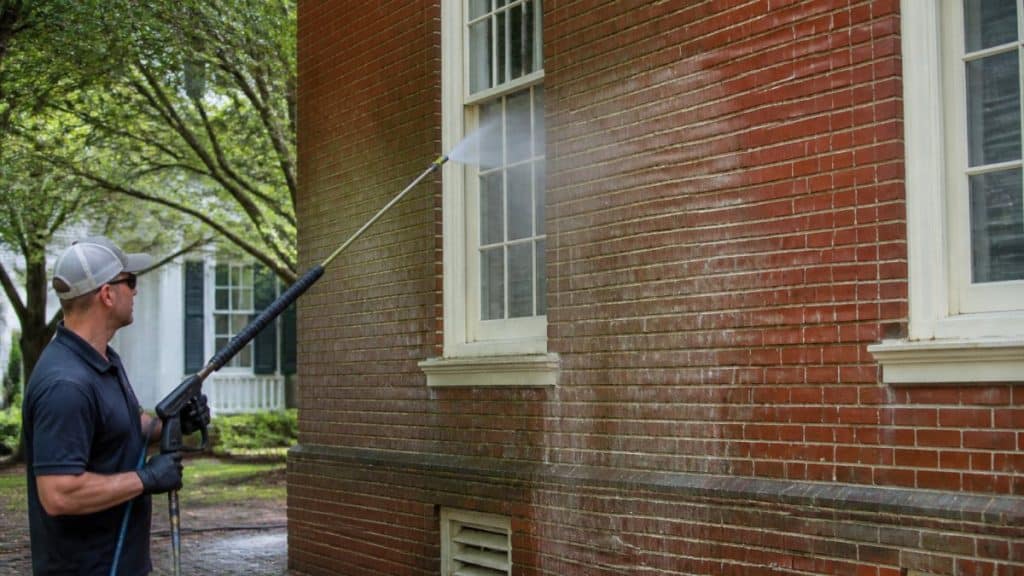
Soft washing is generally considered the safer choice for historic brick, but it is not automatically safe for every wall. The main difference between the two methods is pressure. Soft washing uses low pressure and a cleaning solution, while pressure washing relies on high-force water to blast dirt away. Because even low-pressure cleaning can affect vulnerable masonry, the same care used when protecting historic stonework helps preserve the character of older buildings.
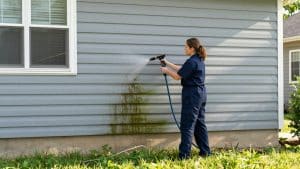
Pressure washing can chip the face of old brick and erode soft mortar joints. Soft washing works by letting the solution do most of the work, so the surface takes far less stress. You can see how soft washing is offered as a gentler alternative to pressure washing.
- Soft washing: low pressure, cleaning solution, longer dwell time
- Pressure washing: high pressure, little or no solution, faster results
How to Clean Old Brick Safely, Step by Step
Start with a close look at the wall before you spray anything. Check for loose bricks, crumbling mortar, and areas where paint has peeled. Test a small, hidden patch first to see how the brick reacts.
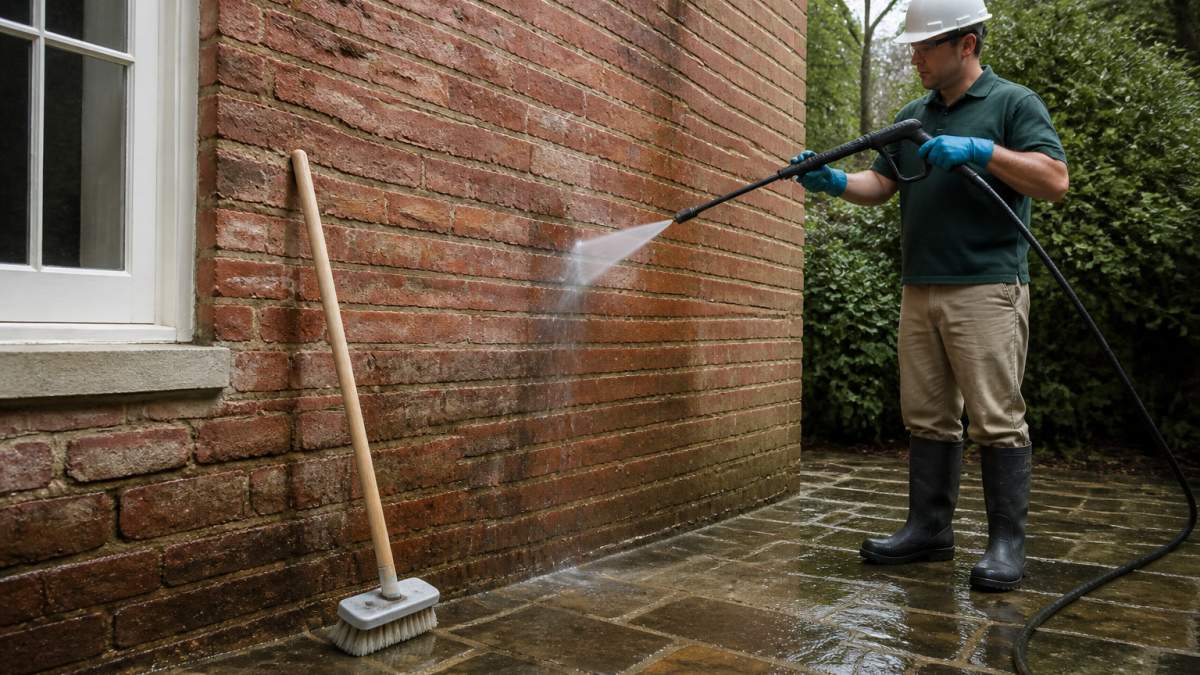
- Wet the wall with plain water at low pressure.
- Apply a gentle cleaning solution from the bottom up.
- Let the solution sit for the recommended time, without letting it dry.
- Rinse from the top down with low pressure.
- Inspect the wall once it dries.
Watch out: Never let a strong solution dry on old brick, since it can leave stains and weaken the surface.
The steps below summarise the safe cleaning process described in the article.
| Step | What to do | Note |
|---|---|---|
| 1 | Wet the wall with plain water | Low pressure |
| 2 | Apply gentle cleaning solution | Work from the bottom up |
| 3 | Let the solution sit | Recommended time, do not let it dry |
| 4 | Rinse the wall | Low pressure, top down |
| 5 | Inspect the wall | Once it dries |
Choosing Safe Cleaning Solutions and Removing Algae, Then Booking Your Brick Cleaning
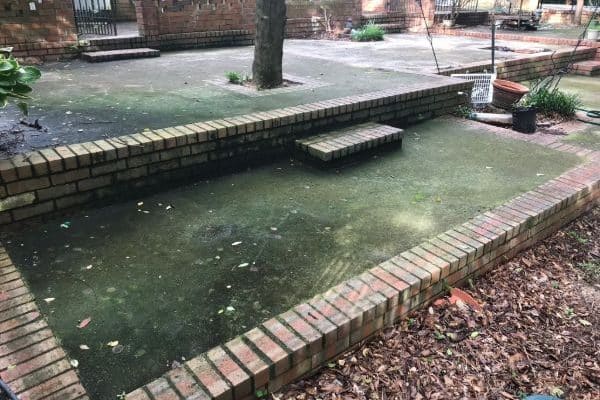
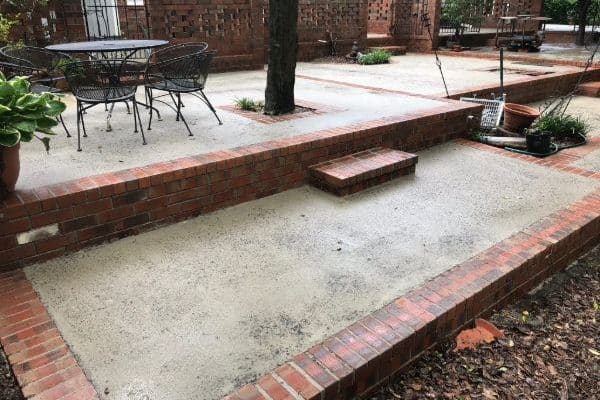
Pick a mild cleaning solution made for masonry, and always follow the label’s dilution instructions. For stain-specific guidance, see how to safely remove red clay stains without damaging the surface. Stronger chemicals can damage old mortar even when they seem to clean well.
If you are unsure whether your brick can handle the work, a professional assessment is a sensible first step. You can request a Fast Quote from Curb Appeal Solutions to get started. Our team focuses on low-pressure cleaning.
Frequently Asked Questions
Can soft washing damage historic brick or mortar?
It can, if the wrong chemical strength or too much pressure is used. Soft washing relies on low-pressure rinsing and diluted cleaning solutions, which is far gentler than high-pressure cleaning. Old brick is often porous and mortar can be soft or eroded, so it is still risky to skip a condition check. A qualified cleaner should inspect the wall, test a small inconspicuous area, and rinse thoroughly so no residue is left to weaken the surface.
Is pressure washing safe for old brick?
Usually not. High-pressure water can strip the surface of older brick, erode soft mortar joints, and push water deeper into the wall. Once the face of a brick is damaged, it cannot be restored to its original condition. For historic brick, low-pressure methods are the safer choice in most cases, and the pressure should be kept low enough that you can clean the wall without forcing water into the joints.
How can you tell if historic brick is too fragile to wash?
Signs of fragility include crumbling or sandy mortar, spalling or flaking brick faces, hairline cracks, and areas that already look weathered or powdery. If any of these are present, do not wash the wall until a masonry professional has assessed it. Testing a small patch first is also important, because some brick reacts badly even to gentle cleaning. Stop immediately if the surface softens or the mortar begins to wash out.