Last Updated: November 9, 2026
Quick Summary
To rinse patio chemicals for pet safety, flush the surface with clean water from the highest point to the lowest using steady, low-pressure flow until no film, slickness, or soapy runoff remains. Rinse a second time, scrub stubborn spots, and keep pets off until the patio is fully dry and passes a surface check.
- Move pets indoors and remove bowls, toys, and food dishes before you spray.
- One quick hose pass is not enough to rinse patio cleaner off completely.
- Porous pavers, stamped concrete, and brick soak up more cleaner and need a longer rinse.
- Rinse during a mild part of the day, never right before rain that carries runoff into the yard.
- The patio is safe when it is fully dry, free of residue, and passes a surface check.
Table of Contents
- Step 1: Prep the Patio and Protect Surrounding Areas
- Step 2: How to Rinse Patio Cleaner Off Completely
- Step 3: Verify the Patio Is Safe Before Pets Return
- Frequently Asked Questions
Step 1: Prep the Patio and Protect Surrounding Areas
Learning how to rinse patio chemicals for pet safety starts before you spray, since pets pick up residue through paws and mouths. Move pets indoors, remove bowls, toys, and food dishes, sweep debris, cover potted plants, and pre-wet nearby grass and beds to dilute overspray.
Wet, freshly sprayed patios are the most common way pets pick up cleaner on their paws, so keep them off until the rinse and dry cycle is done. Are Exterior Cleaning Chemicals Pet Safe? covers which chemicals are pet-safe and what risks they pose.
Step 2: How to Rinse Patio Cleaner Off Completely
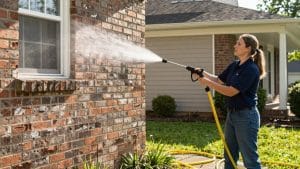
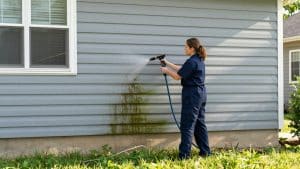
Rinsing patio chemicals off completely means flushing the surface with clean water until no film, slickness, or soapy runoff remains, one quick hose pass is not enough. Respect the label’s dwell time, then rinse from the highest point to the lowest with steady, low-pressure flow, pushing runoff toward a drain or lawn edge away from pet areas. Keeping the rinse even across the surface helps prevent residue from lingering in textured areas, and the same care matters when cleaning concrete patio surfaces.
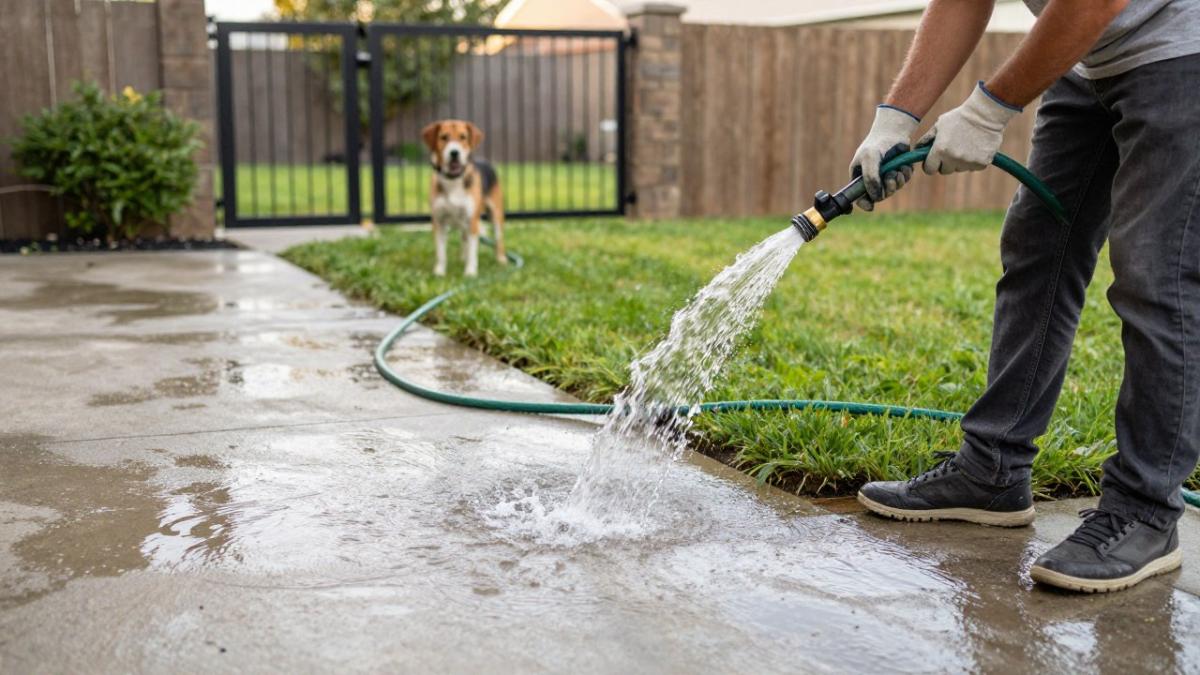
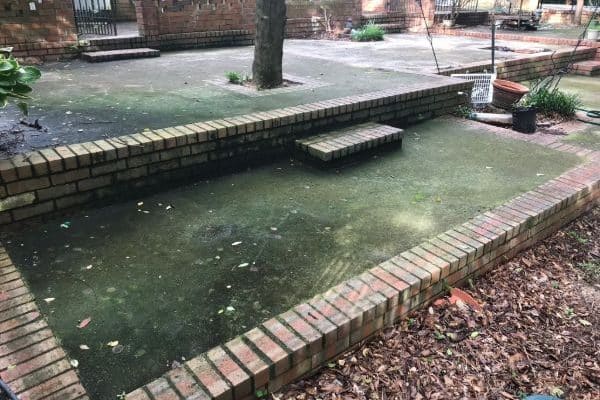
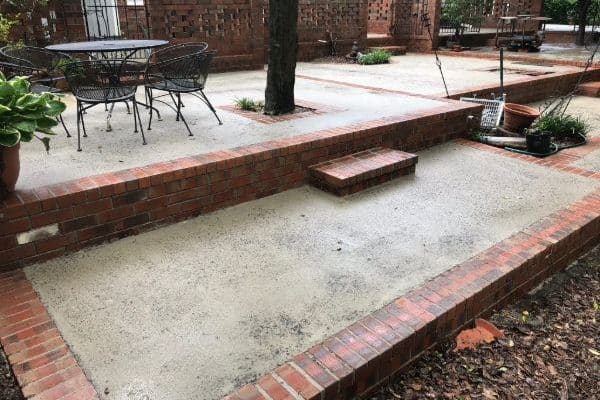
Rinse a second time, check for slick spots, and scrub stubborn areas with a stiff brush before rinsing again. Water carrying cleaner should not pool where your dog drinks or lies down. Porous pavers, stamped concrete, and brick soak up more cleaner, so they need a longer rinse; sealed surfaces rinse cleaner, but check seams for film. Eco-Friendly House Wash for Pets: A Safe Guide covers nearby siding.
Rinsing completely takes more than one pass, and the surface type changes how long you flush it.
| Surface type | Rinse need | Note |
|---|---|---|
| Porous pavers | Longer rinse | Soak up more cleaner |
| Stamped concrete | Longer rinse | Soak up more cleaner |
| Brick | Longer rinse | Soak up more cleaner |
| Sealed surfaces | Rinse cleaner | Check seams for film |
Step 3: Verify the Patio Is Safe Before Pets Return
The patio is safe when it is fully dry, free of residue, and passes a simple surface check, do not rely on looks alone.
On a hot, sunny day cleaner can bake in before you rinse; on a cool, humid day residue sits longer. Rinse during a mild part of the day, never right before rain that will carry runoff into the yard. For stubborn stains like dog urine spots or red clay, a vinegar solution or mild biodegradable cleaner still needs a full rinse, and some pets are sensitive to vinegar smells even after drying. Give the patio one last look at pet level, checking edges, seams, and where it meets the grass, since that is where residue hides.
If the job feels bigger than a hose and brush can handle, you can request a Fast Quote from Curb Appeal Solutions for current pricing and availability.
For broader guidance on keeping the whole exterior pet-safe, Eco-Friendly Exterior House Cleaning: A Safe Guide covers the full process.
Rinsing patio chemicals properly is the step that protects your pets, and it is easy to rush. If you would rather hand the whole job to a team that uses pet-conscious methods, Curb Appeal Solutions offers low-pressure washing, roof cleaning, gutter maintenance, and window cleaning backed by our 100% satisfaction guarantee. Get started with Curb Appeal Solutions and enjoy a clean exterior without the chemical worry.
Frequently Asked Questions
How long should pets stay off a patio after cleaning?
Keep pets off the patio until the surface is fully dry and you have rinsed it at least once. Most cleaners need a dwell time of 10 to 15 minutes before rinsing, then the patio should dry completely, which can take a few hours depending on sun and humidity. Wait at least 24 to 48 hours before letting pets walk or lie on the surface, and longer if the label specifies it.
How can I tell when a patio is safe for pets after cleaning?
Check three things: the surface is dry to the touch, there is no visible residue or film, and the rinse water ran clear. Wipe a small area with a white cloth and look for color or slickness. If you used a product with a strong odor, wait until the smell fades. When in doubt, rinse again and wait another day before letting pets back out.
Are pet-safe patio cleaners safer than diluted bleach?
That said, no cleaner is safe to leave on the surface. Always follow the dilution ratio on the label, rinse thoroughly, and keep pets away until the patio is dry. Even biodegradable cleaners need a full rinse cycle.