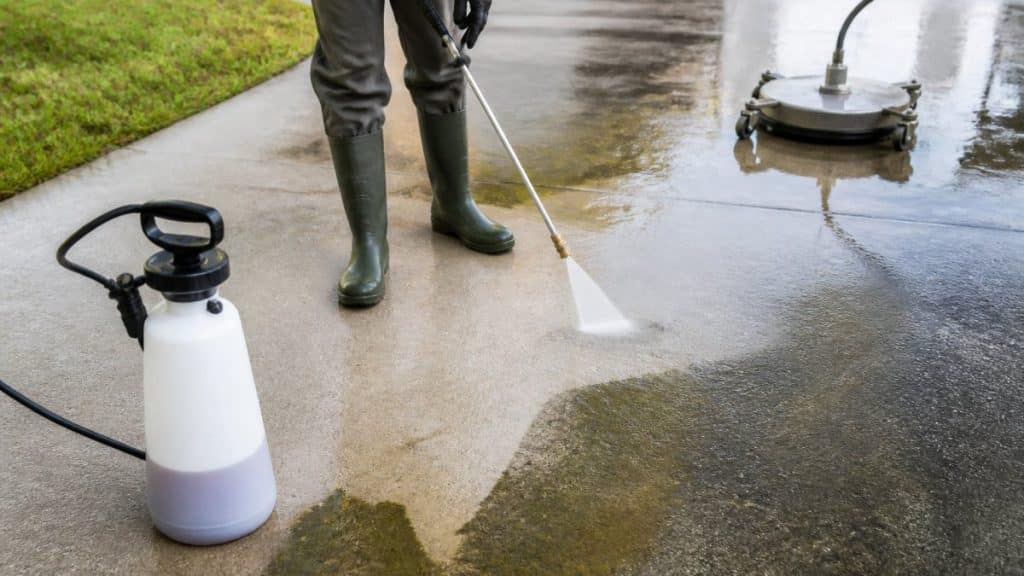
Last Updated: October 31, 2026
Quick Summary
To prevent mold on your driveway, keep the concrete drying out by fixing drainage first: clear debris from the edges, check the slope, extend downspouts, trim back shade, and add a channel drain in severe cases. Clean existing growth second, then fix the moisture, or it returns in weeks.
- Concrete is porous and holds moisture in surface pores long after rain, especially on the shaded north side of a house.
- Scrubbing mold off without fixing the moisture is the most common mistake, and growth returns in weeks, often worse.
- For light growth, mix one part household bleach to three parts water, let it sit ten minutes, then scrub and rinse.
- High pressure on old or cracked concrete can pit the surface and open new pores for moisture.
- A channel drain along the low edge permanently solves severe drainage cases.
Table of Contents
- Why Mold Grows on Concrete and How to Stop It at the Source
- How to Improve Driveway Drainage and Cut the Moisture Mold Needs
- How to Remove Mold and Mildew from Concrete Before It Returns
- Frequently Asked Questions
Why Mold Grows on Concrete and How to Stop It at the Source
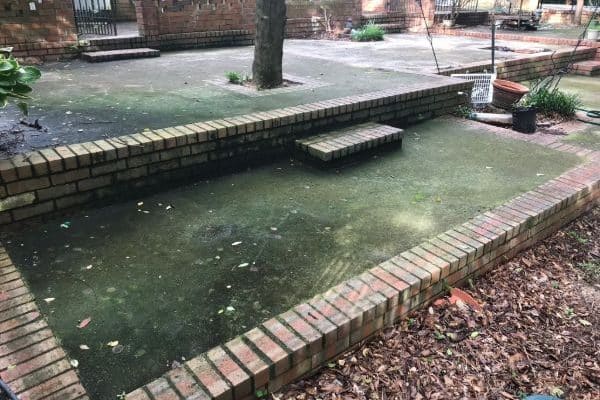
Mold grows on concrete because concrete stays damp, and damp concrete plus shade is all a mold spore needs to prevent mold from taking hold. Concrete is porous, holding moisture in surface pores long after rain, especially on the shaded north side of a house.
No food source or crack is required, a shaded slab that stays wet for a day or two will grow a green or black film within weeks.
Watch out: scrubbing mold off without fixing the moisture is the most common mistake we see. Growth returns in weeks, often worse, because scrubbing water soaks deeper into the slab.
Three root causes to check:
- Shade. Trees, fences, and north-facing walls block the sun that would dry the slab.
- Poor slope. Flat or settled concrete holds thin sheets of water.
- Clogged edges. Debris piles up where the driveway meets the lawn, trapping dampness.
In humid climates this is a year-round fight. For a deeper look, see maintaining concrete driveways in humid climates.
How to Improve Driveway Drainage and Cut the Moisture Mold Needs
Drainage is the highest-use fix, because the best way to prevent mold is to keep concrete drying out. Related growth on other exterior surfaces is covered in how do you prevent algae growth on exterior surfaces. Walk the driveway after rain and note where water sits longest.
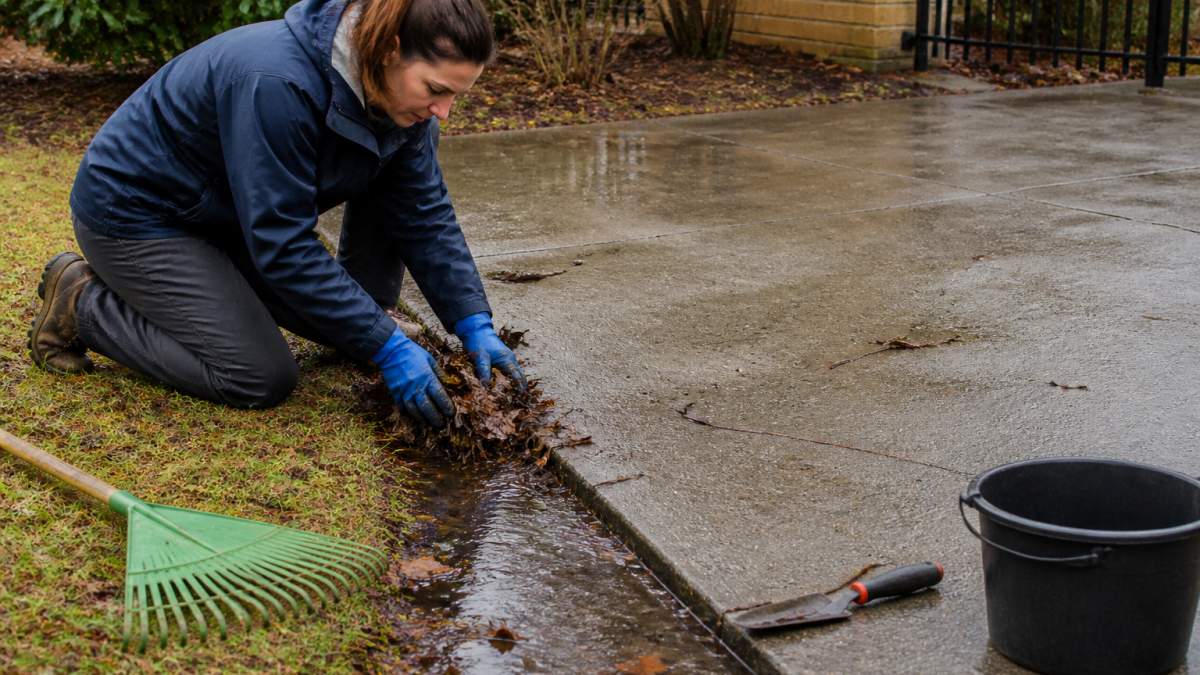
Then work through this list:
- Clear the edges. Remove leaves, soil, and debris where the slab meets grass or mulch.
- Check the slope. Water should run off, not pool; fill small low spots with concrete patching mix.
- Extend downspouts. Route roof runoff away from the driveway.
- Trim back shade. Thinning low branches lets sun and air reach the slab.
- Add drainage. In severe cases, a channel drain along the low edge solves it permanently.
Work through these drainage fixes in order to keep the concrete drying out.
| Step | What to do |
|---|---|
| Clear the edges | Remove leaves, soil, and debris where slab meets grass or mulch |
| Check the slope | Fill small low spots with concrete patching mix |
| Extend downspouts | Route roof runoff away from the driveway |
| Trim back shade | Thin low branches so sun and air reach the slab |
| Add drainage | A channel drain along the low edge solves it permanently |
How to Remove Mold and Mildew from Concrete Before It Returns
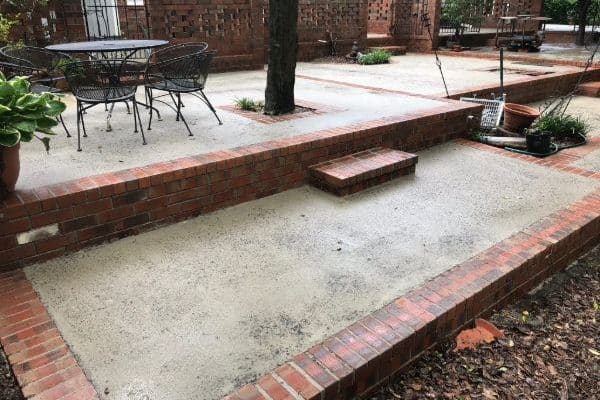
Cleaning is the second step, not the first. Kill the growth, then fix the moisture, or you will be back out there next month.
First, identify what you are dealing with. Mold and mildew look like a fuzzy or powdery film, often green, gray, or black, and smear when wiped. Algae is slicker and greener; moss is raised and textured; black spot is dark speckling that does not wipe away easily.
For light growth, mix one part household bleach to three parts water, apply, let it sit ten minutes, then scrub and rinse. Never mix bleach with other cleaners, and wet nearby plants down first and rinse afterward.
For heavier growth, use a concrete-safe mold-inhibiting cleaner and follow the label. For a gentler approach, see how to remove mold from concrete driveway naturally.
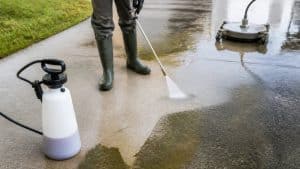
Watch out: high pressure on old or cracked concrete can pit the surface and open new pores for moisture. To keep growth from returning, learn how often to pressure wash your driveway. Keep the nozzle moving and stay off the most damaged areas.
Frequently Asked Questions
Does sealing a concrete driveway help prevent mold?
A penetrating sealer slows water absorption into the concrete, which removes one of the conditions mold and mildew need to settle in. It works best after the surface is fully clean and dry, and it is not a substitute for fixing drainage or trimming shade. Expect to reseal every few years, and never seal over active growth, because trapped moisture under a film will feed regrowth from below.
How can I keep a shaded driveway from growing mold?
Shade keeps concrete damp far longer than sun does, so the fix is airflow and light. Trim low branches back from the slab, thin shrubs along the driveway edges, and clear leaf litter so morning sun can reach the surface. Where shade cannot be removed, clean more often and use a mold-inhibiting cleaner on a regular schedule rather than waiting for black spot to spread.
What causes mold to grow on a driveway?
Four conditions together: moisture from rain, runoff, or standing water; shade that slows drying; organic debris like soil, pollen, and leaf tannins sitting on the surface; and warm weather. Concrete is porous, so dampness lingers in the slab itself. Remove any one of those conditions and growth slows sharply, which is why drainage and shade fixes matter more than scrubbing alone.
Mold on concrete is a moisture problem wearing a green coat. Fix the water, and the growth stops coming back. That is the work Curb Appeal Solutions does every week: low-pressure washing that kills mold without damaging the slab, plus gutter maintenance to move water away from your concrete. Our team is woman and veteran owned, and every job is backed by our 100% satisfaction guarantee. Get started with Curb Appeal Solutions and a driveway that stays clean through the season.