Table of Contents
- Common Causes of Green Stains on House Siding
- Soft Wash vs Pressure Wash: Choosing the Right Method
- How to Remove Green Algae from Vinyl Siding Safely
- Frequently Asked Questions
Last Updated: September 20, 2026
Common Causes of Green Stains on House Siding
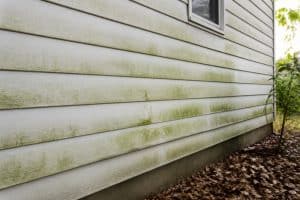
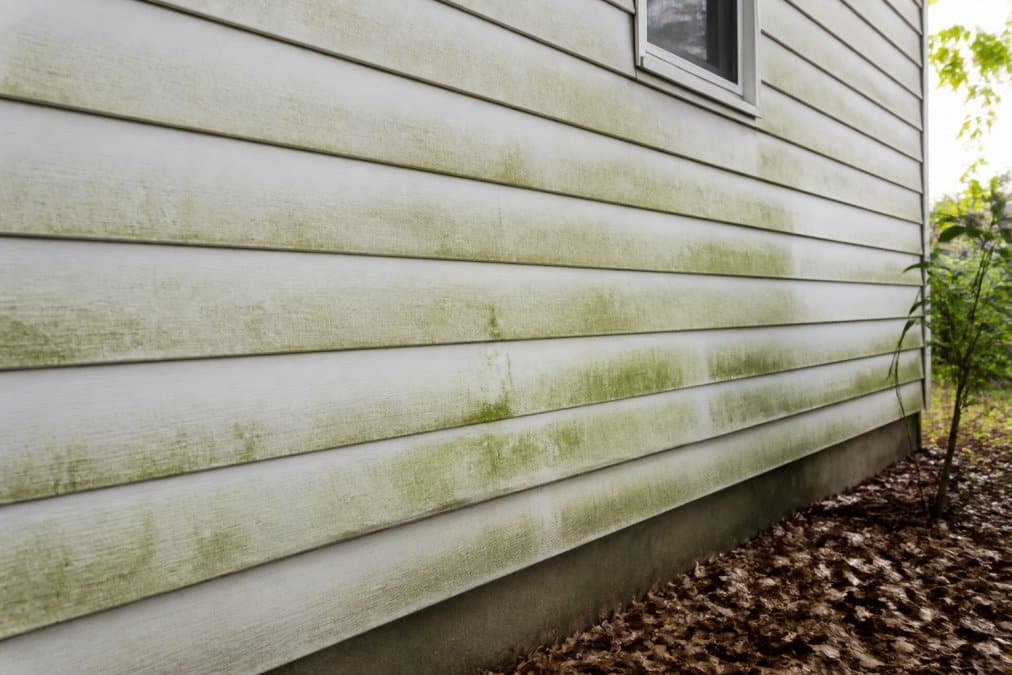
Green stains on house siding are biological growth, primarily algae feeding on moisture and organic debris, not dirt or a paint defect.
This guide from Curb Appeal Solutions covers what causes green stains on house siding, how to tell algae from mold and lichen, and how to remove it safely.
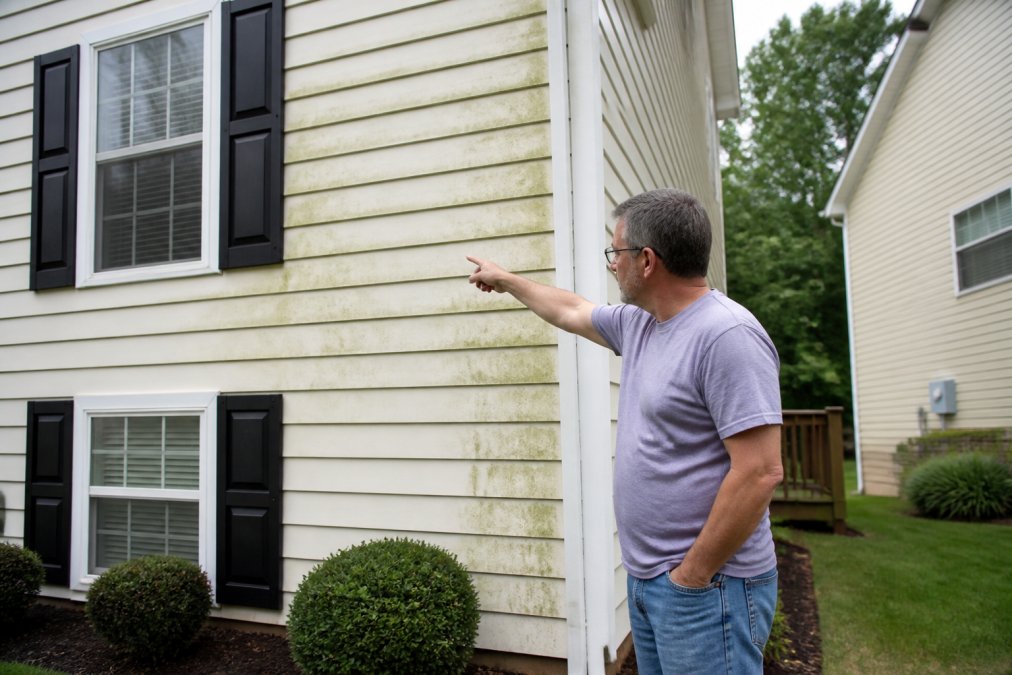
The most common causes of green stains on house siding include algae on damp north-facing walls, shade and moisture from trees and overhangs, gutter overflow, pollen buildup, and poor downspout drainage. Vinyl is especially prone because it holds a moisture film longer than wood or brick.
Why Shade and Moisture Drive Green Growth
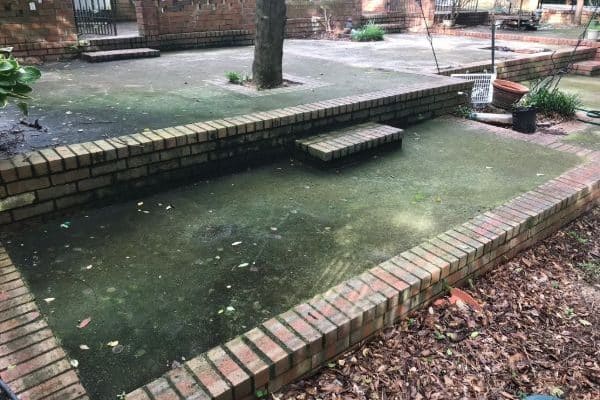
Algae needs moisture, organic debris, and a surface to cling to. Shady areas dry slowly, letting spores take hold, while trees touching the siding trap moisture and clogged gutters sheet water down the wall.
Ignoring gutter overflow is a common mistake. The algae spreads upward from the clog point, and by the time it’s visible, the growth has already worked into the siding’s texture.
How to Identify What’s Growing on Your Siding
| Growth Type | Appearance | Texture | Common Location |
|---|---|---|---|
| Green algae | Soft green film | Powdery, wipes off | Shady north walls |
| Mildew | Gray-white or black | Fuzzy spots | Damp, low areas |
| Lichen | Gray-green, crusty | Rough, hard | Sunny, older surfaces |
Algae wipes away with light pressure. Lichen doesn’t. That distinction changes your cleaning method entirely.
Soft Wash vs Pressure Wash: Choosing the Right Method
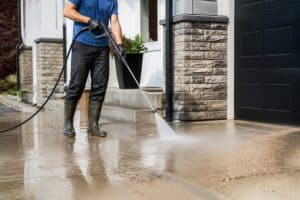
Soft washing is the correct method for removing green stains from siding: low pressure plus a cleaning solution kills algae, mold spores, and mildew at the root, then a gentle rinse carries the dead growth away. Pressure washing leaves spores behind, so growth returns within weeks, and high pressure can crack vinyl and force moisture behind panels. Ensuring that moisture does not remain trapped against your home is essential, as persistent dampness often leads to hidden rot behind siding that can compromise the structural integrity of your walls.
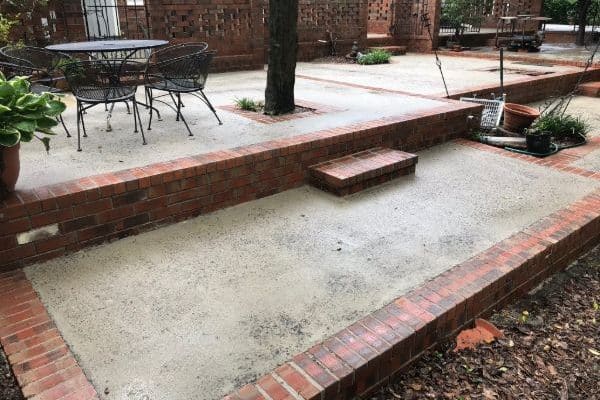
Soft washing kills the organism; pressure washing only removes what you can see. That’s why soft-washed exteriors stay clean longer.
For a deeper look at the trade-offs, this overview of soft washing versus pressure washing explains when each method is appropriate.
Why Low Pressure Wins on Vinyl and Painted Surfaces
Low pressure plus the right cleaning solution removes biological growth without touching the surface underneath, important, since vinyl scratches easily.
The EPA guidance on safe cleaning practices reinforces that matching the method to the surface prevents unnecessary damage.
How to Remove Green Algae from Vinyl Siding Safely
To remove green algae from vinyl siding safely, apply a diluted cleaning solution at low pressure, let it dwell, then rinse gently. Never let it dry on the surface, and always protect plants below.
- Protect landscaping first. Cover shrubs and soak the ground around foundation plants.
- Mix a cleaning solution. A bleach-based cleaner with surfactants, or diluted bleach and water, breaks down the growth.
- Apply at low pressure bottom-up, then let it dwell a few minutes.
- Rinse gently top-down, and re-treat stubborn areas rather than scrubbing harder.
Always work bottom-up when applying and top-down when rinsing. Applying bottom-up prevents streaking, and rinsing top-down keeps dirty water from re-soiling clean sections.
Preventing Mold and Algae on House Exterior
- Trim back landscaping so airflow reaches the siding
- Clean gutters seasonally to stop overflow
- Fix downspout drainage so water moves away from the foundation
- Consider a protective sealant after cleaning
- Schedule seasonal cleaning before growth takes hold
A protective sealant slows surface oxidation and makes future cleaning easier.
The CDC information on mold and moisture control confirms that controlling moisture is the foundation of preventing biological growth.
When to Call a Professional
Two-story walls, steep rooflines, and heavy growth near landscaping are cases where professional soft washing pays for itself. Curb Appeal Solutions uses low-pressure cleaning to remove and kill mold and algae without damaging siding.
Frequently Asked Questions
Why is the siding on my house turning green?
Green discoloration on siding is usually algae, mildew, or lichen. These organisms grow where moisture lingers, especially on shady walls with poor airflow. Vinyl siding is prone because it stays damp longer than wood or brick. Nearby trees, clogged gutters, and downspouts that drain too close to the foundation all feed the problem. Identifying the growth type helps you choose the right cleaning approach.
How do I get the green stuff off the side of my house?
For vinyl siding, a soft wash using a bleach-based cleaner with surfactants kills algae at the root without damaging the surface. Apply the solution, let it dwell, then rinse with low pressure. Avoid high-pressure washing, which can force water behind panels and strip protective coatings. For stubborn lichen, you may need a second application. Always protect landscaping with a pre-rinse and cover nearby plants.
Is green algae on siding harmful to the home?
Green algae itself does not eat into siding, but it traps moisture that can lead to mold, rot, and paint failure over time. On wood trim, prolonged dampness causes decay. On vinyl, algae stains are mostly cosmetic but signal that water is not draining properly. Left unchecked, the growth spreads and becomes harder to remove. Regular cleaning and gutter maintenance keep it from returning.
Green stains on house siding will keep coming back as long as moisture and shade remain. The fix isn’t more pressure; it’s killing the growth at the source and keeping water away from your walls. Curb Appeal Solutions handles this with low-pressure soft washing, eco-friendly cleaning methods, and a 100% satisfaction guarantee. Get a fast quote from Curb Appeal Solutions and restore your home’s curb appeal without risking your siding.