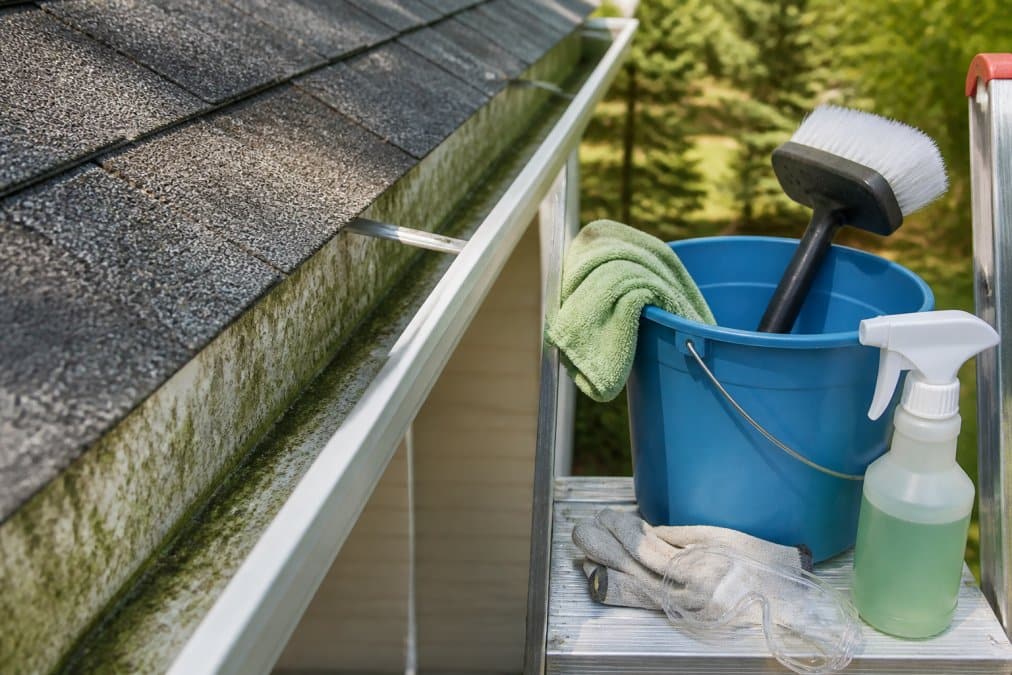
Table of Contents
- Step 1: Prep the Work Area and Gather Tools
- Step 2: Remove Debris and Clear Clogs
- Step 3: Apply an Eco-Friendly Cleaning Solution
- Step 4: Scrub the Gutter Exterior and Fascia
- Step 5: Rinse, Flush, and Manage Runoff
- Step 6: Prevent Regrowth and Schedule Maintenance
- Frequently Asked Questions
Last Updated: September 16, 2026
Step 1: Prep the Work Area and Gather Tools
Learning how to remove algae from gutters starts with preparation, not scrubbing. Algae feeds on moisture and organic debris and spreads fastest along shaded, north-facing runs.
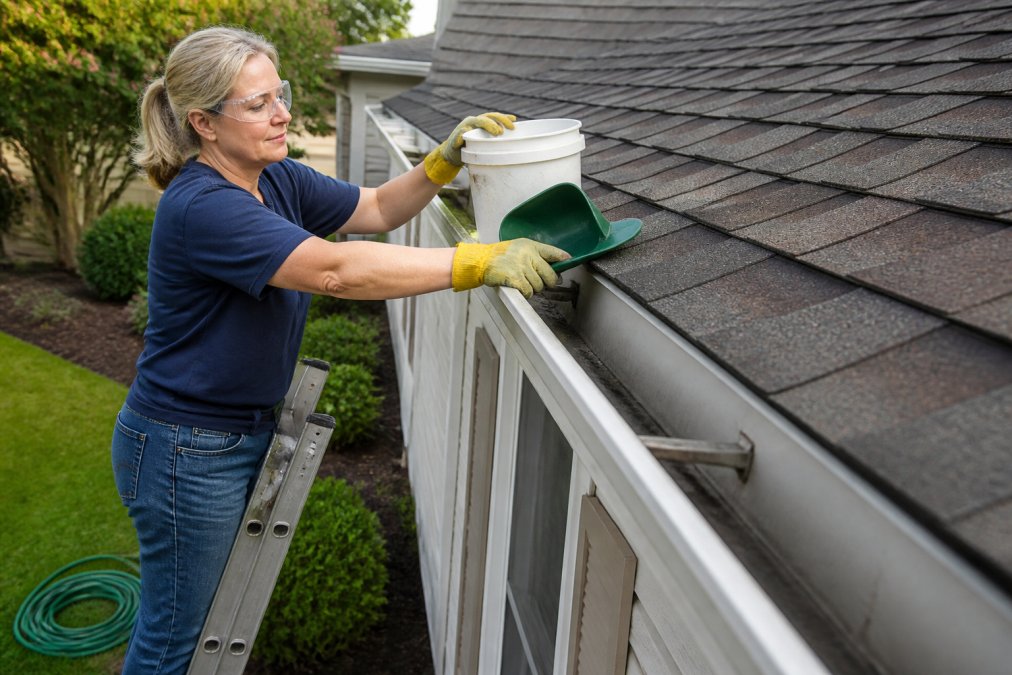
Set your ladder on firm, level ground with a stabilizer, wear goggles, gloves, and non-slip shoes, and never work on a wet roof or in wind. Gather a gutter scoop, bucket, hose with spray nozzle, soft-bristle brush, and telescopic wand; common solutions are white vinegar, chlorine bleach, and oxalic acid.
Never lean an extension ladder directly against the gutter itself. The thin aluminum edge dents under load and can send you sideways. Rest the ladder on the fascia or use a stabilizer bar.
Step 2: Remove Debris and Clear Clogs
No cleaning solution reaches algae buried under pine needles and sludge, so dry debris removal comes first. Work from the downspout end backward, scooping into a bucket, then flush with a hose, if water backs up, the clog is in the downspout. For a blocked downspout, feed the hose from the bottom up or use a plumber’s snake.
Flush the downspout before you clean the gutter exterior. If drainage is still blocked, you will just be washing algae into standing water that backs up under the roof edge.
Step 3: Apply an Eco-Friendly Cleaning Solution
The best eco-friendly gutter cleaning solutions rely on contact time, not brute force.
| Solution | Best For | Watch Out For |
|---|---|---|
| Vinegar solution | Light mildew, routine upkeep | Weak on heavy growth |
| Chlorine bleach | Killing mold and algae fast | Bleaches plants, needs rinsing |
| Oxalic acid | Rust and oxidation stains | Requires careful handling |
Mix your solution in a pump sprayer, test a hidden section, then apply along the gutter exterior and let it dwell. Vinegar handles light mildew on painted aluminum; chlorine bleach works faster on established algae but kills grass and shrubs, so wet plants first and rinse after. Oxalic acid is the right call for oxidation. Never mix bleach with ammonia-based products.
Distinguish biological growth from oxidation before you choose a chemical. Algae and mildew are living growth that bleach or vinegar kills. Oxidation is a chemical reaction on the metal itself, and only an acid-based cleaner lifts it.
Step 4: Scrub the Gutter Exterior and Fascia
Once the solution has dwelled, agitate the surface with a non-abrasive brush to remove algae off the metal. Work in sections, scrubbing the gutter channel then the fascia and soffit, using a soft brush on painted surfaces and a firmer one on bare aluminum.
Step 5: Rinse, Flush, and Manage Runoff
Rinsing is where most DIY gutter jobs go wrong, because the water carries everything you just loosened. Rinse top down with a hose on moderate pressure, directing water away from foundation plantings; if you used bleach or oxalic acid, flush the ground below with clean water and confirm the downspout discharges away from the foundation.
Step 6: Prevent Regrowth and Schedule Maintenance
The final step saves the most work: preventing mold and algae on exterior gutters before it returns. Algae needs moisture, shade, and organic debris, so removing any one breaks the cycle.
- Clear debris at least twice a year, more often under pine trees
- Trim branches so sunlight reaches the roof edge
- Confirm gutters drain fully after every heavy rain
- Consider a gutter guard system to keep needles and leaves out
Homeowners under heavy pine cover who are tired of cleaning the same gutters every season. A gutter guard system reduces how often the channel clogs, which in turn cuts how often algae gets a foothold.
Every rinse sends whatever you sprayed into soil and storm drains, so choose a targeted cleaner and wet down surrounding plants. If climbing a ladder twice a year is not realistic, hand it off: Curb Appeal Solutions handles gutter maintenance, low-pressure washing, and roof cleaning for homes and businesses in Greenville, SC, backed by more than 1,700 five-star reviews. Frequent cleaning cycles often reveal structural degradation that necessitates a more permanent solution when it is time to choose gutter materials.
Frequently Asked Questions
What is the best way to remove algae from gutters?
Start by removing debris, then apply a solution of vinegar or oxygen bleach. Let it sit for 10-15 minutes before scrubbing with a non-abrasive brush. Rinse thoroughly with a garden hose. For stubborn stains, repeat the process. Always wear protective gear and avoid chlorine bleach on metal gutters, as it can cause oxidation.
Will Dawn dish soap remove algae?
Dawn dish soap can help remove light algae, but it is not a fungicide. It works as a surfactant to lift dirt, but for established biological growth, you need a dedicated cleaner like vinegar or oxygen bleach. Dish soap alone may leave behind spores that regrow quickly. For best results, use it as a pre-treatment before applying a proper algae remover.
How often should you clean gutters to prevent algae buildup?
Clean gutters at least twice a year, in spring and fall. If you have pine needles or trees near your home, clean them every three to four months. Regular maintenance prevents clogs and reduces moisture that feeds algae. After cleaning, consider installing gutter guards to keep debris out and inhibit biological growth on the gutter exterior.
Algae keeps returning because the conditions that feed it, shade, moisture, and debris, stay the same year after year. Curb Appeal Solutions removes the growth and addresses the source with low-pressure cleaning, gutter maintenance, and RainDrop gutter guard installation, all backed by a 100% satisfaction guarantee from a woman and veteran-owned local team. Get a fast quote from Curb Appeal Solutions and keep your gutters clear without spending another weekend on a ladder.