Table of Contents
- Is Pressure Washing Safe for Brick Homes? The Short Answer
- Pressure Washing Brick Damage: What High PSI Actually Does
- Soft Washing Brick Homes: The Safer Alternative
- Frequently Asked Questions
Last Updated: September 11, 2026
Is Pressure Washing Safe for Brick Homes? The Short Answer
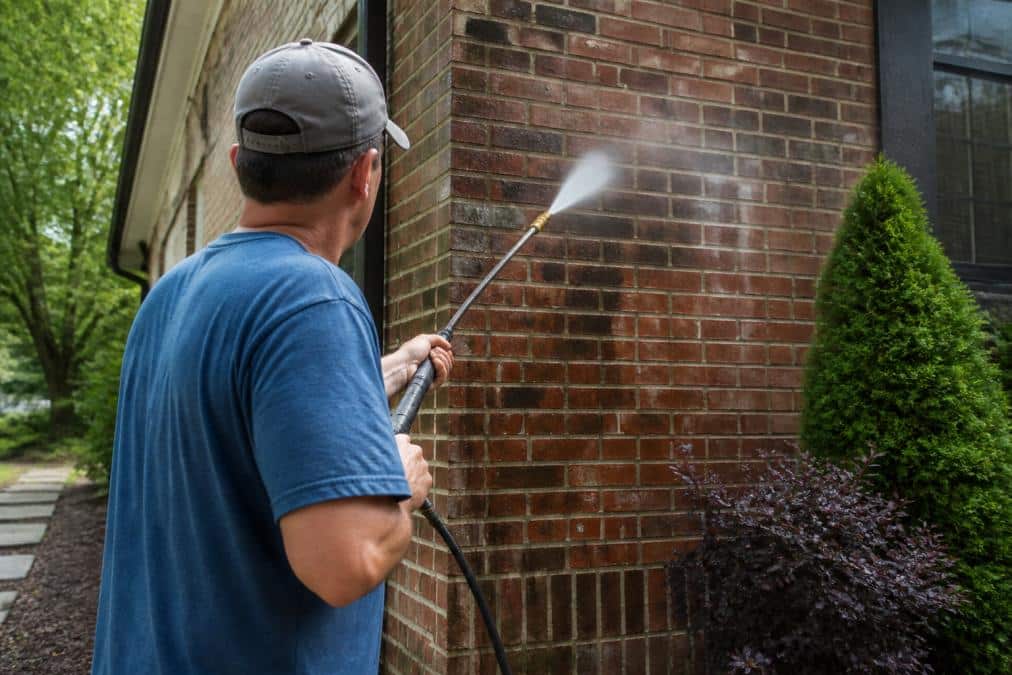
Pressure washing is not safe for most brick homes. High-pressure water forces into brick’s pores and destroys what holds your wall together. We’ve seen the aftermath on Upstate properties: chipped faces, blown mortar joints, and water behind the wall.
Brick feels solid, but fired clay is closer to a hard sponge than a sealed tile. Water that can’t escape travels through mortar into your wall cavity and home. The real question isn’t whether pressure washing works, but whether you can control the pressure, and for most brick, you can’t.
Red clay staining or black mold is still removable, it just requires a different method. Below: what high PSI does to brick, and how low-pressure soft washing cleans without damage.
Pressure Washing Brick Damage: What High PSI Actually Does
High PSI on brick causes three types of damage: surface erosion, mortar degradation, and water intrusion, expensive to fix and, on historic masonry, sometimes impossible to reverse (nps.gov).
Brick is kiln-fired clay, porous by design so the wall can breathe. A high-PSI fan spray overrides that system, forcing water into the pores faster than it can escape.
- Surface erosion and spalling. The outer face flakes off, exposing the softer interior.
- Mortar joint erosion. Mortar is softer, so it wears first; crumbling joints are the earliest warning sign.
- Water intrusion. Forced water travels into the wall cavity.
- Efflorescence and recurring mold. Dissolved salts surface as white powder, and trapped moisture feeds mold long after (peer-reviewed research).
The single most common mistake is testing a pressure washer on a small, out-of-the-way patch “just to see.” That test patch is where spalling starts, and it rarely shows up until the wall dries days later. By then, the damage is done.
Older, softer brick can be scarred by settings modern brick shrugs off.
Soft Washing Brick Homes: The Safer Alternative
Soft washing brick homes is the low-pressure method that cleans masonry without forcing water in. A cleaning solution kills organic growth at the root, followed by a gentle rinse. Pressure does almost none of the work.
- Pre-treat and saturate landscaping. Plants get soaked first so the solution doesn’t stress them.
- Apply the cleaning solution at low pressure. A soft wash wand delivers a diluted mix across brick, mortar, and siding.
- Let it dwell. Dwell time breaks down algae, mold, and mildew.
- Rinse at low pressure. A gentle fan spray washes everything away without driving water in.
- Repeat on heavy staining. Red clay and thick growth sometimes need a second application.
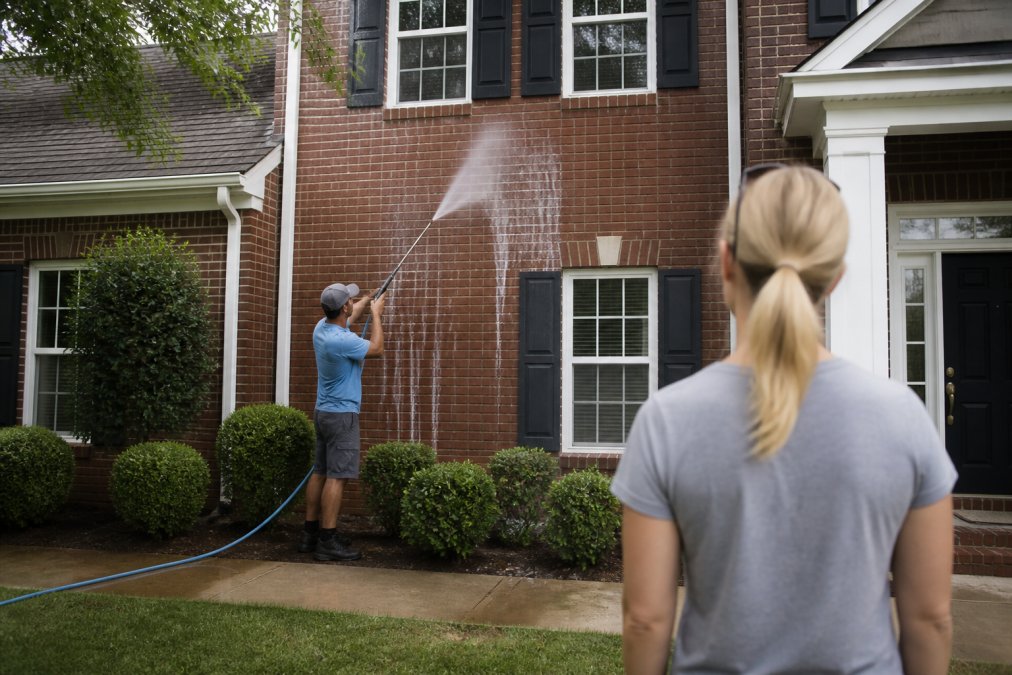
Results last longer than a pressure wash because the solution kills mold and mildew rather than knocking growth loose (the EPA). Our exterior cleaning service is built around this low-pressure approach because it protects masonry while removing black streaks, mold, and clay staining.
Ask any exterior cleaning company what pressure they run on brick before you book. If the answer is a PSI number rather than a method, that’s your cue to keep looking.
Whether you rent a machine or call a professional comes down to what’s growing on the wall and how old the brick is. Soft washing handles both, which is why “is pressure washing safe for brick homes” has a clear answer: not with high pressure, but yes with the right method.
Frequently Asked Questions
Is it safe to clean bricks with a pressure washer?
It depends on the brick and the pressure used. Modern kiln-fired clay brick can usually handle a pressure washer on a low setting with a wide fan spray, but historic brick made before the mid-1900s is softer and more porous, so high pressure can erode the surface and crack mortar joints. For any brick home, soft washing with low pressure and a cleaning solution is the safer choice. It removes mold, algae, and red clay stains without risking the masonry.
Does pressure washing damage brick mortar?
High-pressure washing can damage mortar joints, especially if the mortar is already cracked or eroded. Water forced into those gaps causes grout degradation and lets moisture reach the interior, leading to water intrusion and hydrostatic pressure problems. A fan spray tip held at a safe distance reduces the risk on modern brick, but soft washing at low pressure is the only method that reliably protects mortar joints on older or historic masonry.
What is the difference between power washing and soft washing brick?
Power washing uses heated water and high PSI to blast away dirt, which can strip the surface of soft brick and force water into weep holes. Soft washing brick homes uses low pressure, usually under 500 PSI, combined with a chemical detergent that kills mold, mildew, and algae at the root. The solution dwells on the surface, then a gentle rinse cycle washes everything away. Soft washing cleans deeper and lasts longer without surface erosion.