Table of Contents
- Why Mold Grows on Home Exteriors
- Soft Wash vs Pressure Wash: Which Prevents Mold Best?
- Exterior House Cleaning Frequency for Mold Prevention
- Frequently Asked Questions
Last Updated: September 7, 2026
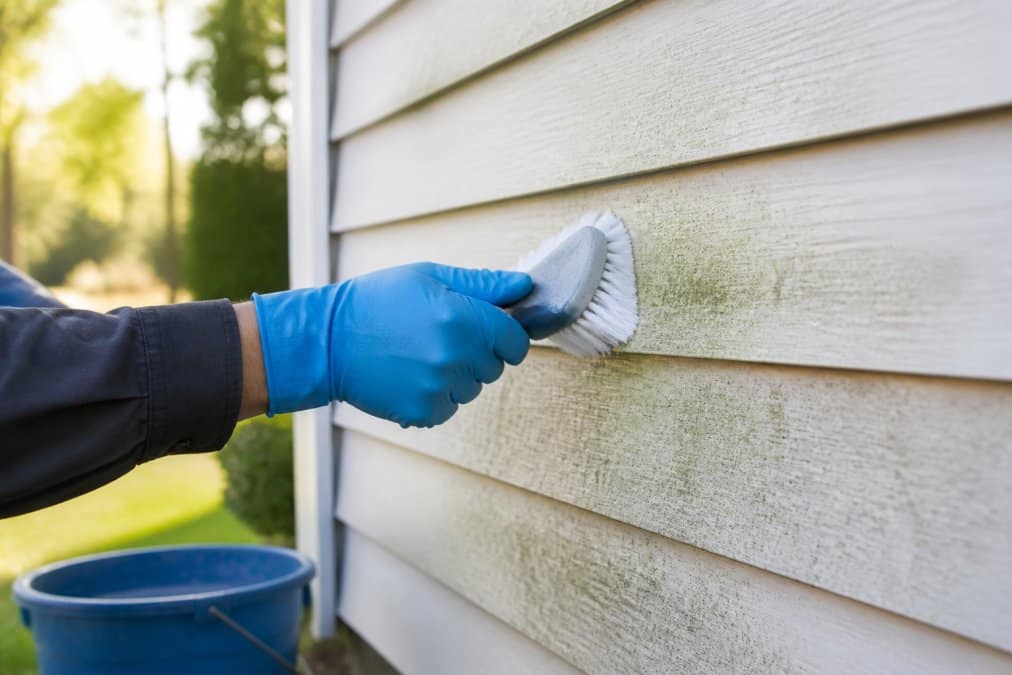
Mold on a home exterior can compromise siding, trim, and structural elements if unchecked. Preventing mold on home exterior 2026 surfaces requires a proactive, seasonally-aware maintenance plan.
Why Mold Grows on Home Exteriors
Mold needs moisture, organic food, and the right temperature, all present on north-facing walls and eaves where dew collects (the EPA). The primary culprit is relative humidity trapped against the surface, worsened by poor drainage and clogged gutters.
Mold signals a moisture management problem, not a dirty house. Condensation forms when warm, humid air meets a cooler surface, enabling spore growth, hence dark streaks under overhangs and near downspouts where thermal bridging cools framing. Seal gaps and ensure exhaust fans vent outside as the first defense.
Soft Wash vs Pressure Wash: Which Prevents Mold Best?
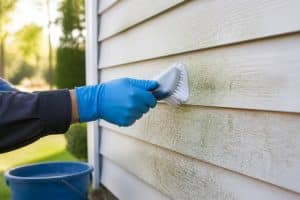
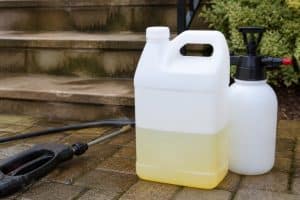
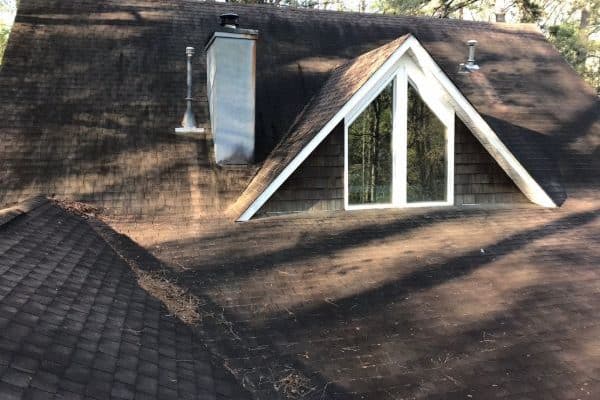
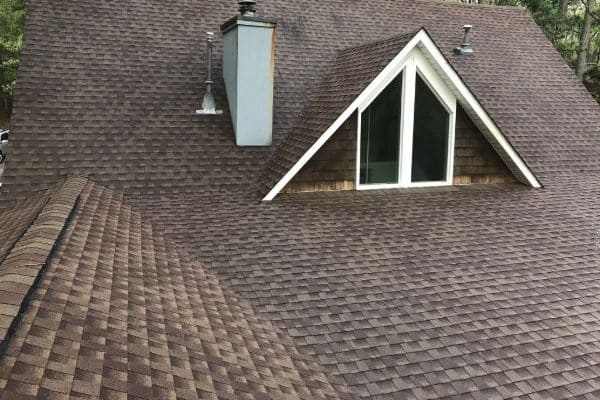
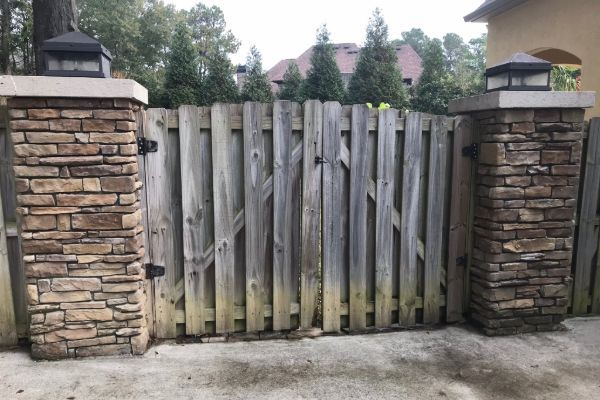
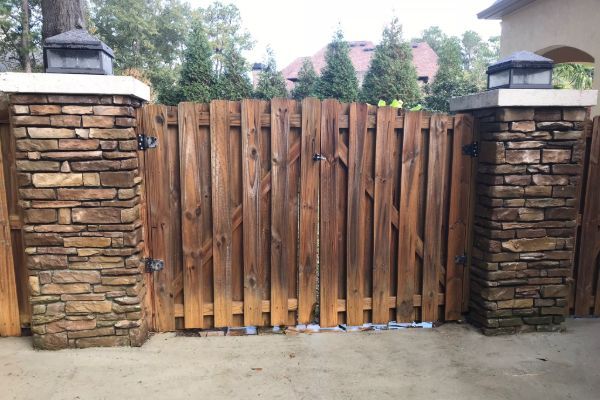
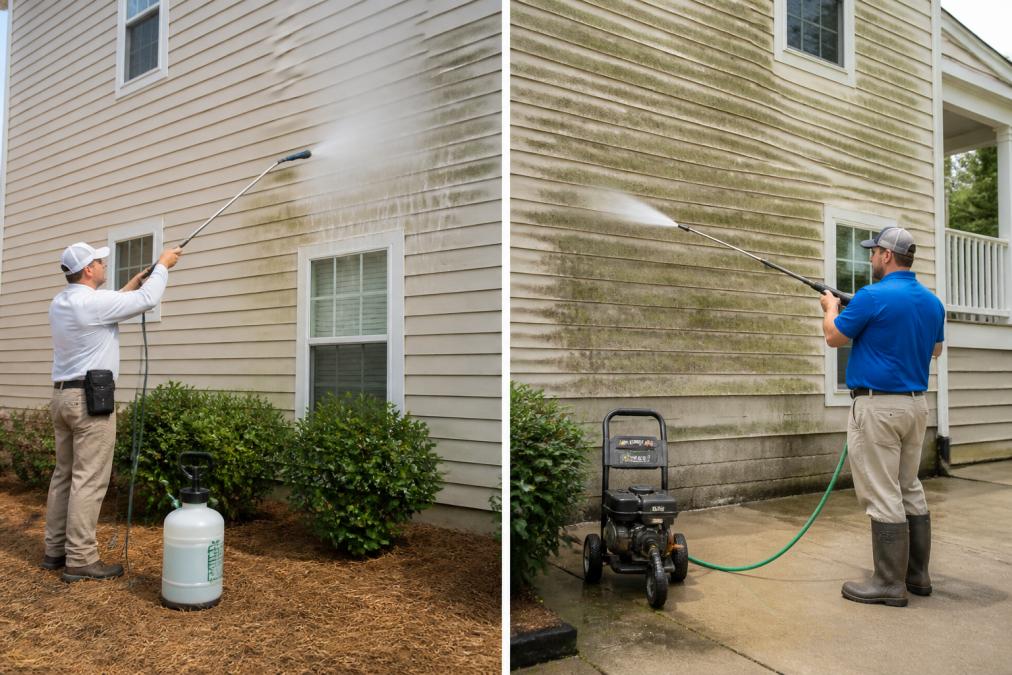
For preventing mold on home exterior 2026, low-pressure soft washing beats pressure washing: soft washing applies an eco-friendly biocide at low pressure to kill mold at the root, while pressure washing blasts surface stains but misses underlying spores. Pressure washing often harms soft substrates: on wood it forces water into seams, accelerating rot; on asphalt shingles it strips granules, shortening roof life (gaf.com).
| Cleaning Method | Best For | Prevention Outcome | Risk Level |
|---|---|---|---|
| Soft Wash | Vinyl siding, roofs, painted wood | Kills spores, slows regrowth | Low |
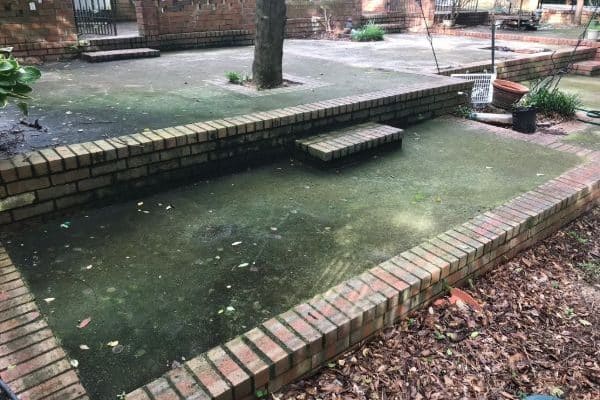
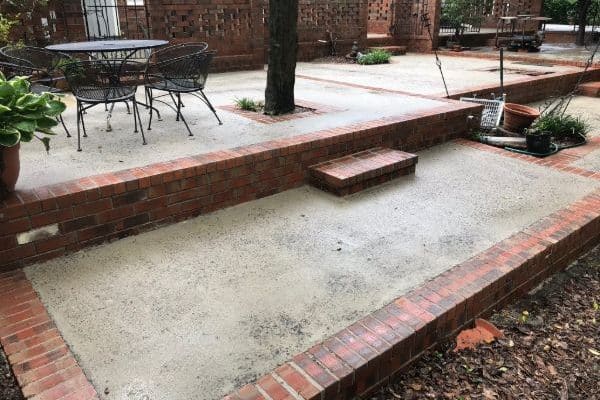
| Pressure Wash | Concrete, brick, stone patios | Removes surface stains | High on soft materials |
For stubborn red clay stains, a soft wash with the right surfactant lifts iron oxide without etching. If unsure which method your siding can handle, a professional assessment prevents costly damage.
Exterior House Cleaning Frequency for Mold Prevention
The ideal exterior house cleaning frequency is once per year in spring, with a fall inspection. Shaded or humid properties may need cleaning every six months. Gutter maintenance should happen at least twice a year; clogged gutters cause downspout extension failures and hydrostatic pressure against the foundation. Check roof flashing and sealing around windows and doors.
Skipping the fall inspection is a common mistake. Leaves accumulate in gutters and against the foundation, trapping moisture against the building envelope all winter. By spring, you’re addressing structural damage that could have been prevented with a 15-minute walk around the house.
A practical rhythm: spring cleaning, a mid-summer check of ventilation in crawl spaces, and fall gutter clearing. Monitoring dew point forecasts helps reduce condensation.
Invest in a hygrometer to track relative humidity around your home’s perimeter. If readings consistently exceed 60 percent near the siding, focus on moisture control through grading, gutter extensions, and vapor barrier installation before you spend money on another wash (hud.gov).
For sellers, a professional soft wash four to six weeks before listing keeps the exterior pristine for photos. Preventative maintenance is cheaper than remediation.
Keeping mold off your home exterior is a year-round commitment. Curb Appeal Solutions brings a woman and veteran-owned local perspective, using low-pressure, eco-friendly methods that kill mold without harming surfaces. With a 100% satisfaction guarantee and over 1,700 five-star reviews, schedule your Fast Quote for a mold-free exterior that lasts.
Frequently Asked Questions
What kills mold on the outside of a house?
A soft wash system using an eco-friendly biocide is the most effective method for killing mold on exterior surfaces. Unlike high-pressure washing, soft washing applies a cleaning solution at low pressure that penetrates the surface to kill the mold, mildew, and spores at the root. This method also removes the organic matter that mold feeds on, which helps prevent it from returning quickly.
How often should you clean your home exterior to prevent mold?
Most homes in humid climates need an exterior cleaning once per year to prevent mold and mildew from taking hold. However, homes shaded by trees or located near water may need cleaning every six months. Regular cleaning removes the dirt, pollen, and organic debris that mold spores feed on, breaking the growth cycle before it causes stains or structural damage.
Does pressure washing prevent mold from coming back?
Standard pressure washing can remove surface mold, but it does not prevent it from returning. In fact, high pressure can damage siding and force water behind it, creating conditions for more mold growth. A soft wash treatment, which uses eco-friendly cleaning agents to kill mold at the source, offers longer-lasting results by removing the food source and neutralizing spores.