Table of Contents
- Recommended Pressure Washing Frequency for Driveways
- Signs Your Driveway Needs Professional Cleaning
- DIY vs Professional Driveway Pressure Washing
- Frequently Asked Questions
Last Updated: September 21, 2026
Recommended Pressure Washing Frequency for Driveways
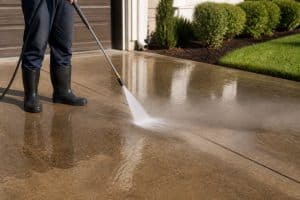
Most driveways benefit from professional cleaning once or twice per year, depending on climate and environmental conditions; areas with heavy rainfall, humidity, or tree coverage may need to pressure wash driveway more frequently to prevent mold and algae growth.
Temperate climates warrant annual spring or fall cleaning; humid regions with clay soil should schedule semi-annual pressure washing to prevent surface damage.
Most driveways show visible deterioration within 12 months without maintenance; match cleaning frequency to your specific environment rather than following a one-size-fits-all rule.
Signs Your Driveway Needs Professional Cleaning
Visible Contamination Indicators
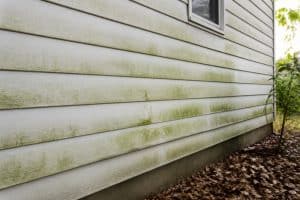
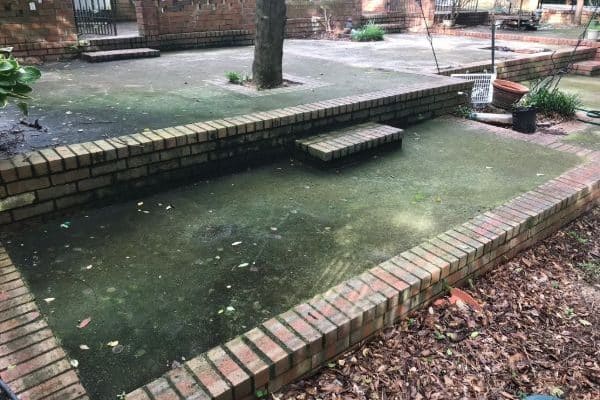
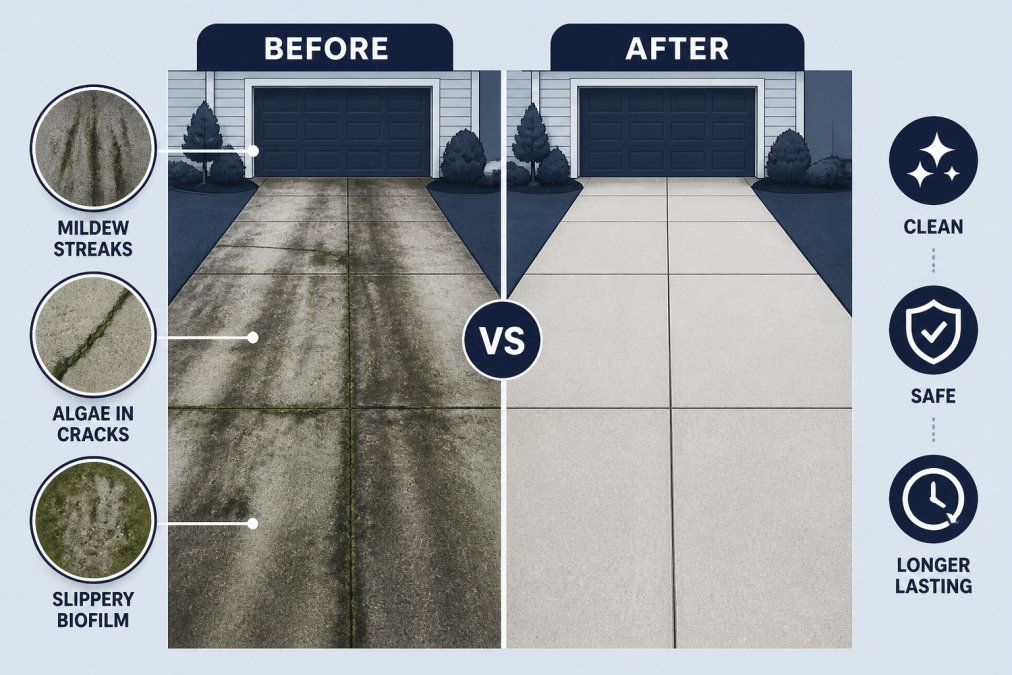
Dark streaks indicate mildew or algae; reddish stains come from iron oxide or rust. These contaminants retain moisture and accelerate freeze-thaw damage and salt penetration.
Slippery patches indicate biofilm growth and are a safety hazard; pressure washing at this stage is more effective before contamination penetrates deeper.
Material-Specific Warning Signs
White chalky deposits (efflorescence) indicate water penetration and salt migration; this precedes spalling and should trigger cleaning and resealing within 1-2 months.
Paver warning signs include weeds through joints (degraded polymeric sand), sunken pavers (eroded base), and visible gaps (water infiltration risk).
Timing Matters: The Damage Progression Window
Contaminants follow a timeline: 3-6 months (surface-level, easily removed), 6-12 months (acids etch concrete), beyond 12 months (structural damage and pitting).
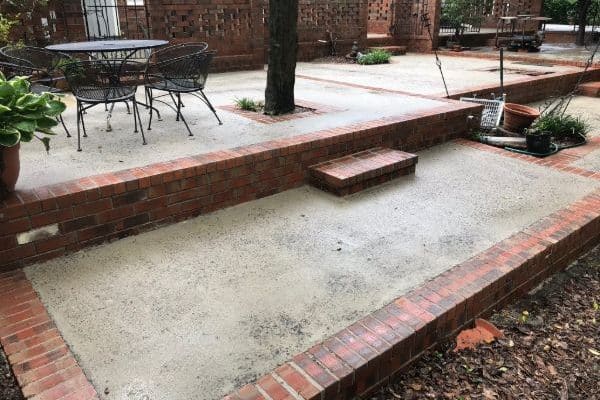
To pressure wash driveway within 6-9 months is preventative; waiting beyond 12 months requires repair. Spring cleaning prevents summer damage progression.
The Post-Cleaning Step Most Homeowners Skip
Apply concrete or paver sealant within 48 hours of pressure washing to prevent recontamination and extend cleaning intervals by 12-24 months; without resealing, regrowth appears in 6-8 months.
DIY vs Professional Driveway Pressure Washing
Equipment and Rental Costs
Pressure washer rental costs $40-$75 per day, but improper technique risks $500-$2,000 in concrete repairs or $1,000-$3,000 in paver joint replacement.
Surface-Specific Damage Risks
Concrete sealant strips above 3,000 PSI; pavers destabilize above 1,500 PSI, dislodging polymeric sand and creating uneven surfaces.
Professionals adjust PSI by material and age, using low-pressure chemical pre-treatment when needed; driveways over 10 years old or pavers with joint degradation warrant professional service.
When DIY Makes Sense
DIY works for newer concrete (under 5 years, no sealant) using 2,000-2,500 PSI with a 25-degree nozzle and detergent pre-treatment, maintaining consistent distance.
When Professional Service Pays for Itself
Professional cleaning with sealant reapplication ($250-$750 for 500 sq ft) extends cleaning intervals 2-3 years and prevents repairs exceeding $1,000.
Frequently Asked Questions
Can you pressure wash a driveway too much?
Yes. Excessive pressure washing can erode concrete, damage joint sand between pavers, and strip protective sealant. Annual or semi-annual cleaning is sufficient for most driveways. High-pressure equipment (above 3000 PSI) applied repeatedly accelerates surface deterioration. Low-pressure methods preserve surface integrity while still removing mildew, algae, and oil stains effectively.
How long does a driveway stay clean after pressure washing?
Results typically last 6-12 months depending on local climate and weather exposure. Areas with frequent rainfall, high humidity, or heavy shade develop mildew and algae faster. Applying sealant after cleaning extends cleanliness and protects against UV exposure and weathering. In regions with red clay soil and organic matter accumulation, semi-annual cleaning maintains curb appeal longer.
What’s the best way to remove oil stains from your driveway?
Fresh oil stains respond to degreaser applied before pressure washing. Older, set-in stains require professional-grade degreaser and low-pressure washing to avoid pushing oil deeper into concrete pores. Concrete driveways absorb oil differently than pavers. After removal, sealant application prevents future staining. For stubborn stains, professional cleaning with specialized equipment and detergent yields better results than DIY methods.
Keeping your driveway clean protects your home’s value and curb appeal. Professional pressure washing removes mold, algae, and oil stains that damage concrete over time. Curb Appeal Solutions delivers eco-friendly, low-pressure cleaning with a 100% satisfaction guarantee. Get a fast quote today and discover why over 1,700 satisfied customers trust us for their exterior maintenance needs.