Table of Contents
- Toxic Ingredients Found in Exterior Cleaning Chemicals
- How to Protect Pets During Pressure Washing
- Pet Safe House Wash Solutions and Chemical Cleaning Alternatives
- What to Do If Your Pet Comes Into Contact With Cleaning Agents
Last Updated: August 19, 2026
Toxic Ingredients Found in Exterior Cleaning Chemicals
Many common exterior cleaning solutions contain ingredients that pose real risks to dogs, cats, birds, and other pets. Bleach is corrosive to skin and mucous membranes; when pets inhale fumes or contact residual residue, results range from mild irritation to severe respiratory distress. Ammonia creates similar hazards and produces toxic chlorine gas when combined with bleach.
Phenols and formaldehyde appear in many commercial cleaners for mold and mildew removal. These compounds are absorbed through skin and respiratory systems, causing chemical burns on paw pads, skin irritation, and neurological effects. Isopropyl alcohol damages mucous membranes and causes central nervous system depression in animals.
Manufacturers aren’t required to list every ingredient on labels. Professional exterior cleaning services like Curb Appeal Solutions avoid this risk by using low-pressure washing methods combined with eco-friendly, pet-safe solutions.
If your pet ingests or heavily contacts any exterior cleaning chemical, contact your veterinarian or the ASPCA Animal Poison Control Center immediately. Time matters when chemical exposure occurs.
How to Protect Pets During Pressure Washing
The safest approach is prevention: keeping pets completely away from the cleaning area during and immediately after work.
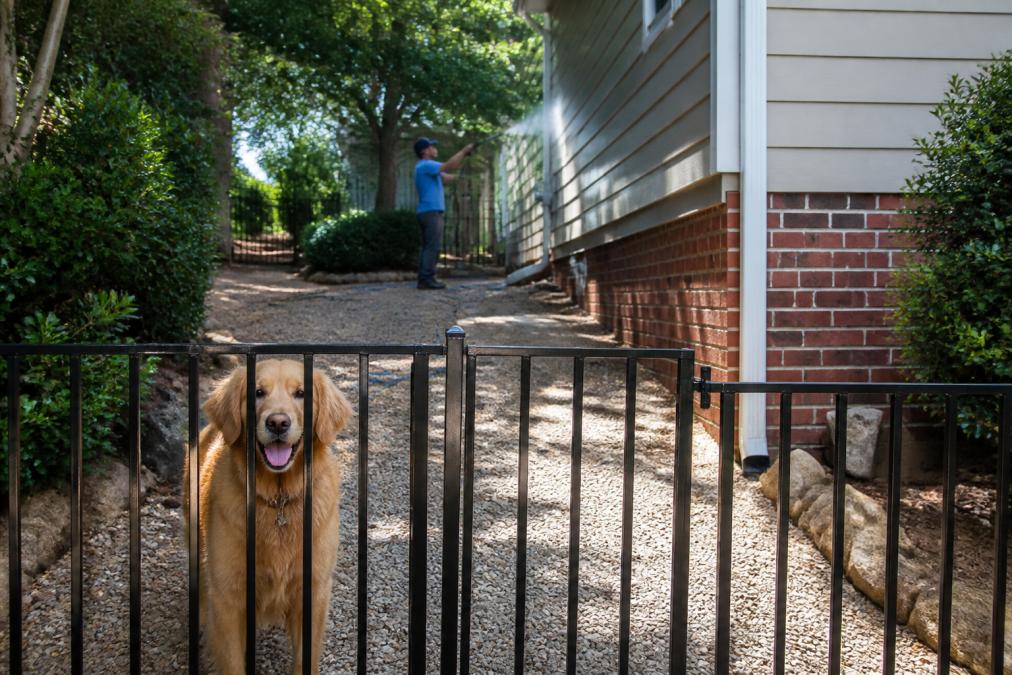
Create a physical barrier between your pets and the work zone. Keep pets indoors in a room far from exterior walls and windows, or secure outdoor pets in an enclosed area at least 50 feet away from cleaning. Don’t rely on pets staying put; animals are unpredictable when curious or anxious.
The dwell time (how long chemicals sit on surfaces before rinsing) is critical. Professional services understand that proper rinsing removes most surface residue, but some compounds bind to porous surfaces like wood, concrete, and brick. Most veterinarians recommend keeping pets away from treated exterior surfaces for at least 24-48 hours after cleaning. During this period, remaining moisture and chemicals can still cause skin irritation or respiratory issues. Open windows and allow air circulation to speed evaporation.
If you’re doing [exterior cleaning](/best-pressure-washing-services-2026/) yourself with store-bought chemicals, wear gloves and a respirator mask. If professional-grade chemicals require this protection for humans, your pets, who are smaller and more sensitive, definitely need protection too.
Pet Safe House Wash Solutions and Chemical Cleaning Alternatives
Enzymatic cleaners break down organic material (mold, algae, mildew) through biological action rather than chemical burn. These alternatives use naturally occurring enzymes that are biodegradable and non-toxic to pets, though they work more slowly than bleach-based solutions.
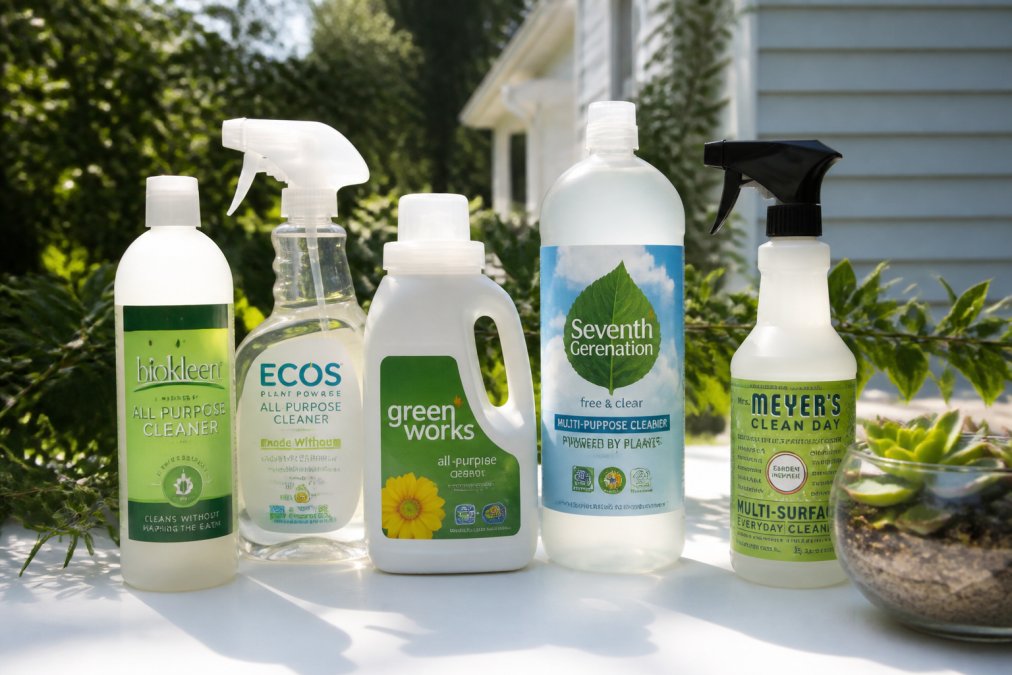
Hydrogen peroxide-based cleaners oxidize organic material without producing toxic fumes and break down into water and oxygen, leaving no harmful residue. Citrus-based degreasers containing naturally derived limonene from orange peels are non-toxic to pets at concentrations used for exterior cleaning.
The trade-off with pet-safe alternatives is time and sometimes cost. Enzymatic cleaners may need 12-24 hours of dwell time; hydrogen peroxide solutions require multiple applications for stubborn stains. For routine maintenance, many homeowners find that a simple low-pressure water rinse removes light algae and mold growth. Adding a biodegradable surfactant improves cleaning action without introducing toxic compounds.
Pet-safe exterior cleaning solutions exist and work effectively. They cost more and take longer than harsh chemicals, but they eliminate the risk of chemical poisoning in your animals.
What to Do If Your Pet Comes Into Contact With Cleaning Agents
If your pet contacts exterior cleaning chemicals, identify what chemical they encountered by checking product containers or asking the cleaning service. This information is critical for your veterinarian.
For skin contact, rinse the affected area immediately with large amounts of water for at least 15 minutes. Remove any contaminated collars, harnesses, or clothing. If the chemical caused visible burns or blistering, seek veterinary care immediately.
For inhalation exposure, move your pet to fresh air immediately. Watch for respiratory distress: rapid or shallow breathing, coughing, wheezing, or blue-tinged gums. These symptoms require emergency veterinary attention.
If your pet ingested cleaning chemicals, do not induce vomiting. Call your veterinarian or the ASPCA Animal Poison Control Center at (888) 426-4435 immediately. Document everything: the chemical name, concentration, time of exposure, visible symptoms, and any treatment given. Some chemical exposures cause delayed effects that emerge days after initial contact.
Protecting your pets during exterior cleaning comes down to prevention: keeping your animals away from treated surfaces for 48 hours, choosing professional low-pressure services using pet-safe chemicals, or using DIY alternatives like enzymatic cleaners. At Curb Appeal Solutions, we understand that your pets are part of your family. Our eco-friendly, low-pressure methods eliminate harsh chemicals from the equation entirely. Get a fast quote today and discover how professional exterior cleaning protects both your home and your animals.
Frequently Asked Questions
What outdoor cleaner is safe for pets?
Enzymatic cleaners and biodegradable surfactant-based solutions are safe for pets when properly diluted and rinsed thoroughly. Look for products labeled non-toxic and free of ammonia, bleach, phenols, and isopropyl alcohol. Professional soft washing services that use pet-safe formulations and follow proper rinsing protocols offer the safest option. Always verify the safety data sheets and allow adequate drying time before pets access treated areas.
Are professional soft washing services safe for pets?
Yes, professional soft washing using low-pressure equipment and pet-safe chemical solutions is significantly safer than high-pressure washing or DIY harsh chemicals. Professional services understand proper chemical dilution, dwell time, and neutralizing agents that minimize pet exposure. They follow industry safety protocols and can advise on post-cleaning waiting periods. Ensure your service provider uses eco-friendly, non-toxic formulations and takes preventative measures to protect your pets during and after cleaning.
What should I do if my pet comes into contact with exterior cleaning chemicals?
Remove your pet from the area immediately and rinse their fur with fresh water for at least 5 minutes. Monitor for signs of chemical poisoning such as respiratory distress, skin irritation, vomiting, or lethargy. If ingestion is suspected or symptoms develop, contact your veterinarian or animal poison control center right away. Provide the product's safety data sheet to your vet. For minor skin irritation, continue rinsing and watch for improvement; seek professional help if symptoms persist or worsen.
How can I tell if an exterior cleaning chemical is truly pet safe?
Check the product label for explicit pet-safe or non-toxic certifications and review the safety data sheet for harmful ingredients. Avoid products containing bleach, ammonia, phenols, formaldehyde, and chlorine. Biodegradable and enzymatic cleaners are generally safer options. Ask your cleaning service provider about their specific formulations, dilution ratios, and rinsing protocols. Contact the manufacturer if you have questions about pet safety, and consult your veterinarian if you're uncertain about a product's safety for your specific pet type.
This article was written using GrandRanker